Truthout is an indispensable resource for activists, movement leaders and workers everywhere. Please make this work possible with a quick donation.
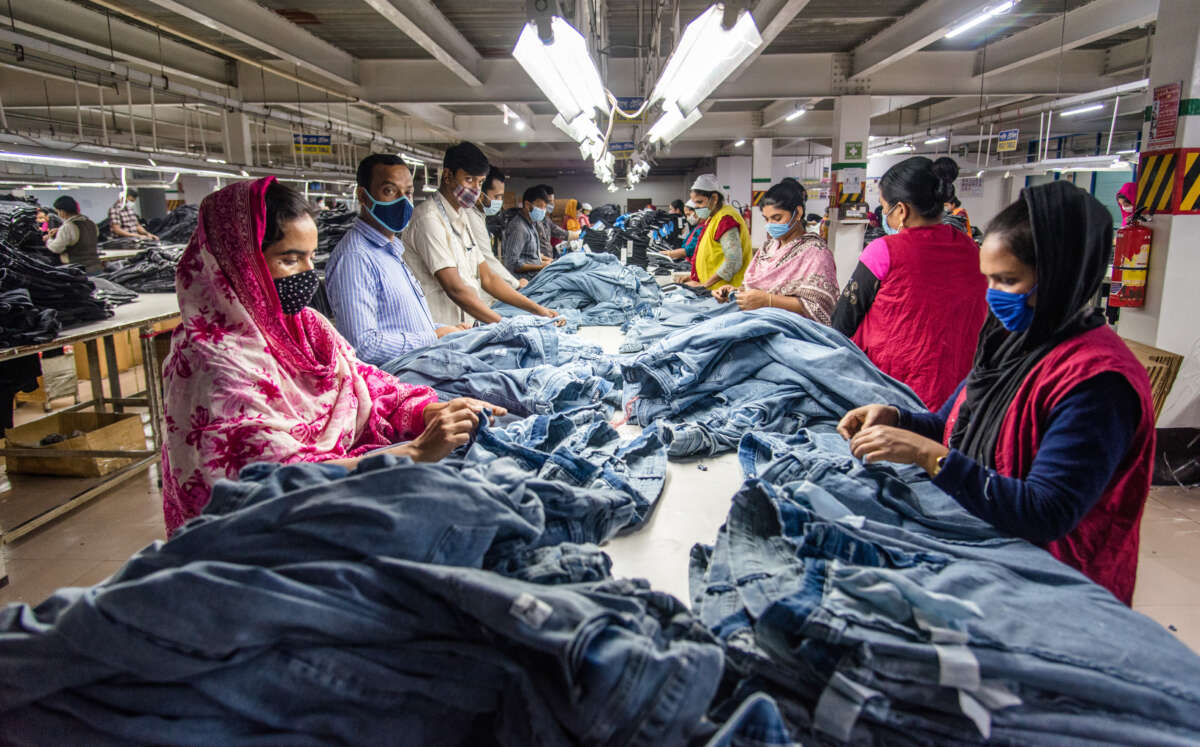
Dilhani worked for six years in a Sri Lankan factory that makes clothes for Nike. She is one of millions of South and Southeast Asian garment workers in Big Fashion companies’ supply chains who saw their income dramatically reduced during the Covid-19 pandemic through layoffs, wage cuts, and wage theft.
As an outspoken member of her factory’s employee council, Dilhani pushed for repayment of lost wages as she and her coworkers suffered food shortages and sold off their belongings to keep their children in school.
Then one day in August 2021, management locked Dilhani in a small room and forced her to remain there for hours without access to her belongings or a restroom. They allowed her to leave only after she agreed to sign her resignation. A year and half later, she continues to fight from the outside. We are not revealing her full name for security reasons.
In the same months that Dilhani and her coworkers struggled to survive on slashed wages in the spring of 2020, the Nike-owning Knight family (the 26th-wealthiest family in the world), paid themselves $74 million in dividends.
Nearly three years later, Big Fashion companies like Nike have seen revenue growth and profits hit new highs. Their wealthiest investors have hoarded more and more of these profits through stock buybacks — a legal form of market manipulation in which corporations inflate share prices for investors by repurchasing their own stock. Nike authorized $18 billion in stock buybacks in 2022.
The vast majority of garment workers who fuel Big Fashion’s fortunes, however, have been left unpaid and stuck in a permanent crisis.
Workers like Dilhani in countries across South and Southeast Asia are fighting back. On February 27, unions throughout the region, the Asia Floor Wage Alliance (AFWA), and Global Labor Justice-International Labor Rights Forum (GLJ-ILRF) will launch a campaign to Fight the Heist, bringing workers together in six countries to demand that Big Fashion companies:
- Sit down with garment workers and their unions for a systematic investigation of COVID wage claims, including specific impacts on women workers.
- Stop billionaire payouts from dividends and stock buybacks until all garment workers are repaid their lost wages. Garment supply chain workers stand alongside U.S. coal miners, railroad workers, airline workers, and many others who are calling on Wall Street to invest in workers instead of lining their pockets through stock buybacks.
- Transform their global supply chains to provide living wages for all workers.
This coalition of workers and allies will take collective actions in their factories to demand the world’s wealthiest fashion companies respect the basic human rights of their workers. They are also engaging with the OECD, an intergovernmental organization that helps resolve claims of labor and human rights violations.
This fight began in 2020, when the Asia Floor Wage Alliance, with its partner unions in Bangladesh, Pakistan, India, Sri Lanka, Indonesia, and Cambodia, surveyed thousands of garment workers about the impacts of the Covid pandemic on their incomes and lives. The next year, they published Money Heist, a report detailing the wage theft and the massive income loss facing garment workers during the Covid-19 pandemic in the supply chains of companies like Nike, Levi Strauss & Co., and North Face parent company VF Corporation.
The Alliance and Global labor Justice-International Labor Rights Forum have just published a new report that reveals how Big Fashion companies funneled money to investors rather than paying workers back. With their current share buybacks authorizations, Big Fashion companies could pay back the workers in the factories that AFWA surveyed on average more than a thousand times over. As a particularly extreme example, Nike could pay back workers in the surveyed factories in its supply chain almost two thousand times.

Dilhani now sells fruit by the roadside to try to stay afloat and pay her pandemic-era debts while she fights for justice at her factory. She remains an active member of the Sri Lanka’s Textile Garment and Clothing Workers Union (TGCWU).
Over the coming months, Dilhani and other garment workers from Big Fashion’s supply chains will bring their fight to the brands and investors who profited from their unpaid wages and who have the money and power to pay them the living wages they deserve.
“Until we get fair wages,” Dilhani says, “we will carry forward this fight.”
Media that fights fascism
Truthout is funded almost entirely by readers — that’s why we can speak truth to power and cut against the mainstream narrative. But independent journalists at Truthout face mounting political repression under Trump.
We rely on your support to survive McCarthyist censorship. Please make a tax-deductible one-time or monthly donation.