Honest, paywall-free news is rare. Please support our boldly independent journalism with a donation of any size.
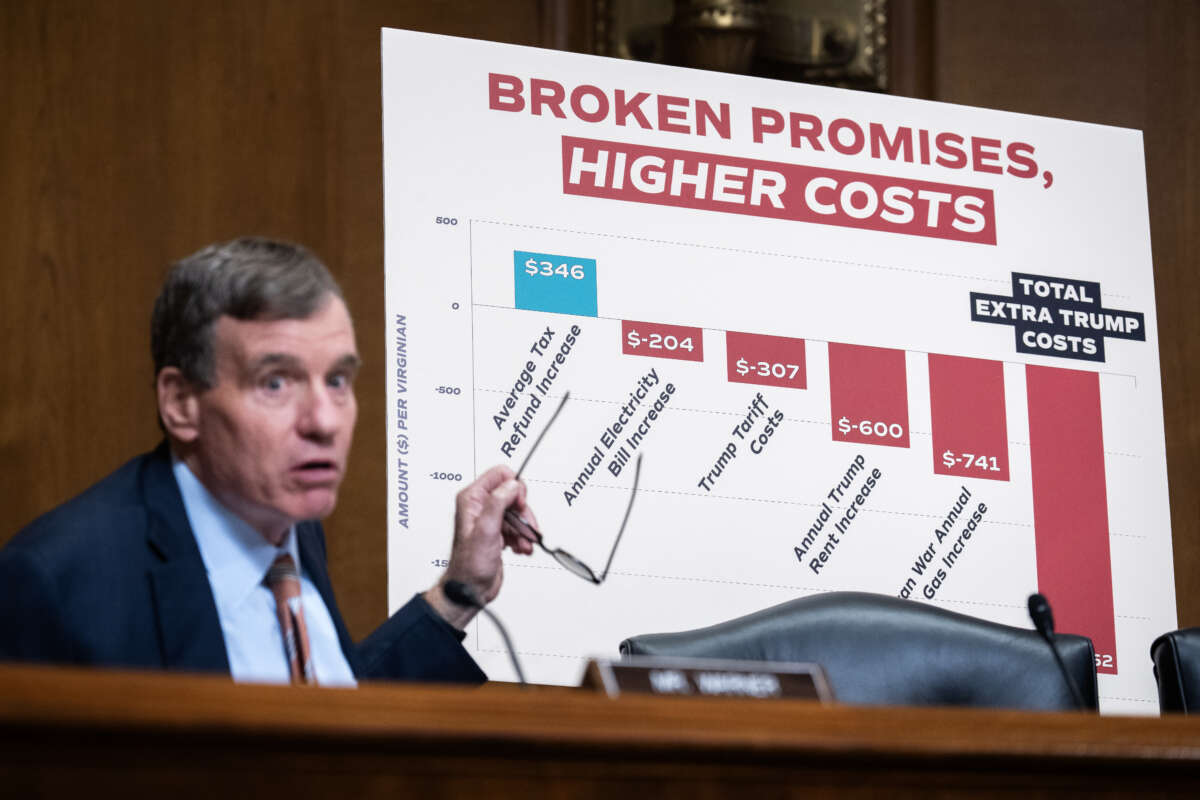
Congressional Republicans had been hoping their political standing would improve this spring when American voters received larger refunds thanks to changes in US tax law made under the One Big Beautiful Bill Act.
However, The Financial Times reported on Tuesday that much of the projected fiscal stimulus from the larger refunds has already been swallowed up by the rise in gas and energy prices caused by President Donald Trump’s illegal war with Iran, and the financial situation could grow even worse in the coming months.
Gregory Daco, chief economist at EY Parthenon, told The Financial Times that “the tax refunds have been largely erased by the increase in Middle East price pressures,” and warned that “the longer the conflict lasts, the more we move to an adverse scenario where inflation proves more persistent and erodes consumer spending growth.”
Nathan Sheets, global chief economist at Citigroup, told The Financial Times that the Iran war has only accelerated problems for US consumers who were already facing high pressures from the cost of living.
“By our reckoning, wage growth has steadily lost ground relative to the pace of inflation since the middle of last year,” Sheets said. “First President Trump’s tariffs and, more recently, Iran-related pressures on oil and commodity prices have pushed up prices relative to wages.”
US retailers have been expecting the positive impact of the tax refunds to dwindle, with Target CFO Jim Lee telling The Financial Times that they “will be fading over the rest of the year” as Americans are using larger shares of their incomes to pay for basics such as food and energy.
Lee’s concerns were echoed by Walmart CFO John David Rainey, who told CNBC last week that while tax refunds have been helping Americans buffer the costs associated with the Iran war, that financial cushion is shrinking by the day.
“I think higher tax returns muted some of the pressure related to higher fuel prices,” said Rainey, “and as we’re in a period of time right now where those tax refunds are largely not coming in, I think consumers are going to feel more of that pressure from higher fuel prices.”
Walmart’s stock price on has fallen sharply over the last week despite strong quarterly earnings, as investors express concerns that low-income consumers are feeling squeezed financially.
As reported by The New York Times, Walmart noted in its most recent earnings call that “sales continued to be driven by its low-price private label goods and higher-income households trading down to stretch their budgets,” suggesting that consumers are under increasing distress.
An important fundraising appeal: 8 Days to raise $47,000
Donations are down for Truthout at a time when media is under immense pressure. Google’s AI search has driven our traffic down by 15 percent, Trump is arresting journalists, and many independent media organizations face heartbreaking cutbacks and closures.
At the same time, movement media is vital in the fight against Trump’s authoritarian reign. Our mandate to tell the truth, share strategies for resistance, and speak against fascism is ever more urgent in this deluge of political censorship and misinformation. Yet, we are struggling to meet our publishing costs when our work is so urgently needed.
We are fundraising right now for those basic operating expenses — we need $47,000 in the next 8 days. If you can support Truthout with a one-time or monthly donation, you will make a significant impact on our work. Anything you can do makes a difference.