Support justice-driven, accurate and transparent news — make a quick donation to Truthout today!
The Trump administration and fellow Republicans are citing the Iran war as a pretext for oil drilling in Alaska, in an attempt to rapidly implement longstanding policy goals in the state.
In April, President Donald Trump declared that the Strait of Hormuz blockade could be a boon for U.S. oil production, including in Alaska. This narrative was celebrated by Alaska Republicans, like Governor Mike Dunleavy, who praised Trump for working to unleash “Alaska’s extraordinary resource potential.”
Senator Lisa Murkowski (R-Alaska), one of the only Republican lawmakers who occasionally criticizes the president, also voiced support for this vision.
“The situation in Iran is not good,” Murkowski recently stated. “The situation, as it’s going to impact Alaskans in their homes, is not good, but could the state benefit because there is this increased focus on resource shortages and volatility?”
“We have seen what it means to be vulnerable from a resource perspective, and you have seen this president turn that around in a strong way,” she added.
On May 6, the Trump administration announced that it was transferring 1.4 million acres of national public lands in Alaska’s Dalton Utility Corridor to the state’s government, which has sought to expand industrial development in the region. The Interior Department noted in a statement that the corridor contains portions of the proposed route for a 211-mile road to the Ambler mining district and fully developing the Alaska Liquefied Natural Gas project.
“For far too long, we have been at a relative standstill on statehood entitlements because these critically important lands were off the table,” gushed Kevin Pendergast, state director for the Bureau of Land Management, in celebration of the news.
Ten environmental groups are suing over the move, which they say will harm local tribes and endanger wildlife. “The Interior Secretary broke the law when removing federal protections for over 2 million acres of public lands in February without hearings in local communities, without a public comment period, and without addressing that decision’s impacts on land, water, and subsistence users,” said Bridget Psarianos, an attorney representing the plaintiffs, in a statement.
The U.S. Interior Department announced it would streamline the permitting process for oil development in the Alaska National Petroleum Reserve.
On May 15, the U.S. Interior Department announced it would streamline the permitting process for oil development in the Alaska National Petroleum Reserve. Under the new rules, some drilling operations, like the controversial Willow Project, could be rubber-stamped for approval in just 30 days.
“The faster we can cut through the speed of those regulations, the faster we can bring down prices for America,” declared Interior Secretary Doug Burgum.
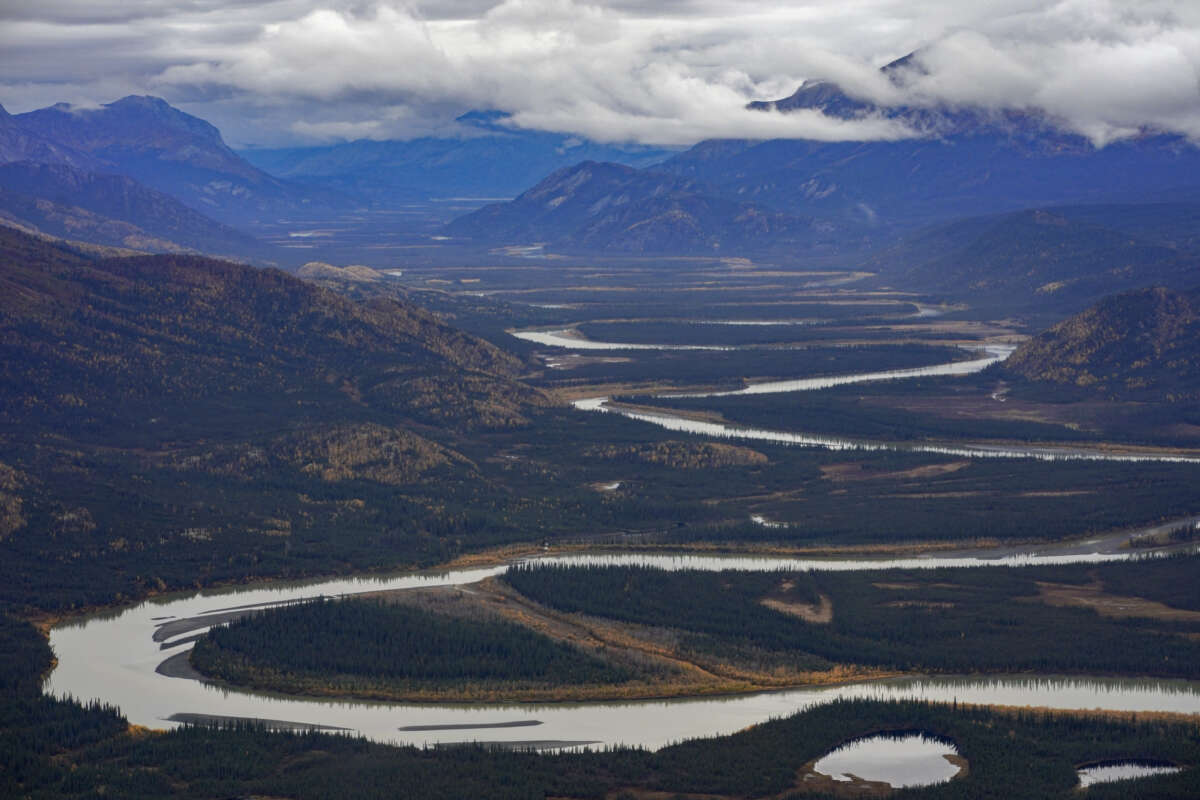
On June 5, the Interior Department’s Bureau of Land Management will host the first of four legally mandated lease sales in the Coastal Plain of the Arctic National Wildlife Refuge (ANWR). The 1.5 million-acre stretch is known for its hills, lakes, and tundra vegetation. “Caribou travel to the coastal plain during June and July to give birth and raise their young. Migratory birds and insects flourish here during the brief arctic summer,” notes the U.S. Fish and Wildlife Service’s website. “Tens of thousands of snow geese stop over on the coastal plain during September to feed prior to migrating south, and muskoxen live here year-round.”
The U.S. Geological Survey (USGS) estimates that the plain holds between 4.25 billion and 11.8 billion barrels of recoverable oil, and Trump is poised to disrupt the aforementioned habitat via heavy drilling in areas that have historically been protected. The plan has been condemned by Indigenous peoples of the Arctic Refuge, including the Gwich’in Nation, who say that any drilling “would negatively impact our subsistence and violate our rights as Indigenous people.”
The plan has been condemned by the Gwich’in Nation, who say that any drilling “would negatively impact our subsistence and violate our rights as Indigenous people.”
These developments come on the heels of an Interior Department draft plan that seeks to dramatically expand offshore drilling over the next five years. The extraction strategy includes 21 areas off the coast of Alaska. An analysis by the Center for Biological Diversity, which is based on historical data and anticipated oil production, estimated that the five-year plan could result in more than 4,000 additional oil spills, releasing over 12 million gallons of oil into the ocean.
Environmental groups are also rejecting the idea that domestic drilling will aid the flailing U.S. economy.
Bobby McEnaney, director of land conservation at the Natural Resources Defense Council (NRDC), told Truthout that, if the United States could actually drill its way to economic success, it would have done it already.
“The United States produced a record amount of oil last year — for the fourth year in a row — more than any other country in history. That hasn’t kept our families and businesses from getting gouged at the pump, on the farm, and at the grocery store from yet another oil shock beyond our control,” said McEnaney.
“Exposing irreplaceable Arctic habitat and lands to the hazard and harm of drilling won’t fix that,” he continued. “We must break our addiction to oil. Our dependence on oil is the vulnerability, not the solution.”
“Using a war in the Middle East as a political excuse to expand drilling in one of America’s most fragile and ecologically important landscapes is as cynical as it is dangerous,”
These sentiments were echoed by Athan Manuel, director of Sierra Club’s Lands Protection Program.
“Using a war in the Middle East as a political excuse to expand drilling in one of America’s most fragile and ecologically important landscapes is as cynical as it is dangerous,” said Manuel. “The reality is that opening more of Alaska to oil drilling won’t lower gas prices, won’t meaningfully address energy security concerns, and will only deepen our dependence on the volatile fossil fuel markets that are squeezing American families.”
“What it will do is put Alaska’s public lands, wildlife habitat, and Indigenous communities at greater risk for the benefit of oil company profits,” he continued.
Oil Companies Eye Alaska Amid Deregulation
Republicans have been pushing for expanded drilling for decades, and their plans for Alaska predate the current international crisis. In October 2025, the GOP-controlled Senate voted to repeal a land management program that was enacted at the end Joe Biden’s term to limit development in interior Alaska. A month later, Trump finalized the rollback of preexisting drilling limits. Trump’s infamous “One Big Beautiful Bill Act” also opened up vast amounts of land to oil and gas leasing.
There’s reason to believe that oil companies are taking the Republican rhetoric about domestic production seriously.
Lease sales in the Arctic Refuge have not always drawn a lot of interest from such companies. “Drilling in a remote and sensitive region with little to no supporting infrastructure makes both the oil and gas industry and its wall street investors hesitant to participate,” notes the group Taxpayers for Common Sense. However, in March, ExxonMobil, Repsol, and Shell were among the oil companies that bid some $163 million to secure leases in the reserve. “The energy crisis sparked by the Iran war has … underlined the importance of supply diversity beyond the Middle East, further boosting the state’s appeal,” explained the Financial Times.
“This is the hottest play in the world right now,” independent oil prospector Bill Armstrong told the paper.
“We can’t afford to lock in decades of new carbon emissions while destroying irreplaceable wildlife habitat.”
“Alaska is a fantastic opportunity,” said Repsol’s head of exploration and production, Francisco Gea, adding “the reversal in the decline of oil production in the great state of Alaska is going to help put more oil in the Pacific area at an important moment.”
The consultancy group Wood Mackenzie predicts that oil production in the state will go up to roughly 750,000 barrels per day by 2030, a 275,000 barrel a day increase from 2024.
Cooper Freeman, Alaska director at the Center for Biological Diversity, says drilling could do irreparable damage to an area that is already threatened by climate change.
“Fast-tracking oil and gas exploration in Alaska is a shortsighted bid for corporate profit that ignores the devastating reality on the ground,” he told Truthout. “The Arctic is already one of the most rapidly warming ecosystems on Earth, yet it remains a vital refuge for polar bears, caribou, and millions of migratory birds. We can’t afford to lock in decades of new carbon emissions while destroying irreplaceable wildlife habitat and delaying the necessary renewable energy transition.”
25 Years of Truthout: An important fundraising appeal
This September, Truthout is celebrating 25 years of publication. For over two decades, we have been a trusted source for fiercely independent journalism thanks to readers like you.
Looking to the next 25 years, we launched a special fundraising campaign. We still need to raise $16,000.
We are asking for your support at this juncture because we face greater threats than ever before in our organizational history. Trump and his MAGA allies are determined to control the information ecosystem, and movement-based organizations are subject to dangerous censorship and scrutiny.
If you can support Truthout with a one-time or monthly donation, you will make a significant impact on our work and our legacy. Anything you can do makes a difference!