Support justice-driven, accurate and transparent news — make a quick donation to Truthout today!
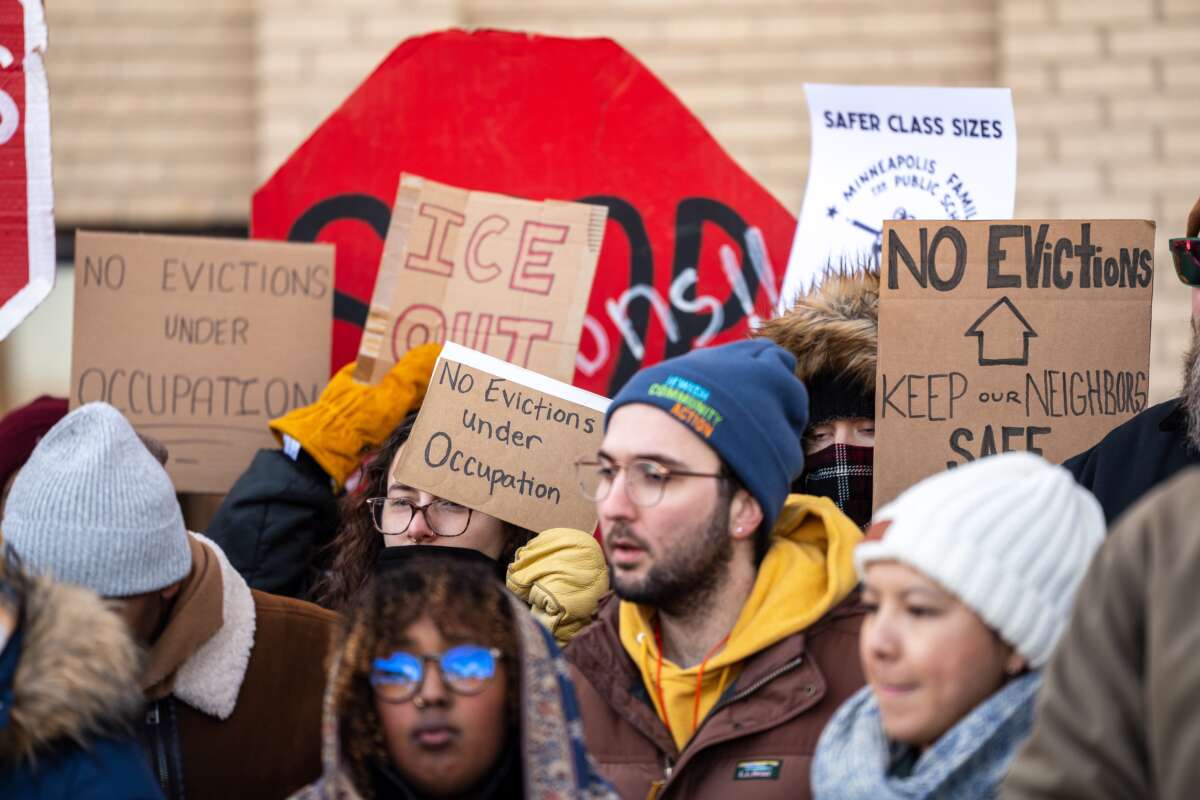
Rent is due in the Twin Cities, and many families won’t be able to pay. “Operation Metro Surge” has left thousands of families sheltering in place from masked federal agents roaming the streets. With many afraid to go to work or school, bills are piling up, galvanizing calls for Minnesota Gov. Tim Walz to declare an eviction moratorium.
“It is very expensive to be sheltering in place,” Yusra Murad, a communications organizer at Inquilinxs Unidxs por Justicia, told Truthout. Murad’s group is a Twin Cities–based tenants’ rights collective that is one of the groups leading the call for the eviction moratorium.
Operation Metro Surge has forced undocumented families in the Twin Cities into a cascade of difficult decisions, and activists warn that without an eviction moratorium, the region faces an impending eviction catastrophe. Many have had loved ones — and their household’s primary income earners — taken by federal agents and have been scrambling to scrape together funds to pay February rent.
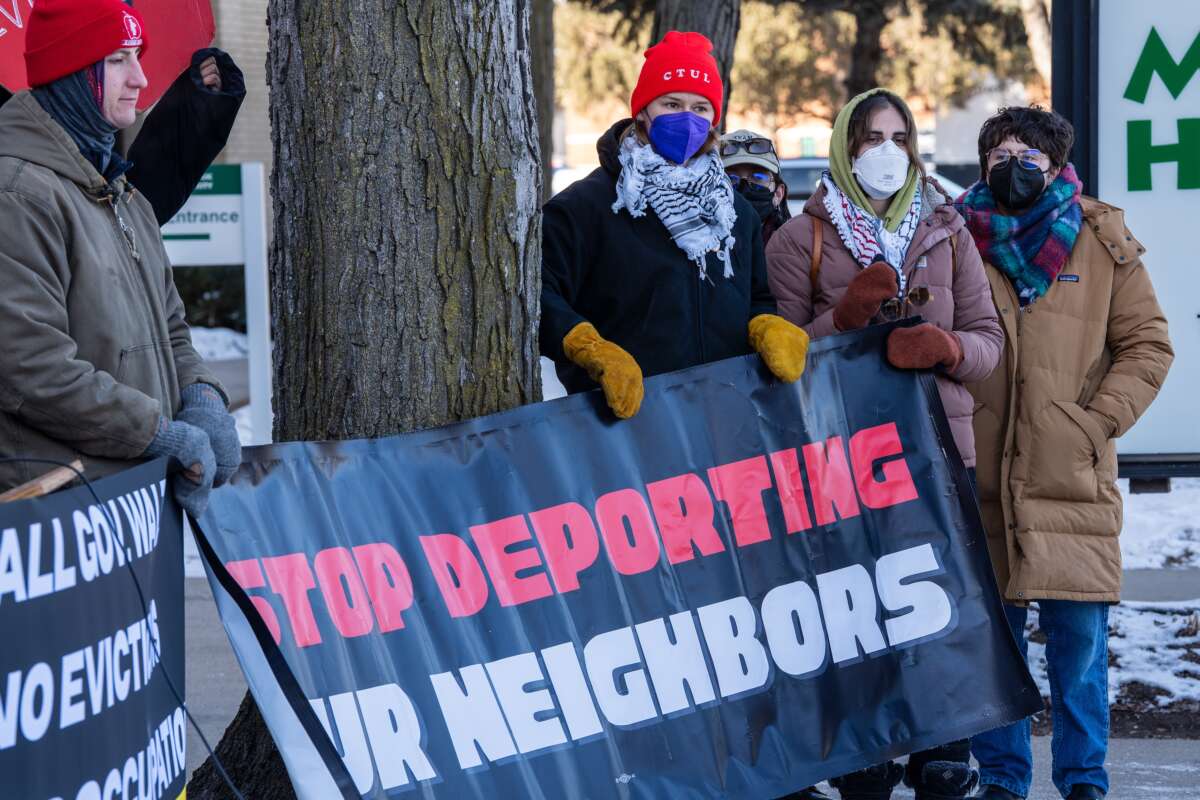
On January 15, members of the Minneapolis City Council held a press conference at City Hall after unanimously passing a resolution calling on the governor to enact a moratorium. Council Member Robin Wonsley, who represents Ward 2 and is backed by the Democratic Socialists of America, told Truthout: “Residents also need immediate protection from ICE, which is why the City Council is calling on Gov. Walz to implement an eviction moratorium now. No family should have to choose between keeping a roof over their heads and risking being kidnapped by ICE. This is the choice families have been forced to make.”
While the limits of mayoral and gubernatorial authority are exposed when officials face demands to remove ICE from Minnesota (since doing so would require local police to directly engage federal authorities), declaring an eviction moratorium is undoubtedly within Walz’s power. He has refused to act. Walz did not respond to a request for comment.
During Minneapolis Mayor Jacob Frey’s time in office, he has helped facilitate a transformation in how the city approaches housing affordability, including through the Minneapolis 2040 Plan. The plan, which phases out parking minimums and zoning restrictions for multifamily housing, has helped turn the city into a destination for millennials seeking a lower cost of living.
According to Nadia Langley, a lead organizer with the South Minneapolis Tenants Union, and others, however, Frey is not meeting the moment, no matter how inclusive his housing policies have been to date. Frey is beholden to developers and landlords, Langley said, from whom he received tens of thousands of dollars in campaign contributions last election cycle. And after the city council unanimously passed a resolution calling for an eviction moratorium on January 15, Frey declined to sign it. Frey also did not return Truthout’s calls or emails.
“No family should have to choose between keeping a roof over their heads and risking being kidnapped by ICE.”
Walz maintained an eviction moratorium in Minnesota during the COVID-19 pandemic from March 2020 to June 2021. Advocates say it is baffling that Walz has not taken what they view as a common-sense step to protect Minnesotans not only from immigration enforcement but from homelessness during a period of economic precarity.
Governor Walz is well within his authority to declare a statewide eviction moratorium. In fact, he is the only elected official with that power. “The governor is not running for reelection, but I still feel like he could at least show us some kindness on his way out,” Klyde Warren, a leader of the IPG Tenant Union, which represents tenants of Investment Property Group units in the Twin Cities, said, half joking.
Pressure on Walz is growing. As of the latest count, more than 72 organizations have signed onto the call for an eviction moratorium. Democratic lawmakers have also petitioned the governor to mitigate the effects of the ICE operation, especially if he cannot bring it to an end. “We as tenants, as neighbors and as regular people have been out on the streets, risking a lot, at some points risking our lives, to protect our neighbors,” Langley said. “And we’re asking our governor to do something that is not really a risk at all to him.”
Langley said years of tenant organizing before Operation Metro Surge will help undocumented communities in the Twin Cities weather the storm. “The tenant union is kind of like the container to respond to this crisis,” she stated. They have facilitated neighborly connection during a time of increasing fear and isolation and reaffirmed that tenants not only can but should organize to protect themselves and their neighbors.
Warren has witnessed firsthand what can happen when landlords cooperate with federal immigration authorities. He said that in late December, one of his neighbors was taken by ICE after a building staff member opened the door for agents despite them not showing a warrant. After the incident, Investment Property Group leadership told Warren the staff member was no longer employed in the building, only for the person to later reappear working at another IPG property. IPG did not respond to multiple requests for comment.
“I’m basically functioning as unpaid security at this point. And it’s exhausting, but it’s necessary,” Warren said.
Governor Walz is well within his authority to declare a statewide eviction moratorium. In fact, he is the only elected official with that power.
Langley said tenants’ unions’ ability to respond to community needs is only possible because of work done largely since the COVID-19 pandemic to build tenant power in the Twin Cities. On January 31, a coalition of tenants’ unions announced they would form the Twin Cities Tenant Union to consolidate their power and push for stronger housing protections.
“Folks who have never used the term ‘tenant organizing’ before are doing the work of tenant organizing by meeting their neighbors, identifying what needs they have — whether it’s rent support, groceries, or rides — and rapidly responding,” Langley said. “They’re figuring out where the gaps are and learning how to fill them.” Tenant organizing, however, is not the only strategy being deployed.
Rapid response networks and neighborhood associations have also helped facilitate donations for families struggling to make rent, but activists told Truthout this is only a stopgap measure. Some GoFundMe campaigns, including one by Centro De Trabajadores Unidos En La Lucha, an immigrants’ rights organization in the Twin Cities, have raised tens of thousands of dollars. The Twin Cities are facing a crisis of a much larger magnitude, and for tenant union organizers, the only solution is an eviction moratorium.
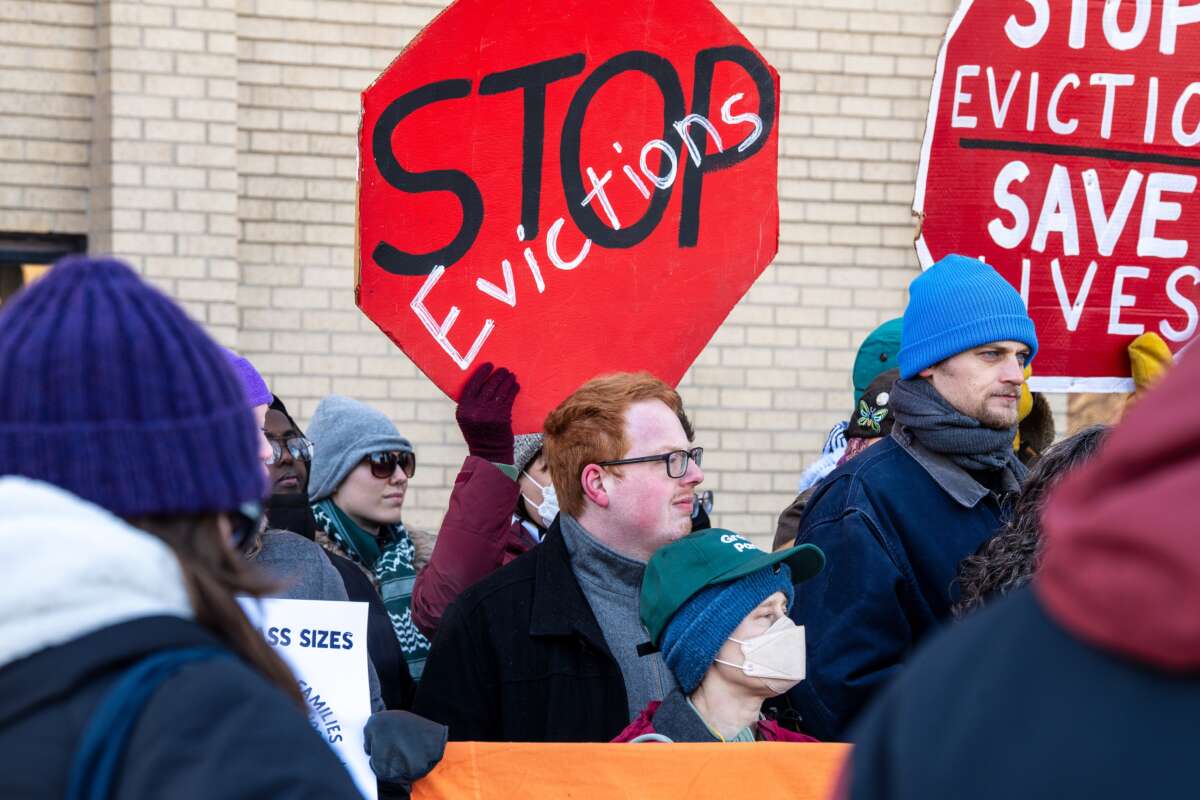
One Minneapolis resident who spoke with Truthout on the condition of anonymity for fear of reprisal due to her and her family’s immigration status said, “I can’t leave. I can’t work. I am absolutely filled with worry.” With her infant crying in the background, the resident said her family was unable to pay February rent and that she has been forced to skip medical appointments for her child for fear of being abducted.
Since the start of Operation Metro Surge, Minneapolis public schools have become sites of organizing for parents and teachers, building mutual aid networks and providing on-the-ground relief to students and families sheltering at home. Minneapolis and St. Paul public schools have optional distance learning policies so undocumented students, or children of undocumented family members, do not feel forced to choose between their education and their families’ safety.
Everything is on the table, Langley and Murad stressed, including lobbying local sheriffs to refuse to enforce eviction warrants and physically standing in the way of evictions in progress, as the front door — for now — is the only thing standing in the way of them being abducted and deported. “Until you experience or at least see an eviction being carried out, you don’t understand how life-altering and traumatic it is,” Langley said.
25 Years of Truthout: An important fundraising appeal
This September, Truthout is celebrating 25 years of publication. For over two decades, we have been a trusted source for fiercely independent journalism thanks to readers like you.
As we look to the next 25 years, we have launched a special fundraising campaign. Looking to a sustainable future for our publication, we have a fundraising goal of $71,000 in the next 5 days.
We are asking for your support at this juncture because we face greater threats than ever before in our organizational history. Trump and his MAGA allies are determined to control the information ecosystem, and movement-based organizations are subject to dangerous censorship and scrutiny.
If you can support Truthout with a one-time or monthly donation, you will make a significant impact on our work and our legacy. Anything you can do makes a difference!