Honest, paywall-free news is rare. Please support our boldly independent journalism with a donation of any size.
The Trump administration is expanding its surveillance of social media — and targeting both documented immigrants and U.S. citizens.
Documented spoke to Emile Ayoub, a senior counsel in the Brennan Center’s Liberty and National Security Program, about a new U.S. Citizenship and Immigration Services (USCIS) vetting rule, greenlit last week, that he says poses a serious threat to privacy and free speech rights.
USCIS acknowledged Documented’s request for comment but did not provide one before time of publishing.
Under the rule, USCIS will collect social media handles and messaging app information from individuals applying to change their immigration status, and may also request information from their family members.
The Brennan Center, together with 41 other organizations, previously submitted comments opposing the rule when it was introduced during the first Trump administration. The Biden administration rejected the rule change in 2021, but the proposal was brought back in Trump’s second term as part of its push to increase the “screening” and “vetting” of immigrants.
In the interview, Ayoub spoke to Documented about the impact of the rule change, why it is raising concerns, and what people should be wary of as USCIS expands its collection of social media information during immigration processes. The conversation below has been edited for length and clarity, and presented in a Q&A format.
Julia Malleck: What is the USCIS rule change about?
Emile Ayoub: The Trump administration has been steadily expanding its data collection efforts, and just last week, it approved USCIS to collect social media handles from legal immigrants and in some cases, from U.S. citizens who are related to those immigrants.
So this is really intended to require the more than three million people who apply each year for immigration status changes — that’s seeking work or travel authorization, a green card or citizenship — to give the government their social media handles, as well as in some cases, the handles of their young children, their spouses and their parents.
What concerns do you have about the rule change?
I think what’s especially concerning about this rule change is that this type of data collection undermines privacy and constitutional rights to free speech, anonymity and association.
In fact, the Trump administration has openly declared that it plans to use social media handles to screen people for speech it doesn’t like. So what’s especially concerning is that people affected by this collection are now faced with a choice that they shouldn’t have to make: either risk retaliation for their online activity, or self-censor.
Do you think the rule change is legal?
I think that the data retention and sharing policies that USCIS and DHS have, violate federal privacy law, and it really enables the continuous surveillance of millions of people in the United States.
You and your colleagues at the Brennan Center filed comments opposing the rule change last year. Could you explain that process, and what concerns were included in your comments?
Absolutely. So, back last year USCIS published a notice that they were seeking to collect social media handles. And the process allows for public comment from anyone, whether it’s nonprofit organizations, citizens, industry associations.
In May, the Brennan Center, along with our colleagues at the Knight First Amendment Institute at Columbia University, submitted comments to USCIS urging them to abandon their proposal. We highlighted the significant costs of their proposal, specifically the threats to privacy, to constitutional rights like I mentioned under the First Amendment, and we also highlighted the fact that social media collection used to screen people for national security threats doesn’t work. There has been evidence — by DHS, by USCIS — that there is little to no value in obtaining the social media handles for this type of screening and vetting.
After those comments are submitted, USCIS reviews the comments and they may update the information collection requests, proceed with their request, change the request. What happened is, after those comments were submitted, USCIS continued with its proposal and offered the public another 30 or 60 days to submit additional comments. We submitted a second set of comments with the Knight First Amendment Institute.
So first, USCIS proposes a plan and then offers the public an ability to comment. Then the office called the Office of Management and Budget (OMB) reviews that plan. And just last week, the OMB approved the USCIS plan for one year.
What happened back in 2021, when the rule was initially rejected?
The Office of Information and Regulatory Affairs (OIRA), in reviewing that request, rejected the proposal, and what it said was that if DHS wanted to come back and implement a policy like this, they need to demonstrate that the practical utility, the usefulness of collecting social media handles on immigration forms, outweighed any monetary and social costs.
The social cost is one of the big things here, right? The social costs are threats to our privacy, our First Amendment protected rights. Those costs are significant, and the actual utility of collecting social media handles is very, very low. [Government officials] said in the emails that were obtained by the Knight First Amendment Institute through a FOIA request that this process added, quote, “no value” and had very little impact on improving screening accuracy of relevant systems.
What advice do you have for immigrants, U.S. citizens and non-citizens in light of the rule change?
I think it’s important for people to understand that the administration’s collection of social media handles will facilitate its stated goal of screening people for speech it doesn’t like. The administration has openly declared it intends to use social media handles for that reason, and immigration officers have been directed to screen people for quote, “hostile attitudes” or “hateful ideology.” And these are vague phrases that have been used to punish and label constitutionally-protected speech. So that’s one thing.
The other thing I would note is social media itself can reveal really intimate personal details, that includes people’s political views, their religious practices, groups and people they might associate with and other sensitive information. And because immigration officers have broad discretion when reviewing applications, the information that they might collect from social media, this intimate information increases a risk of bias in their decision-making process, and that information might be misappropriated for other purposes — not just for the screening and immigration benefit request applications.
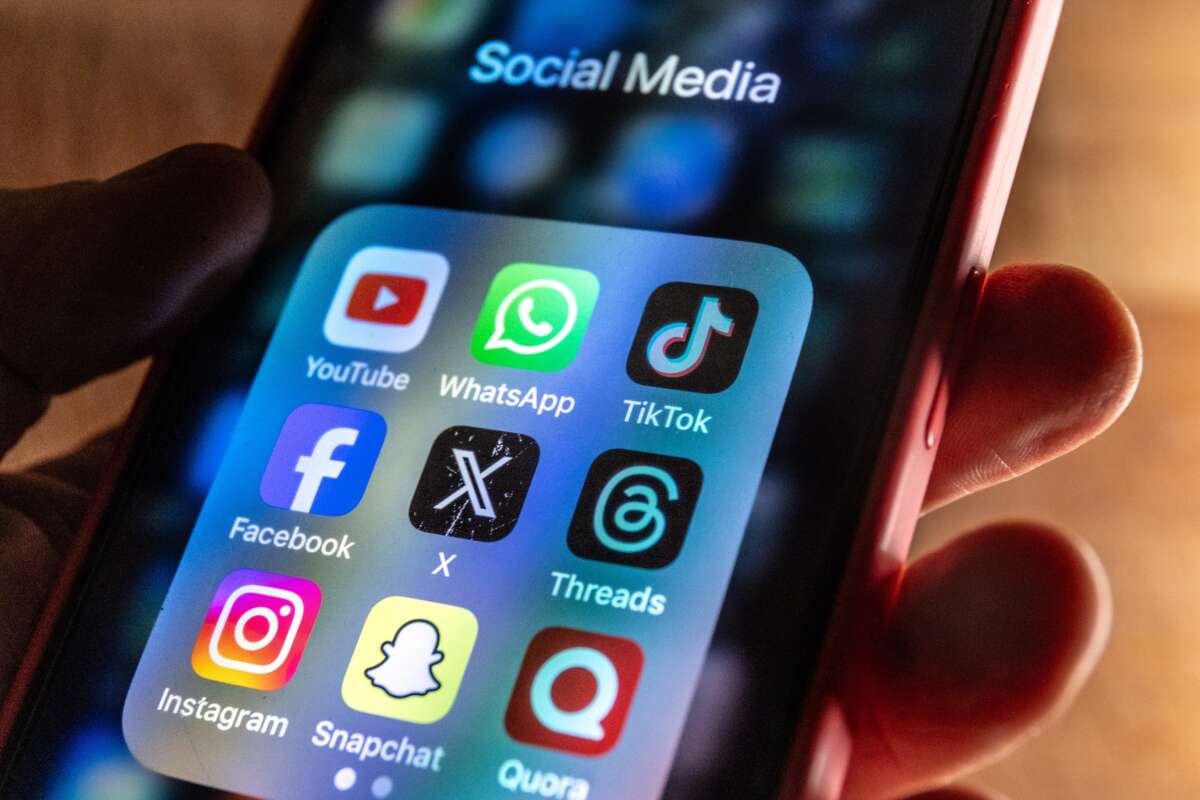
The plan here will require people to submit, not just what you would typically think of as social media — so Facebook or X or Instagram, TikTok and YouTube — but also the handles of messaging services: WhatsApp, Telegram and GroupMe. So this is a significant expansion of the type of data that the government is looking to collect, and I think it further undermines our privacy and our rights to free speech and anonymity and association. So I think it’s just highlighting that this is part and parcel of a significant expansion of data collection efforts by the administration, and it goes far beyond what they would normally need to adjudicate these immigration status requests.
When does the rule change go into effect?
It’s not entirely clear, but I expect, effective immediately. What we expect to see is that these changes will be made on the application forms that immigrants fill out when they’re requesting a change of status.
[Note: OIRA, which published the rule change on Feb. 11, states in the notice that the rule will expire on Feb. 28, 2027.]
Sign up for Early Arrival, Documented’s newsletter, here, and get your immigration and policy news from New York, Washington, and nationwide in your inbox 3x per week.
An important fundraising appeal: 4 Days to raise $32,000
Truthout is one of only a few platforms for justice-oriented, grassroots journalism. Today, as political censorship from the right intensifies, we have no choice but to ask for your help.
We are fundraising right now to cover our basic operating expenses. If you can support Truthout with a one-time or monthly donation, you will make a significant impact on our work. Anything you can do makes a difference — we appreciate your support.