Truthout is a vital news source and a living history of political struggle. If you think our work is valuable, support us with a donation of any size.
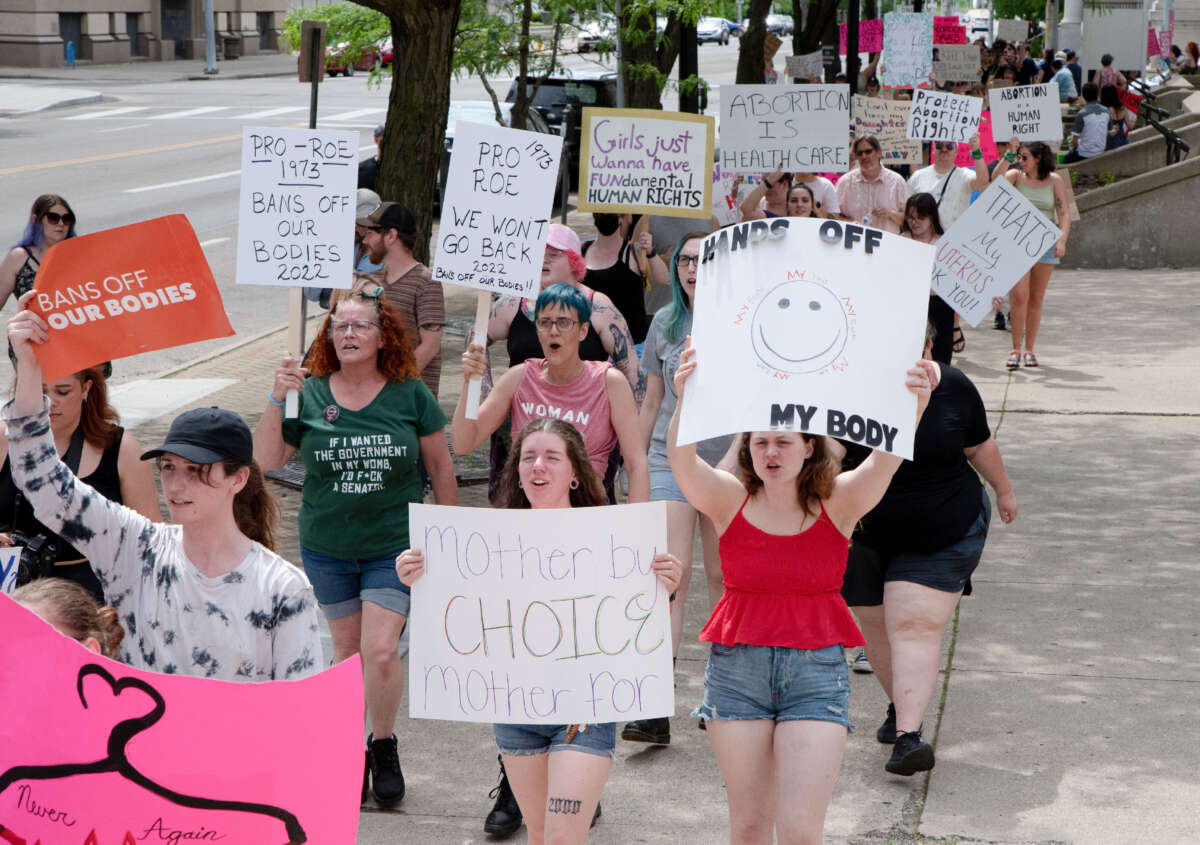
This November, Ohio voters will get to decide whether to enshrine abortion rights in the state constitution, as organizers have collected more than 700,000 signatures to place the question on a ballot initiative.
The signatures have not yet been certified, but any challenges to them are likely to fail, as organizers obtained 710,131 signatures in total — nearly 300,000 more signatures than the amount needed for a ballot initiative to be approved.
If passed, the initiative would undo a 2019 trigger law passed by Republicans, which went into effect in 2022 when the U.S. Supreme Court upended federal abortion rights that were previously protected by Roe v. Wade. That state law restricted abortions after the detection of cardiac activity, usually around six weeks — a standard that physicians widely condemn as unscientific and dangerously burdensome, as it is before many people even know they are pregnant. The 2019 law is currently being blocked by a judicial order.
Conversely, the state amendment would ensure that “every individual has a right to make and carry out one’s own reproductive decisions,” according to its text. That includes the ability to make decisions on contraception, fertility treatment, miscarriage care, how to continue one’s pregnancy, and abortion.
The amendment allows state lawmakers to continue restricting abortion after “fetal viability” — generally understood to be around 24 weeks of pregnancy. But the amendment also states that abortion cannot be prohibited if, “in the professional judgment of the pregnant patient’s treating physician it is necessary to protect the pregnant patient’s life or health.”
If allowed to be on the ballot in November, the amendment will have a high chance of being approved by voters. According to one poll conducted in June, 58 percent of Ohioans agree that there should be safeguards protecting the right to abortion, contraception and fertility treatment, with only 23 percent outright opposing such measures. (Another 20 percent were unsure.)
Advocates for reproductive freedom celebrated the news that organizers were able to obtain more than twice the amount of signatures needed, and predicted that the measure would pass this fall.
“We know that Ohioans, just like our neighbors in Michigan and Kentucky — when they have the opportunity to vote for abortion access, they will,” said Lauren Blauvelt, vice president of Planned Parenthood Advocates of Ohio.
“Ohioans must be able to make our own reproductive health care decisions without political interference because abortions are not political; they are an important safety net that safeguards the wellbeing of all,” said Kellie Copeland, executive director of Pro-Choice Ohio.
Press freedom is under attack
As Trump cracks down on political speech, independent media is increasingly necessary.
Truthout produces reporting you won’t see in the mainstream: journalism from the frontlines of global conflict, interviews with grassroots movement leaders, high-quality legal analysis and more.
Our work is possible thanks to reader support. Help Truthout catalyze change and social justice — make a tax-deductible monthly or one-time donation today.