Did you know that Truthout is a nonprofit and independently funded by readers like you? If you value what we do, please support our work with a donation.
President Donald Trump has issued an executive order declaring that the United States will respond to any attack on Qatar with retributional force toward the aggressor country, including potential use of the U.S. military.
The executive order was issued on Monday but not made public until Wednesday, as Trump was hosting Israeli Prime Minister Benjamin Netanyahu at the White House on Monday. The Israeli government has been at odds with Qatar in the past; earlier this month, Israel launched an attack against the capital city of Doha, where Hamas political negotiators had traveled to discuss a potential ceasefire agreement regarding Israel’s genocide in Gaza.
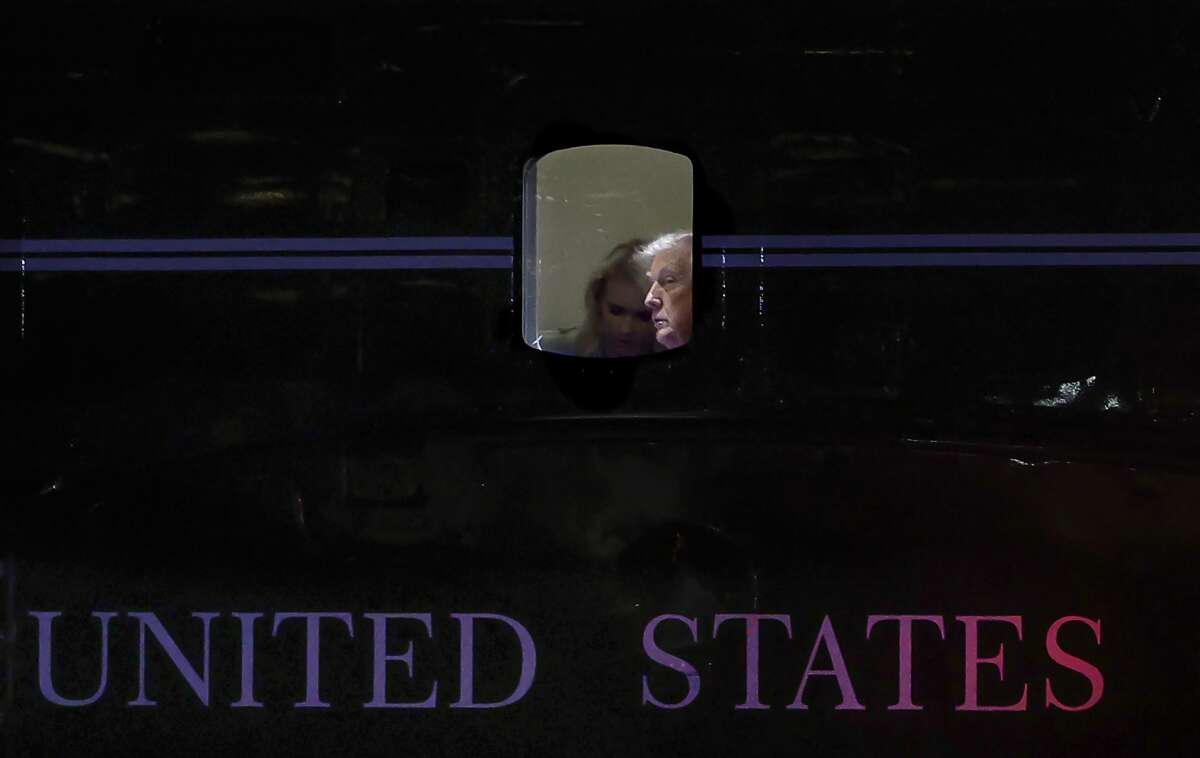
The order comes just months after Trump accepted a 747 jetliner gift from Qatar, worth at least $400 million, in what critics suggested was possibly a direct violation of the Constitution’s restrictions on emoluments from foreign governments.
Qatar is considered a U.S. ally, especially militarily — the country hosts a U.S. Central Command (CENTCOM) military base at Al Udeid Air Base, which is located in Doha. The base has hundreds of military personnel and defense contractors, and is considered essential for the U.S. in terms of its ability to maintain a strategic military presence within the Middle East.
The executive order states that the U.S. “shall regard any armed attack on the territory, sovereignty, or critical infrastructure of the State of Qatar as a threat to the peace and security of the United States,” and that “in the event of such an attack, the United States shall take all lawful and appropriate measures — including diplomatic, economic, and, if necessary, military — to defend the interests of the United States and of the State of Qatar and to restore peace and stability.”
The order justifies the need for such protections due to the cooperation between the two countries, as well as “continuing threats to the State of Qatar posed by foreign aggression” — though the order fails to mention the attack by Israel at all.
Legal observers say that the directive is akin to NATO’s Article V pledge, which stipulates that any member of the multinational organization will come to the defense of another if it is attacked. Notably, that treaty was negotiated and passed through the normal legal channels — including the constitutionally required approval of the U.S. Senate — and not by executive order.
Still, as commander-in-chief, Trump has some legal standing to make such an announcement, though any military action should, in theory, still require congressional approval. (In practice, however, presidents have consistently tested and violated the Constitution’s restrictions on them.)
The executive order is thus mostly about showing support for Qatar, observers noted.
“This isn’t a legally binding, ratified treaty – i.e. one requiring sign-off from the US Senate. It’s in effect a promise that Trump is making using the imprimatur of his office,” read an analysis by CNN’s Aaron Blake. “And it’s not something future presidents will have to abide by.”
But the president’s action is still concerning, as this is not the first time he has sought to usurp the legislative branch. His failure to use appropriate measures to pass a treaty-like agreement may also cast doubts on the legitimacy of his promises, author and international security expert Ankit Panda suggested.
As Panda explained in a recent post on his website:
It matters to the United States, its people, and U.S. allies that assurances and extended deterrence relationships are codified in treaties. … A collective defense arrangement fundamentally pledges the expenditure of American blood and treasure in the potential defense of allies; having elected representatives of the American people (Senators) offer their advice and consent on a treaty isn’t just empty pageantry.
“This component of democratic legitimacy is thus absent in this bizarre new pledge to Qatar, which is entirely of the executive branch’s whims (as so many things are these days),” Panda added. “I’d observe that this makes this assurance fundamentally far less credible than treaty-based assurances.”
Media that fights fascism
Truthout is funded almost entirely by readers — that’s why we can speak truth to power and cut against the mainstream narrative. But independent journalists at Truthout face mounting political repression under Trump.
We rely on your support to survive McCarthyist censorship. Please make a tax-deductible one-time or monthly donation.