Honest, paywall-free news is rare. Please support our boldly independent journalism with a donation of any size.
A Donald Trump-appointed judge who could effectively enact a federal ban on the abortion medication mifepristone privately sought to prevent the public from knowing that a hearing for the case was scheduled in order to prevent protests ahead of the hearing.
District Court Judge Matthew Kacsmaryk, one of the most conservative anti-abortion federal judges in the U.S., recently scheduled the first hearing for the case for Wednesday — but planned to delay putting the hearing on the public docket until late Tuesday, according to sources cited by The Washington Post.
In a conference call with attorneys on Friday, Kacsmaryk said that he didn’t want the hearing to be “disrupted” by possible protests and other forms of dissent, sources said. He asked the attorneys not to share information about the case before Tuesday.
Kacsmaryk’s move is highly unusual, experts say, and a stunning show of a judge attempting to insert opacity in the judicial system and escape public oversight. Public notice is a crucial element of the judicial system and is especially important in cases where millions of Americans could be affected; some experts have suggested that seeking to block public notice of hearings should disqualify Kacsmaryk from being able to serve.
Carolina Kitchener, one of the reporters who uncovered the news of Kacsmaryk’s move for The Washington Post, noted that delaying notice of the hearing until Tuesday would likely mean that protesters coming from outside of Amarillo, Texas, where the case will be heard, would not be able to make it in time to voice their opposition — and journalists would also have an extremely hard time getting to the court in time to report on the hearing.
“An important piece of this: Amarillo is really hard to get to. A five hour drive or a flight from Dallas. If Kacsmaryk had publicized this Tuesday night, as planned, very few journalists or advocates from other states would have been able to show up Wednesday morning,” Kitchener wrote on Twitter. “When I went last month, it took me nine hours door to door from NYC.”
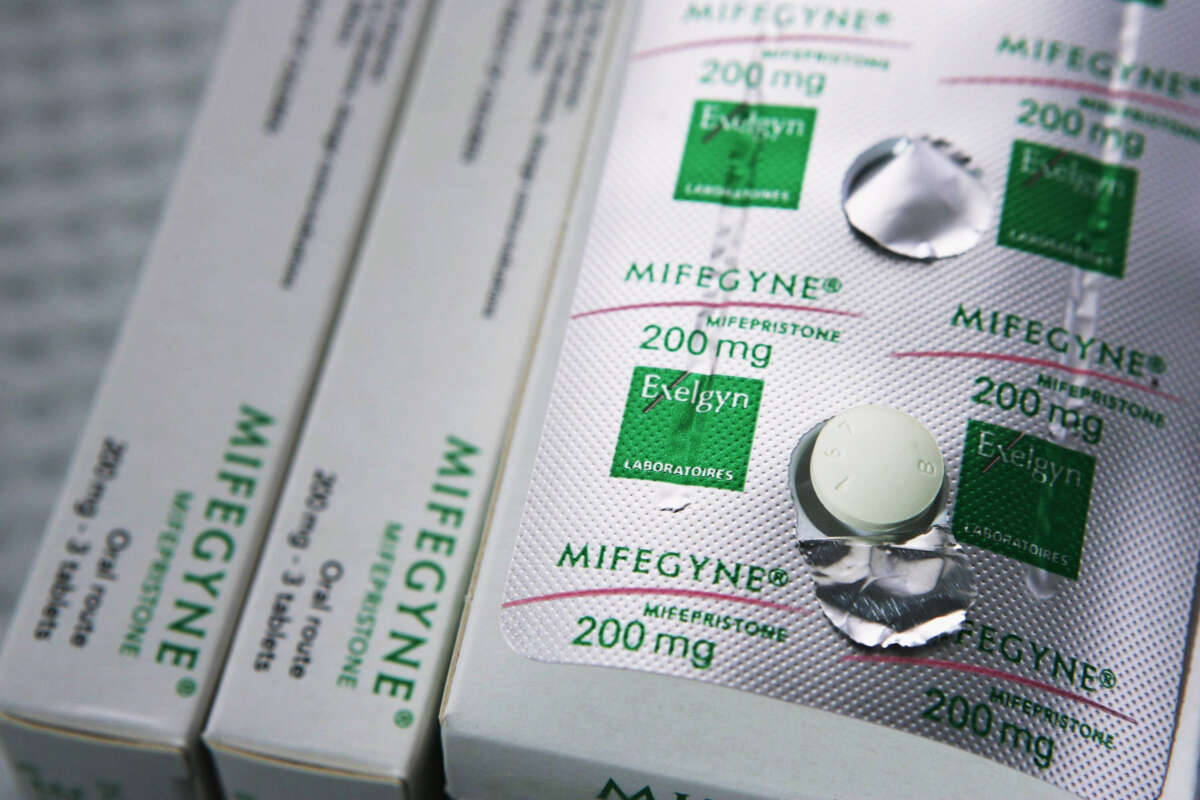
The case could have huge ramifications. Kacsmaryk is expected to rule that the Food and Drug Administration’s (FDA) approval of mifepristone in 2000 never should have happened, ordering the agency to revoke the decision. Though federal judges don’t have power to slash the FDA’s decisions this way, the FDA, perhaps seeking to avoid legal troubles, could choose to comply with the order, law professors recently noted in Slate.
If this happens, mifepristone could be banned from distribution across the country — an outcome that abortion advocates say would be “catastrophic.” Mifepristone is the first of two drugs used in many abortion procedures, in conjunction with misoprostol. Mifepristone is also used for many other crucial procedures and treatments other than abortion, like cervical ripening for insertion of IUDs, a form of birth control, and to treat Cushing’s syndrome, a hormonal disorder.
Medication abortions, which are the most common form of abortion, will still be able to be administered through misoprostol alone, but research has shown that the misoprostol-only method is less effective than the two-drug combination, and can have more side effects, like cramping and bleeding.
If Kacsmaryk does rule to overturn the FDA’s approval of mifepristone, it would likely be an unprecedented decision that could have wide-ranging effects over the federal government’s ability to regulate other drugs, experts say. This could be extremely dangerous, as far right activists have already been waging judicial attacks on medications like HIV prevention drug PrEP because of its disproportionate effect in saving lives in the LGBTQ community.
An important fundraising appeal: We still need to raise $9,000
Truthout is one of only a few platforms for justice-oriented, grassroots journalism. Today, as political censorship from the right intensifies, we have no choice but to ask for your help.
We are fundraising right now to cover our basic operating expenses. If you can support Truthout with a one-time or monthly donation, you will make a significant impact on our work. Anything you can do makes a difference — we appreciate your support.