Honest, paywall-free news is rare. Please support our boldly independent journalism with a donation of any size.
There is no origin story of the police without the story of the reorganization of human society by the birth, expansion, and dominance of the system of capitalism. While capitalism did not create inequality, it structured society such that new methods and tools were required to impose its uniquely unequal order — with threat of, and acts of, violence — in new ways. The police became one of the most important tools, specially adapted to fit the contours of this new social order.
During the early decades of capitalist development — first in England, then the United States — uprisings, rebellions, and strikes became commonplace. The participants were what elites would come to describe as “the dangerous class,” which included white workers, immigrants, and enslaved and free Black people. At this point, the existing precursors to the police were attempts by the ruling class to organize and manage the urban environment. The emergence of the mob and the restive crowd posed a massive challenge to the urban order and thus required new solutions.
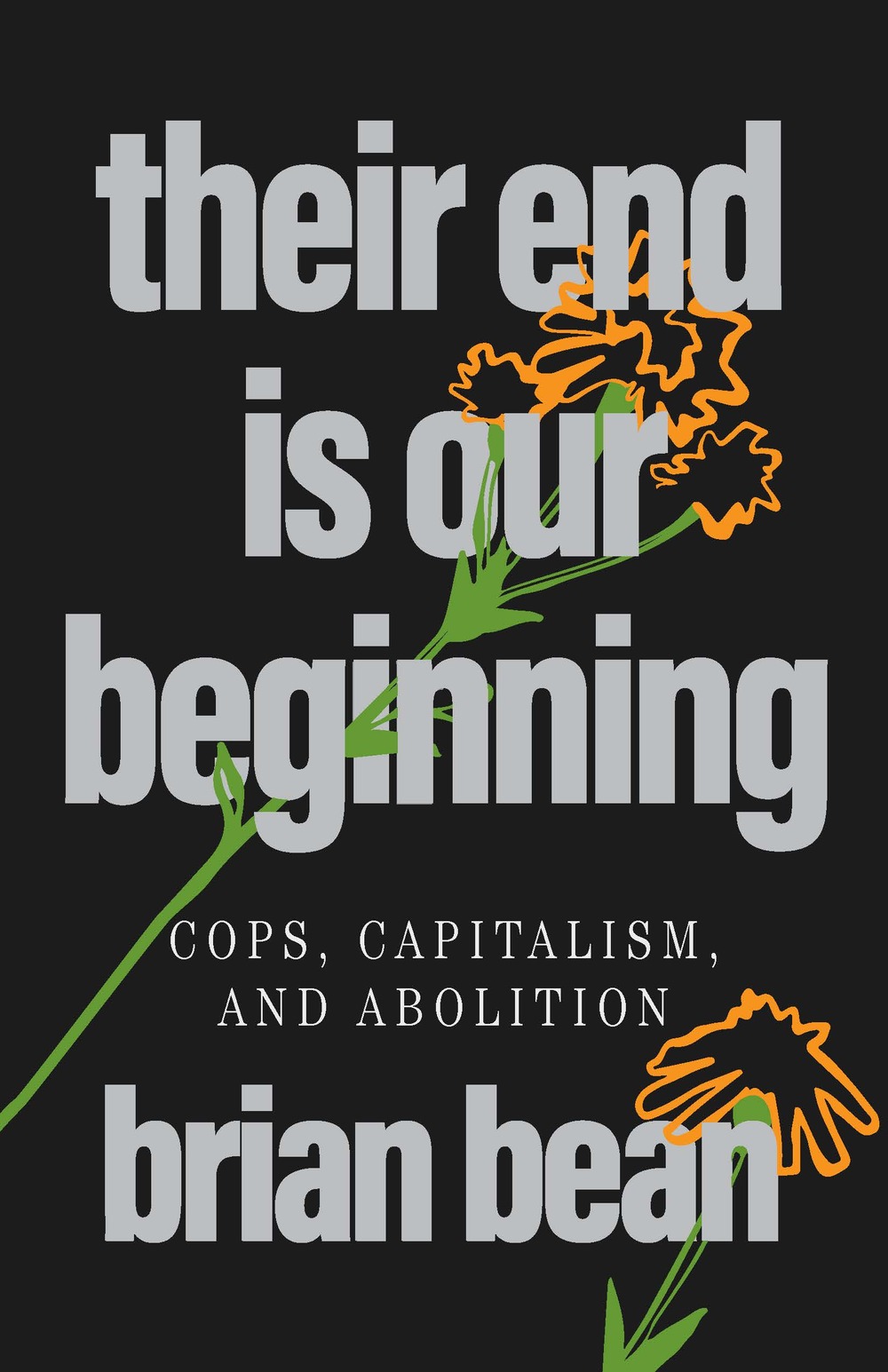
The hope and rebelliousness of the “dangerous class” grew with the promise of the American, French, and especially Haitian revolutions, which reverberated through the networks of the revolutionary Atlantic. Ruling classes found the spread of uprisings increasingly worrisome and unmanageable. Since the working class was largely employed in port cities, they were concentrated at nodal points of Atlantic trade, connected by news and word of mouth to these revolutionary developments even if they weren’t personally able to participate. The revolutionary waves created a profound problem for the capitalist class: How could they maintain control over the working masses in this context of revolt and compel them to dutifully submit to exploitation?
His Majesty King Mob
For about a week in June 1780, London was shaken by what some consider the most significant urban rebellion England has ever faced. Nominally instigated by progressive legislation to ease discrimination against Catholics, it detonated deep resentment against the wealthy and their fledgling carceral system. What became known as the Gordon Riots — in which two Afro-American radicals, John Glover and Benjamin Bowsey, and a Black woman, Charlotte Gardiner, played leadership roles — saw, day after day, workers, armed with everything from rifles to frying pans, roaming the streets, openly plundering of the homes of aristocrats, looting and destroying the homes of judges and magistrates, and attacking the properties of industrialists. Newgate Prison — London’s largest — and several other jails were burned to the ground, while workers freed hundreds of prisoners on a single night. The offices of the Bow Street Runners, a police precursor, were raided and their records torched. In what could be described as a near revolution, Parliament and the Bank of England almost fell to the uprising. Graffiti on the walls of the ruins of Newgate Prison proclaimed that the inmates had been released on the “authority of His Majesty King Mob.” A nascent abolitionist sentiment of the participants can be heard in the later courtroom testimony of one of the liberators, who was asked by the judge about the “cause” of the riots. His reply: “There should not be a prison standing on the morrow in London.” Military encampments were built in parks, and, ultimately, it would take the army reoccupying the city to wrest control from King Mob, leaving four hundred to five hundred dead.
The existing system of magistrates and constables completely failed to stem or slow the Gordon Riots. Subsequently, Parliament was unanimous that a new system of public order was needed to prevent any future insurrectionary occurrence that marked “every property” as target for appropriation by the unruly crowd. While it is too simple to see the creation of the municipal police in London and elsewhere as a direct response to a single riotous act, events like the liberation of Newgate Prison instilled the ruling-class experiments to manage unruly workers with a new urgency and seriousness. In England and elsewhere, the new class of the free, enslaved, and dispossessed peoples not only resisted the new order but actively attacked it. It was directly because of the Gordon Riots that the first bill was introduced in Parliament for a “system of police” in 1785; although it failed to pass. Prime Minister William Pitt argued that a solution was needed that was more efficient, cheaper, and would provoke less alarm than resorting to the army.
Within the workplace — and the workhouse — employers devised all manner of disciplinary regimes to keep workers “in their place.” Outside the factory gates, however, workers were beyond the immediate command and control of the bosses. Here, they could commiserate, air grievances, and — worst of all from the bosses’ point of view — discuss ways to collectively fight back. This presented a volatile situation. At the time, the only real recourse that constables had for managing crowds was the reading of the Riot Act, a proclamation ordering dispersal that was read aloud to crowds deemed unruly or threatening to public order. Failure to comply exempted vigilantes and mobs from legal recourse when the crowd was then violently suppressed. However, this strategy proved less and less useful as the size of crowds increased with the dramatic growth of the urban proletariat. The size of the crowd could simply overwhelm the constable, as happened in 1792 in Edinburgh, during protests in solidarity with the French Revolution, where a sheriff sauntered up to the angry crowd, read the Riot Act, and was promptly run off by a hail of stones.
Though the ruling class did its best to keep Black and white laborers divided, there were also instances where these two oppressed milieus converged and linked arms in struggle. Throughout the seventeenth and eighteenth centuries, multiracial rebellions — in 1676 in Virginia or in 1683 in Barbados, for example — were met with legal strictures that forbade trade, running away with, and many other interactions. As Ben Brucato has written, the goal of such restrictions was “to encourage the growing division between white and Black worker.” In New York City, in 1712 and in 1741, attempts at insurrection and revolutionary arson were organized together by enslaved Africans, Irish immigrant dock workers, and poor whites, which almost burned the city to the ground. Especially in the port cities, such cooperation made it “hard to police” these “dangerously insurrectionary connections,” according to historian Ira Berlin.
Overall, 70 percent of America’s cities with a population over twenty thousand saw major disorder in the first half of the nineteenth century, and the threat of slave rebellion haunted the slavocracy in the South. London experienced major riots almost every year of the second decade of the nineteenth century, and revolt was openly feared by those in power. Between 1825 and 1830, New York City saw riots once a month. In Paris, food riots were commonplace in the latter half of the eighteenth century, but the commissaires were notably absent when they happened. One commissaire reported that, if he left his home, he would be “assailed and plundered by the crazed populace.” In 1775, the Flour Wars, riots of Gordon-level explosiveness, rocked Paris. Only one brave — or stupid — commissaire attempted to quell them, but he quickly found himself impotent to stop them and ended up being forced by the crowd to help disperse bread at the “price” set by the rioters. Historian Eric Hobsbawm writes that these unruly expressions of crowds, looting, and machine-breaking were “a traditional and established part of the industrial conflict … in the early stages of the factory and mine” in what he calls “collective bargaining by riot.” This political situation was described by a conventional police historian, who bemoaned the fact that
It was not difficult for political extremists to secure the following of a mob, incite them to rise, and lead them in a march upon Parliament. Mobs which marched on Parliament usually carried some grievances, real or imagined, which they hoped Parliament would redress. It was not unusual that mobs were unruly, destructive, and bore little regard for the well being of local residents and their property.
This relative ease of resistance — even if it was not able to culminate in victory for the underclasses — stoked the fear and contempt of the ruling classes.
“We Must Break the Yoke”: Insurrection in the Slavocracy
If we jump back to the American South, we can see how urbanization produced similar changes to the institution of the slave patrol. Urbanization moved and consolidated the free Black and enslaved populations into cities, a process described by historian Julius Scott as one of the “key demographic trends of the early national period.” In Charleston, for example, the number of free Black inhabitants more than tripled from 1790 to 1820. This process was driven by rapid industrialization in the South that also had a tremendous impact upon the enslaved population. Although field work was still predominant, enslavers began leasing out individuals for work, meaning enslaved Blacks worked more and more in the textile mills, iron works, mines, tobacco factories, hemp factories, and tanneries of the cities. Free and enslaved Black artisans and “hired out” workers all took part in a sort of quasi-proletarianization. The process would be a factor in the doubling of the industrial output of the South by the mid-nineteenth century. But the urbanization of the South also brought increasing fears of revolt and required changes in the apparatus of repression.
Revolts of the enslaved — from the Stono rebellion to the German Coast uprising to Gabriel Prosser’s rebellion to Nat Turner’s revolt — struck fear into the hearts of the slave-owning ruling class, and, as resistance from below became ever more difficult to manage, the slavocracy opted for more professionalized and reliable ways of containing it. There was great anxiety about the events in Jamaica, where, in 1739, fugitive maroon communities in the mountains united and fought a guerilla war with the British to a standstill, winning the maroons limited autonomy. But few things haunted the enslavers more than the example set by the Haitian Revolution, which began in 1791 and culminated in the liberation of the island’s Black population, giving enslaved people in the United States more confidence in rebellions. In 1796, a number of Black citizens of Charleston were executed for a large-scale plot to burn the city to the ground; they were described as having “intended to make a St. Domingo business of it” (St. Domingo was the name used for Haiti at the time). Fears sparked by the success of the Haitian Revolution provoked ports from Charleston to Boston to ban, and in some places deport, Black people originating from the Caribbean. Social controls like curfews and restrictions on movement targeted Black folks — free as well as enslaved. But these were difficult to enforce with ad hoc bands of vigilantes.
While the enslaver class relied upon the cities, they also strove to keep the social space of the labor camp and the city separate, fearing that field workers would be “ruined” by exposure to the cosmopolitan interconnections and propensity to revolt of the free Black and proletarianized enslaved workers of the city. The hiring-out system expanded the already existing networks of communication and connection between the rural and the urban. Moreover, the various legal restrictions proved unable to completely regulate city workers, to the point where “neither owners nor municipal officials could effectively monitor the enslaved bricklayers, carpenters, painters, and other craft workers who traveled freely around the city and surrounding countryside.” It was from these craft workers that many of the ranks and leaders of major attempted revolts emerged, such as Gabriel Prosser (a blacksmith) or Denmark Vesey (a carpenter).
The white ruling class in Charleston, a city that was 60 percent Black in 1820, acted on its anxieties with a more intensive and professionalized watch system than other contemporary cities in the form of the City Watch and Guard. This was especially the case on Sundays, market days when movement and interaction were freer among both the enslaved and free Black majority population. It was on these days that — similar to Barbados — day patrols of musket-armed and blue-uniformed squads would “observe and suppress indecent or riotous behavior” at the markets. In the time before the invention of the modern police, it is no coincidence that Charleston, as David Whitehouse points out, was the most heavily policed major city in the US and also “the only one where a majority of the people were enslaved.”
Then, in 1822, a planned insurrection in Charleston was uncovered that confirmed the worst fears of the white slave-owning class. The conspiracy consisted of an extensive network in both the city and labor camps, with a plan to assassinate key officials, loot weapons depots, kill as many whites as possible, set fire to the city, and either escape on boats to Haiti (where revolt leader Denmark Vesey reportedly had contacts) or establish an armed outpost of freedom. Although the plan was aborted before attempted, and thirty-five people were hanged in response, the planned insurrection reflected the explosive potential of Black rebellion and the challenges of the city.
In 1822, in direct response to the thwarting of the planned slave insurrection of Denmark Vesey and his comrades, a daytime patrol was created. By 1856, this patrol had become fully incorporated into a modern uniformed police force. The escalation in repression required the creation of a new organization with more permanent and centralized authority than the slave patrols. A Charlestonian enslaver in 1845 described the change in a perversely matter-of-fact way:
[In the rural setting] the mere occasional riding about and general supervision of a patrol may be sufficient. But, some more energetic and scrutinizing system is absolutely necessary in cities, where from the very denseness of population and closely contiguous settlements there must be need of closer and more careful circumspection.
While it is somewhat simplistic to see the slave patrol as simply turning into the modern police via linear progression, there is an unbroken blue line in the history of the U.S. South from the experiments of the slave patrol to the formation of the modern police, as the private violence of the labor camp was moved into the public city.
Two years before the Denmark Vesey conspiracy, on August 16, 1819, in Manchester, England’s industrial center, one hundred thousand workers marched in organized columns onto St. Peter’s Field as part of a demonstration for suffrage and for the lowering of food prices. This was the culmination of a years-long process of organizing and politicization in which the working class progressed from hunger marches to strikes, to a General Union expressly forbidden by law, to political organizations fighting for radical democracy. The same year witnessed illegal unions parading in the streets, while state attempts to arrest the reformers proved inadequate when juries refused to find them guilty. Here, arrayed on St. Peter’s Field, “King Mob” now appeared as a disciplined army. The volunteer yeomanry militia was sent in first to disperse the protests and arrest one of the leaders, Henry Hunt. The yeomanry was comprised of volunteers drawn from bosses and shop owners — the equivalent of the “cities business mafia”— and thus its members were recognizably from the same class responsible for abuses, hoarding of grain, and driving up of prices: the very target of the workers’ anger. Workers fought to stop the raid and the arrest of Hunt, carrying out a “de-arrest,” to use contemporary parlance. In response, the waiting English military charged the crowd and committed what came to be known as the Peterloo Massacre, in which eleven were killed and four hundred injured. This act of brutal repression had the opposite effect to quelling the protests. Several nights of rioting and unrest in Manchester and surrounding towns followed. A military occupation was required to quell the resistance.
This bloody event created scores of working-class martyrs and provoked an uproar and radicalization. Some sections of the movement began amassing arms in defense, training for military action, and spreading calls for “revenge for Peterloo.” The radical wing of the workers’ movement began agitating for an insurrection against the government to occur in November 1819. “Reform cannot be achieved without bloodshed,” one radical publication proclaimed. Although the more conservative leadership called off the armed rising, the political mood can be seen in the report of a police informant who attended a delegate meeting representing 12,500 workers. The spy stated that workers had begun arming themselves to prepare and that there was “much regret on the part of many” that the insurrection had been called off. One speaker railed, “If we had met all over England on that day the business would have been done before now.” An 1820 editorial in the London Times lamented, “Radicalism is every day most alarmingly and portentously increasing; and will, we predict more and more, till, without change, … end is certain.” A relatively new urban ruling class was frightened and still determining how to control the emergence of the powerful new working class.
For the ruling classes, this problem was ultimately solved via the modern police force. Of course, organized repression and violence have been used by the ruling class for as long as there have been class divisions, but modern policing is a very specific kind of repressive institution with a number of historically unique features. Some histories simplify the process of emergence and present it as proceeding from either London or the slave patrols directly to the modern police. A closer reading of history reveals that modern cops came about as the preferred tool through a process of ruling-class experimentation, rooted in different repressive precursors and different institutional inertias, but nonetheless a conscientious process of mutual borrowing and sharing experiences.
25 Years of Truthout: An important fundraising appeal
This September, Truthout is celebrating 25 years of publication. For over two decades, we have been a trusted source for fiercely independent journalism thanks to readers like you.
As we look to the next 25 years, we have launched a special fundraising campaign. Looking to a sustainable future for our publication, we have a fundraising goal of $71,000 in the next 5 days.
We are asking for your support at this juncture because we face greater threats than ever before in our organizational history. Trump and his MAGA allies are determined to control the information ecosystem, and movement-based organizations are subject to dangerous censorship and scrutiny.
If you can support Truthout with a one-time or monthly donation, you will make a significant impact on our work and our legacy. Anything you can do makes a difference!