Did you know that Truthout is a nonprofit and independently funded by readers like you? If you value what we do, please support our work with a donation.
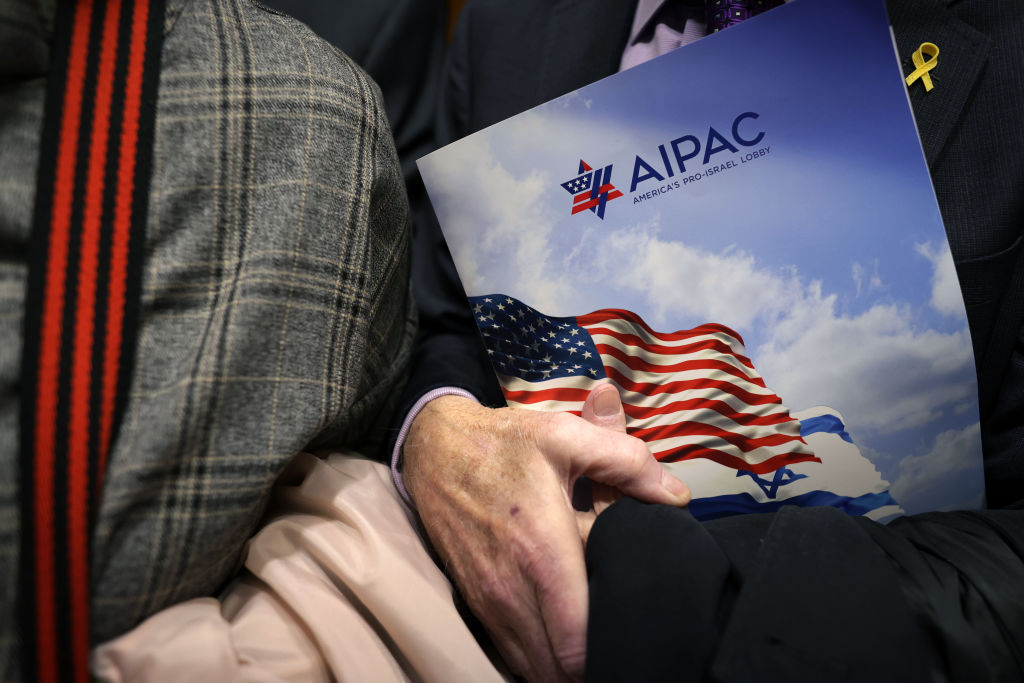
Rep. Seth Moulton of Massachusetts made a surprising announcement last month: The moderate Democrat said he would no longer accept donations from the American Israel Public Affairs Committee (AIPAC).
Spurning AIPAC was not, on its face, shocking. In the more than two years since Israel’s onslaught in Gaza began, numerous members of Congress have pledged not to accept money from the lobby, all from the more progressive wing of the Democratic Party. But for Moulton, who leans heavily on his background as a Marine who served multiple tours in Iraq, to join that cohort was surprising. Now gearing up for a potentially bruising primary as he challenges progressive stalwart Ed Markey for his Senate seat, Moulton apparently decided that turning his back on AIPAC and its allies was more politically advantageous than costly.
The growing list of members of Congress rejecting funding from AIPAC and other pro-Israel groups marks a stark turnaround from the primacy those organizations recently held in the halls of power.
For decades, AIPAC focused entirely on lobbying members of Congress and did not directly support individual candidates. That changed in 2021, when AIPAC launched several Political Action Committees (PACs) expressly designed to help pro-Israel candidates win their races. These PACs — the awkwardly named AIPAC PAC and the AIPAC-affiliated Super PAC, United Democracy Project — quickly became major players in the national political scene. They were soon joined by other pro-Israel PACs, most prominently Democratic Majority for Israel, whose leadership was closely aligned with AIPAC.
In 2022, these groups spent nearly $60 million in direct support or on behalf of candidates, placing AIPAC and its affiliates among the top 10 spenders that cycle. Among their targets was Michigan Rep. Andy Levin, a Jewish member of Congress and president of his synagogue. After 2020 redistricting that merged Levin’s district with that of another Democrat, Haley Stevens, the two faced off in the Democratic primary. AIPAC and its allies, apparently upset over Levin’s critique of Israel’s illegal annexation of Palestinian territory, poured more than $4 million into backing Stevens, who won the nomination handily.
Rep. Seth Moulton apparently decided that turning his back on AIPAC and its allies was more politically advantageous than costly.
In 2024, AIPAC’s reach broadened further. In the first major election cycle after October 7, AIPAC targeted some of Israel’s harshest critics in Congress, spending heavily to unseat progressives like Cori Bush and Jamaal Bowman. It spent a “record-shattering” $14.5 million to support George Latimer against Bowman, and another $8.5 million in St. Louis in support of Wesley Bell against Bush. Both Bowman and Bush were defeated. (The AIPAC watchdog site Track AIPAC rates Bell and Latimer as the top all-time recipients of AIPAC donations.)
By the end of the primary season, progressives and critics of Israel’s Gaza policy were publicly despairing. Bernie Sanders warned that AIPAC’s success would embolden the lobby to suppress critical voices wherever it found them.
Then, something shifted. As Israel’s assault ground on, public sentiment on Israel-Palestine began to fracture. Surveys in mid-2024 showed clear divides in American opinion, with younger people and Democrats increasingly saying the Biden administration was too favorable toward Israel. Within the Democratic Party, these splits were even sharper: Nearly 50 percent of Democrats aged 18–29 said they sympathized more with Palestinians, compared with only 17 percent of those over 65.
These intraparty tensions were amplified by the Uncommitted movement, which urged Democratic voters in key states to select “uncommitted” during the party’s primary to protest the administration’s stance. In swing-state Michigan, the movement garnered more than 100,000 votes. Rifts deepened further when Democratic National Convention organizers denied speaking time to Ruwa Romman, a Palestinian-American Georgia House Representative recommended by the movement.
Meanwhile, coalitions like Reject AIPAC pressed members of Congress to declare they would refuse AIPAC’s funding. By late 2024, with Kamala Harris facing Donald Trump in the general election, the Biden administration’s unqualified support for Israel had become a top issue. Harris, unwilling or unable to distance herself from Biden’s legacy, gave voters little reason to expect a shift in policy.
Ultimately, Harris hemorrhaged support among constituencies crucial to Biden’s 2020 win. Her backing among voters aged 18 to 49 dropped by 10 points from Biden’s 17-point margin in 2020. A pre-election analysis also showed that her support among Muslim voters lagged far behind Biden’s. In swing states like Michigan — where Harris lost by just over 80,000 votes — the significance of the more than 100,000 Uncommitted primary voters in that state was impossible to ignore. While the Uncommitted movement had aimed to serve as a warning to Democrats about the electoral liabilities of its Gaza policy via mounting a protest in the Democratic primaries, it had now become a grim predictor of Democrats’ weakness in the general election.
Now, still reeling from their 2024 wipeout, and with Democratic support for Israel continuing to crater through 2025, the party finds itself at a crossroads. Many Democrats have decided that the electoral risks of taking AIPAC money now outweigh the benefits.
Moulton is just one striking example of how quickly the tide is turning. Recently, former Missouri Rep. Cori Bush announced she would run again for her old seat, directly challenging the AIPAC-backed candidate Bell who unseated her last year. That Bush is mounting a comeback so quickly underscores how rapidly Bell’s close ties to the pro-Israel lobby have shifted from a strength to a liability.
This pattern is emerging elsewhere as well. In New York City, where Zohran Mamdani won the mayorship thanks in part to his support for Palestinian rights, progressives are eyeing multiple congressional seats — including that of House Minority Leader Hakeem Jeffries — for primary challenges. Many of the representatives currently holding these seats — including Jeffries, Dan Goldman, and Ritchie Torres — are well-known for their close ties to the pro-Israel lobby. Torres, for example, has sponsored bills in Congress that lean heavily into AIPAC-promoted narratives about antisemitism on college campuses. He has also gained a reputation as one of the most ardent defender of Israel’s actions in Gaza on social media. Goldman, meanwhile, has been one of the most unwavering voices in supporting Israel’s “right to defend itself.”
Progressives are betting that these affiliations, plus general outrage with mainstream Democrats’ feeble response to the Trump administration, will propel progressive challengers to victory.
As the political landscape continues to shift, the coming cycles may determine whether AIPAC can retain its once-unassailable influence
With such a dramatic swing of the pendulum, the ball now appears to be back in AIPAC’s court. After funding the two most expensive Democratic primaries in history in 2024, AIPAC and its allies are likely to enter the 2026 cycle with ample resources. Whether the same scorched-earth spending strategy remains politically viable is unclear. The lobby will undoubtedly work to defend its closest allies and beat back challengers like Bush and the New York progressives. But it will have to consider how visibly it operates. Its reputation took another hit after Zohran Mamdani defeated Andrew Cuomo — twice — despite Cuomo’s vocal backing from pro-Israel billionaires and donors tied to Donald Trump, many of whom tried to make Mamdani’s criticism of Israel a central campaign issue.
This does not, of course, mean that AIPAC will relent in its quest to influence electoral outcomes within the Democratic primary. It does mean, however, that it may have to go to lengths to either obscure or downplay its role in campaign contributions and independent expenditures on behalf of candidates.
AIPAC and its affiliates have long obscured their actual gripes with candidates they oppose in political advertising — their stances on Israel — instead focusing on those candidates’ stances on controversial domestic policies. They may push this trend further in coming cycles, making it harder for the average voter to determine when they’re subjected to messaging from the pro-Israel lobby.
Whether this will be an effective adjustment in its strategy remains to be seen. As the political landscape continues to shift, the coming cycles may determine whether AIPAC can retain its once-unassailable influence — or whether rising skepticism of U.S. support for Israel signals a lasting realignment among Democrats.
Press freedom is under attack
As Trump cracks down on political speech, independent media is increasingly necessary.
Truthout produces reporting you won’t see in the mainstream: journalism from the frontlines of global conflict, interviews with grassroots movement leaders, high-quality legal analysis and more.
Our work is possible thanks to reader support. Help Truthout catalyze change and social justice — make a tax-deductible monthly or one-time donation today.