Support justice-driven, accurate and transparent news — make a quick donation to Truthout today!
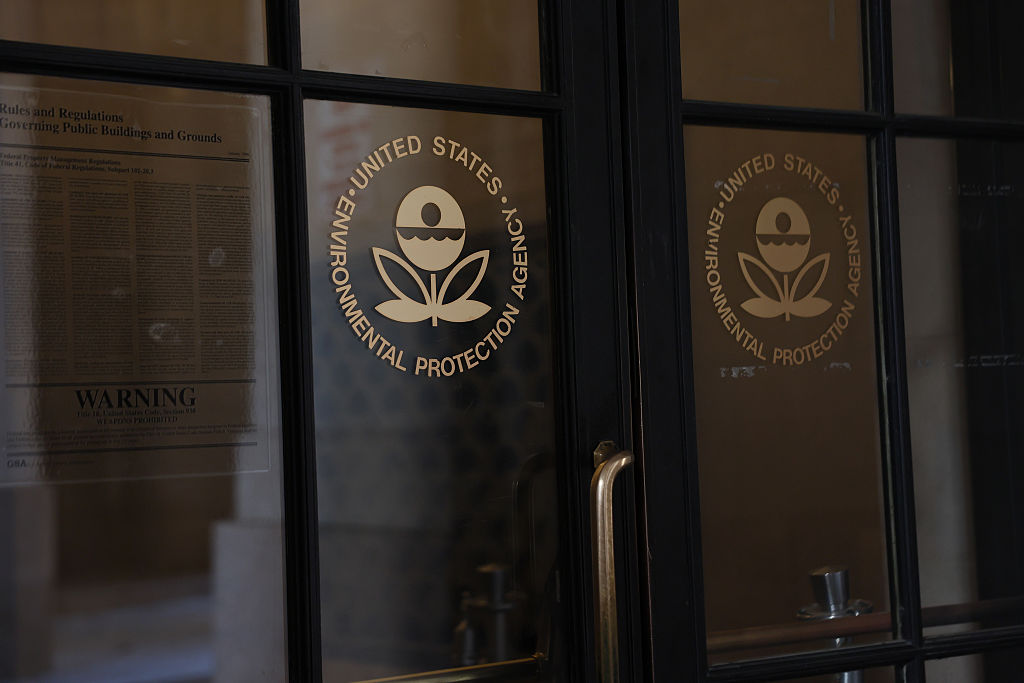
Two lawsuits filed Wednesday in the D.C. Circuit Court of Appeals mark the beginning of a rocky legal road for the Environmental Protection Agency following its reversal of a 2009 rule underpinning federal regulation of greenhouse gas emissions.
The challenges include a lawsuit brought against both the EPA and its administrator, Lee Zeldin, by a coalition of 17 health and environmental groups, as well as a suit filed on behalf of 18 youths across the United States.
Created in the wake of a 2007 Supreme Court decision, Massachusetts v. EPA, which unambiguously held that greenhouse gases are pollutants under the Clean Air Act, the 2009 endangerment finding states that current or projected concentrations of greenhouse gases “threaten the public health and welfare of current and future generations.”
Reversing the 17-year-old scientific finding effectively undermines the EPA’s authority to regulate greenhouse gas emissions from sectors such as motor vehicles and power plants.
“This repeal has no basis in law, science or reality, and human health is at extreme risk,” Georges Benjamin, the executive director of the American Public Health Association, said in a Wednesday press conference. “The Trump administration is making climate denialism the official government policy and undercutting the EPA’s ability to act.”
In a White House press conference last week, President Donald Trump hailed the endangerment finding reversal as “the single largest deregulatory action in American history.”
The EPA is attempting “an end run” around the 2007 Supreme Court decision, said the Sierra Club’s Andres Restrepo, senior attorney for the organization’s environmental law program. “They’re relying on what is clearly a mischaracterization of that decision,” Restrepo said.
“EPA is bound by the laws established by Congress, including under the CAA [Clean Air Act]. Congress never intended to give EPA authority to impose GHG [greenhouse gas regulations] for cars and trucks,” the agency wrote in a statement to Inside Climate News, following the lawsuits’ filing on Wednesday.
The lawsuit brought by environmental and health groups, including the Sierra Club, will challenge the EPA’s attempt to bypass the Supreme Court’s Massachusetts v. EPA decision and abandon responsibility for protecting citizens from greenhouse gas emissions, Restrepo said.
The EPA has said its decision is based on legal doctrine, not climate science, and has had to distance itself from the “Climate Working Group” of prominent climate skeptics cited in the original proposal to reverse the endangerment finding. The scientific community widely criticized the findings of the working group, and a federal judge ruled that Energy Secretary Chris Wright violated the Federal Advisory Committee Act by establishing the group.
“EPA carefully considered and reevaluated the legal foundation of the 2009 Endangerment Finding, the text of the CAA [Clean Air Act], and the Endangerment Finding’s legality in light of subsequent legal developments and court decisions,” the agency’s press office told Inside Climate News. “Unlike our predecessors, the Trump EPA is committed to following the law exactly as it is written and as Congress intended — not as others might wish it to be.”
Though the agency is no longer making a scientific argument for the repeal of the endangerment finding, science and health experts say the decision amounts to climate denialism.
“Simply put, there is no way to make the agency’s statutory claims without fundamentally misreading the science,” said Carlos Javier Martinez, a senior climate scientist with the Union of Concerned Scientists. “Scientifically, this decision by the Environmental Protection Agency is reckless, illogical and ignores the vast majority of public comments.”
The Alliance of Nurses for a Healthy Environment is among several health organizations joining the suit, along with the American Public Health Association, the American Lung Association and Physicians for Social Responsibility.
“We need to call the Trump Administration’s repeal of the Engagement Finding what it is — climate denialism and the EPA abandoning its responsibility to protect us from climate change,” said Katie Huffling, a doctor of nursing practice and executive director of the Alliance of Nurses for a Healthy Environment, in a statement issued Wednesday.
While the coalition’s lawsuit will challenge the EPA’s reading of Supreme Court precedent, a second lawsuit brought against the agency by legal nonprofits Our Children’s Trust and Public Justice on behalf of 18 young Americans will argue that the repeal of the endangerment finding violates its plaintiffs’ constitutional rights.
“When the air is thick with the pollution of fossil fuel-burning cars and trucks and ever-increasing wildfire smoke, I feel it in my chest, and I am reminded that something as basic as breathing is no longer guaranteed. That is not the life today or the future my generation deserves,” said Elena Venner, lead petitioner in the lawsuit, in a statement issued Wednesday. Venner is joined in the case by youths ages 1 to 22 from more than 10 states.
They will argue that rescission of the endangerment finding and greenhouse gas standards for vehicles violates their constitutional rights to life, liberty and free exercise of religion, and infringes on the separation of powers principle by overriding Congress’ mandate to control air pollution.
It is “conscience-shocking” for the federal government to unleash fossil fuel pollution while denying the public health consequences of that pollution, said Julia Olson, chief legal counsel for Our Children’s Trust, an Oregon-based non-profit public-interest law firm dedicated to defending the rights of youths to a safe climate.
“Every ton of greenhouse gas pollution is a threat to these children’s lives. Every. Single. Ton,” Olson said. “They’re fighting for their lives and their health and their safety against the most powerful government on the planet.”
Many more legal challenges are likely in the coming days, the Sierra Club’s Restrepo said. Those could include lawsuits by individual states. The EPA’s final ruling was published in the Federal Register this morning, and litigants have a 60-day window to bring legal challenges.
Depending on the decision reached by the D.C. Circuit Court, the case could move to the Supreme Court, but it’s too early to know what will come next, said Hana Vizcarra, a senior attorney for Earthjustice, at Wednesday’s press conference. “We’ve got a long way to go.”
An important fundraising appeal: 6 Days to raise $39,000
Truthout is one of only a few platforms for justice-oriented, grassroots journalism. Today, as political censorship from the right intensifies, we have no choice but to ask for your help.
We are fundraising right now to cover our basic operating expenses. If you can support Truthout with a one-time or monthly donation, you will make a significant impact on our work. Anything you can do makes a difference — we appreciate your support.