Support justice-driven, accurate and transparent news — make a quick donation to Truthout today!
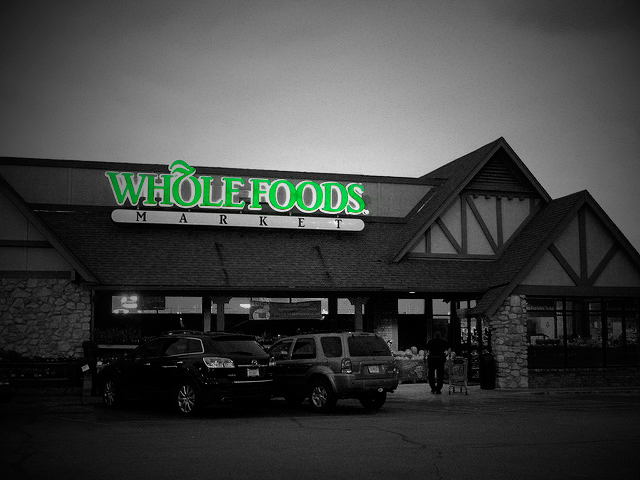
A proposed $13.7 billion takeover of Whole Foods Market, by the world’s largest online retailer, was approved by federal trust-busters on Wednesday.
With regulatory hurdles now cleared, Amazon said it intends to finalize the deal sometime later this year, giving the tech giant an opportunity to bolster its grocery delivery services.
Consumer advocates worry that Amazon could leverage its robust supply chain and soon-to-be acquisition of more than 465 Whole Foods stores to dominate the burgeoning home grocery delivery industry. The development would strengthen its grip on the online sales sector.
The Federal Trade Commission (FTC) determined, however, that the two entities weren’t in sufficient competition with each other to implicate trust concerns.
“The FTC conducted an investigation of this proposed acquisition to determine whether it substantially lessened competition…or constituted an unfair method of competition,” Bruce Hoffman, the acting director of the FTC’s competition bureau said in a statement.
“Based on our investigation we have decided not to pursue this matter further,” he added.
The FTC did hold out the possibility of future actions, with Hoffman noting that the agency “always has the ability to investigate anticompetitive conduct should such action be warranted.”
Ahead of the FTC’s acceptance, shareholders at Whole Foods this week also approved of the buyout, provoking reactions from competitors and organized labor.
Walmart announced on Wednesday it was teaming up with Google to allow customers to purchase items by simply talking to their Google Home — similar to services currently offered by Amazon through its Alexa hardware.
Meanwhile, the head of the United Food and Commercial Workers International Union called the Amazon takeover a “threat to Whole Foods workers and their families.”
“Amazon is well known for disrupting industries, but they are equally known for their preference of putting automation over real people,” union president Marc Perrone wrote in a letter to Amazon’s board.
In the company’s 23-year history, Amazon has resisted all unionizing attempts. The most recent organizing effort was defeated at a Delaware warehouse in 2014.
“The workers at Amazon faced intense pressure from managers and anti-union consultants hired to suppress this organizing drive,” said John Carr, spokesman for the International Association of Machinists and Aerospace Workers, after the failed drive.
Important Message: Please Read
For 25 years, Truthout has survived by publishing impactful investigative journalism and analysis; distributing full editions 365 days a year; and building a community of readers who support us with small, hard-earned donations.
Eighty percent of our $3 million yearly budget comes from small donors alone. Of those, 8,000 readers support us with monthly donations. Back in 2018, when Facebook decided to suppress the circulation of posts made by organizations, thereby cutting readers off from seeing many articles shared by the news organizations they had intentionally decided to follow, Truthout’s total traffic declined by 40 percent, as nearly all of our traffic from that platform disappeared.
Now, Google has recently rolled out its AI search bar, providing AI summaries instead of directing readers to our site. Google Search is our single largest source of traffic; it’s the route by which nearly one third of our readers find us. Much like in 2018, a shocking 40 percent of our Google traffic has disappeared overnight.
It will not be easy for Truthout to shoulder this blow. Nor will it be easy for our peers and collaborators — news sites that depend on traffic and aren’t bankrolled by large corporations.
If you can support Truthout with a donation today, you can help us resist the AI onslaught. Please give today.