Truthout is a vital news source and a living history of political struggle. If you think our work is valuable, support us with a donation of any size.
For decades, Ramsey Zeid’s parents have passed down stories about their home village of Bayt Nabala — and its destruction when the State of Israel was created in 1948.
And for just as long, the Palestinian couple, who now live in the Canadian province of Manitoba, had to counter attempts to brush away their experiences during the Nakba — the forcible displacement of about 750,000 Palestinians from their homeland enacted by Zionist paramilitaries and the Israeli military.
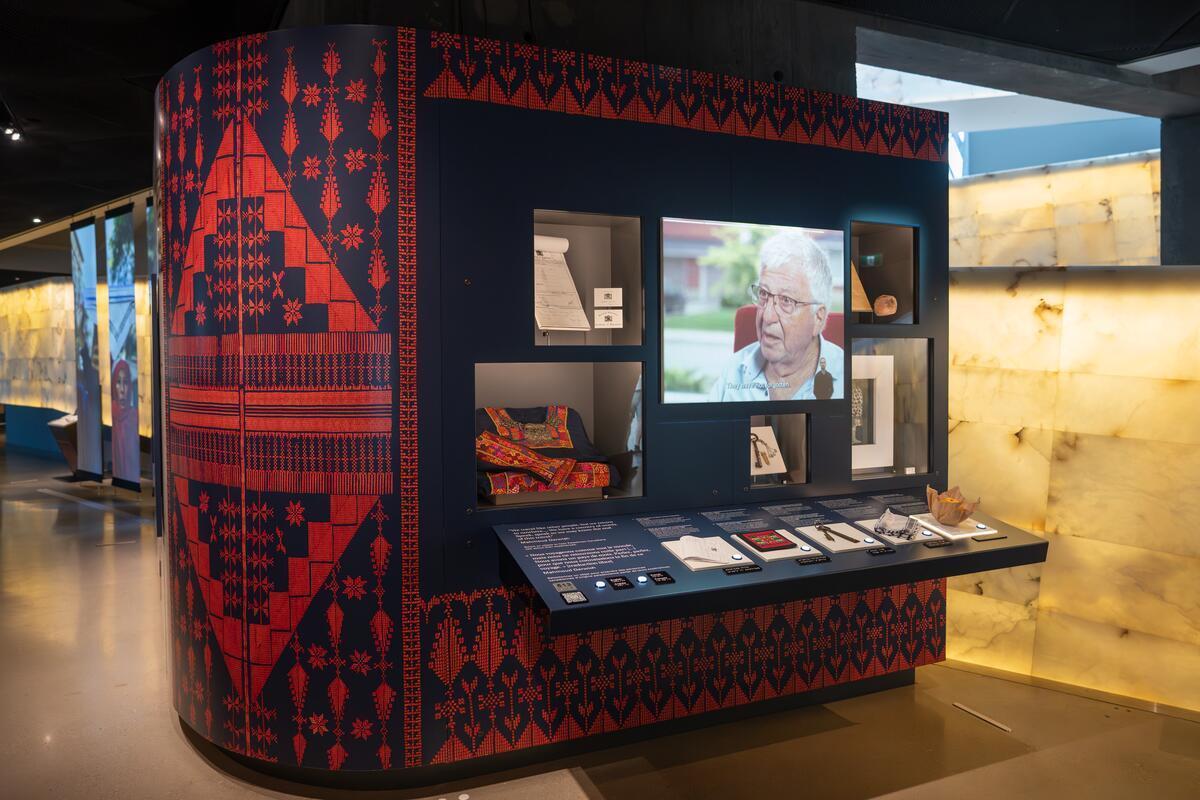
“Like any Nakba survivor, they still have their keys, they still have their deeds, they still have their stories. They remember it like [it was] yesterday,” Zeid told Truthout in an interview.
So, when his parents — now aged 83 and 81, respectively — saw stories from the Nakba (Arabic for “catastrophe”) on display at the Canadian Museum for Human Rights last month, they were left speechless.
“When they saw the photos on the panels, it just brought back so many memories that they teared up,” Zeid said. “All their lives they’ve been told, ‘No, the Nakba never happened.’ This was almost validation for them. Like, ‘We’re not crazy. This did happen, and what I’ve been telling people wasn’t a lie.’”
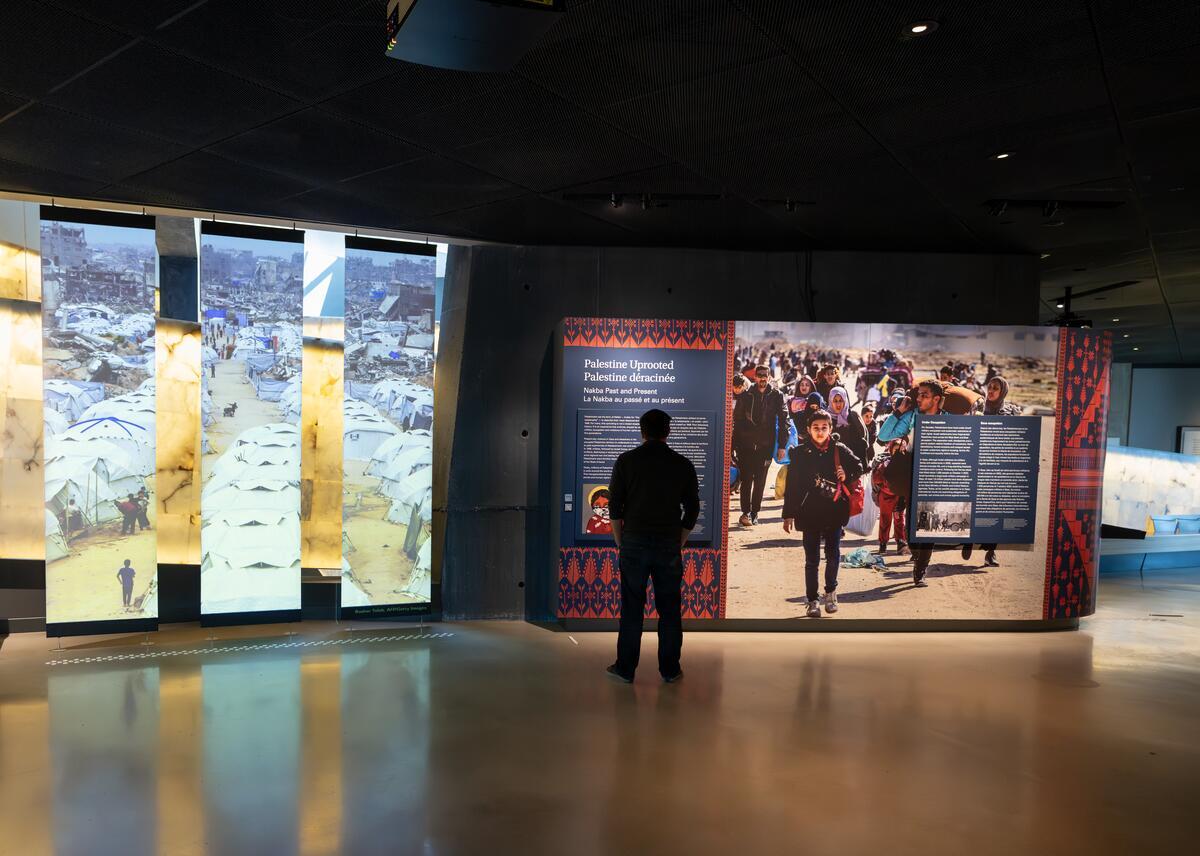
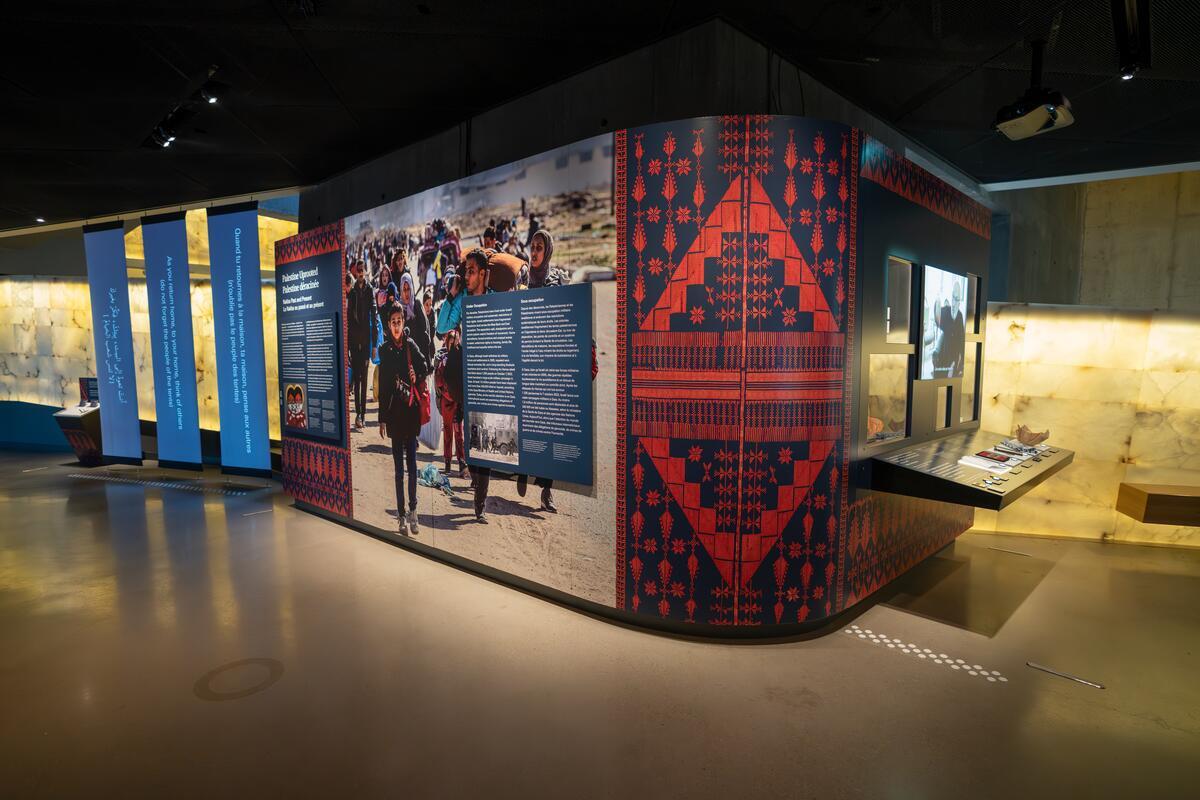
The Palestine Uprooted: Nakba Past and Present exhibit opened in late June at the federally funded museum in Winnipeg, in central Canada.
The result of four years of work, it features artwork, artifacts, and personal testimonies about the Nakba, and explores the ongoing struggle for Palestinian rights. It will run until 2028.
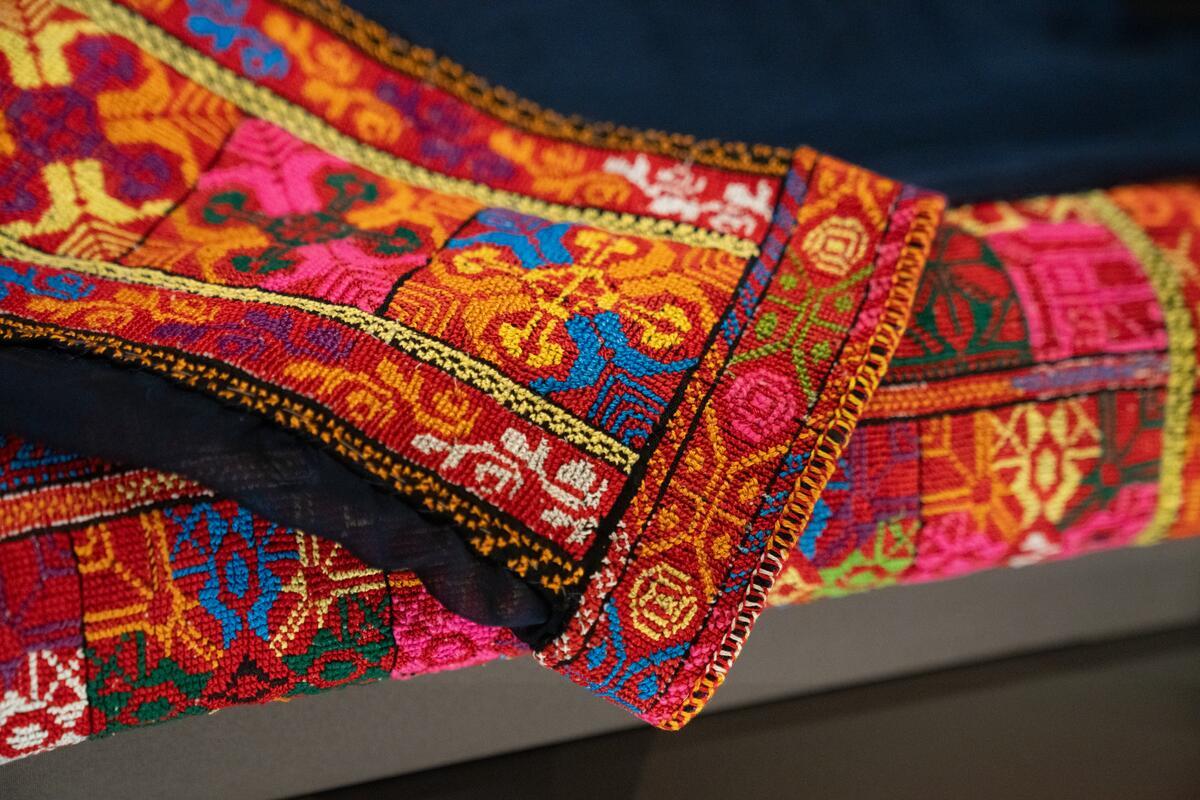
“This is a long overdue exhibit,” said Zeid, president of the Canadian Palestinian Association of Manitoba and a member of the Nakba exhibit’s advisory committee.
“We wanted this exhibit in the museum so that people could learn about [the Nakba]. This is something that happened, and we can’t change our past; we can learn from it, and we can change our future.”
Backlash Against the Exhibit
The exhibit comes amid a global push to amplify Palestinian voices during Israel’s war on the Gaza Strip, which a United Nations commission has described as a genocide.
And while the collection in Winnipeg is limited in size and scope — it measures 12 meters and contains two text panels — observers say its inclusion at a federal museum devoted to human rights is a “tremendous achievement.”
“This is a very rare case of a prominent institution listening to the Palestinian Canadian community … and putting on a project that meets some of their concerns.”
“This is a very rare case of a prominent institution listening to the Palestinian Canadian community … and putting on a project that meets some of their concerns,” said Michael Bueckert, vice president at Canadians for Justice and Peace in the Middle East, an advocacy group.
According to Bueckert, the museum’s “uplifting [of] Palestinian perspectives” is also partly why the collection has drawn the ire of pro-Israel lobby groups, media outlets, and individuals.
“The Canadian Museum for Human Rights has failed its mandate,” read the headline of an opinion column published last month in The Globe and Mail newspaper.
Co-written by former Justice Minister Irwin Cotler, one of Canada’s most prominent defenders of Israel, the piece accused the museum of presenting “a deeply contested political narrative as settled historical truth.”
The influential pro-Israel group the Centre for Israel and Jewish Affairs also hit out at the exhibit, describing it as part of“a dangerous, one-sided political agenda.”
Both the Centre for Israel and Jewish Affairs and B’nai Brith Canada — another leading pro-Israel organization in the country — have said the exhibit “risks inflaming hatred” against Jewish people while calling for the museum’s CEO to be held “accountable.”
A “Fake Controversy”
That heated response should come as no surprise, said Bueckert, describing it as a “fake controversy.”
Pro-Israel groups have spent years lobbying against the Nakba’s inclusion in the human rights museum, he explained. They also have sought to control how Israel’s founding is perceived in Canada — something they had largely succeeded in doing, until now.
Pro-Israel groups have spent years lobbying against the Nakba’s inclusion in the human rights museum.
For decades, Israel and its supporters have presented the country’s creation in 1948 as the successful culmination of a Zionist effort to give “a land without a people” to “a people without a land.”
But historians have documented how the country was built on the remnants of hundreds of destroyed and depopulated Palestinian communities. They have also shown how early Zionist leaders and armed militia groups carried out a coordinated campaign of ethnic cleansing in an attempt to rid the land of its non-Jewish inhabitants.
Hundreds of thousands of Palestinians were forcibly expelled from their homes before and during Israel’s founding, fleeing to neighboring areas, including Lebanon, Jordan, the West Bank, and Gaza.
Denying the Nakba or blaming Palestinians for their own expulsion in 1948 is a form of anti-Palestinian racism, which is defined as racism that “silences, excludes, erases, stereotypes, defames, or dehumanizes Palestinians or their narratives.”
Bueckert told Truthout in an interview that “the fact that Israel was created through ethnic cleansing” — and that Palestinian dispossession remains unresolved to this day — cuts to the heart of Israel’s founding myths.
“The very fact of Palestinians being given a place to tell their stories of what happened to them in 1947 and ’48, that itself is seen as a threat to these [pro-Israel] organizations,” Bueckert said.
“There’s been just decades and decades of pro-Israel groups having so much authority over the national conversation and the expectation that they can simply crush these types of initiatives,” he added.
“This [exhibit] is a very powerful example of an institution doing important, credible work and standing by it, and the lobby not getting its way. That’s really what’s happening here.”
Canada’s Minister of Identity and Culture Weighs In
Criticism of the Nakba exhibit escalated in late June as Minister of Canadian Identity and Culture Marc Miller weighed in on the exhibit.
In an interview with The Canadian Press, Miller, who oversees the Department of Canadian Heritage, said the exhibit contained “regrettable” wording and errors that should be addressed.
“Not identifying Hamas as a terrorist organization is, I think, a failure,” he told the news agency. “And not clearly stating that, for example, Hamas intended to kill Jews [on October 7, 2023] is, I think, an unfortunate error in curation and should be rectified.”
He added: “It isn’t up to me to speak to, or insert myself in, the curation of any particular exhibit. But manifestly, you cannot deny the fact that this is an exhibit that is born in controversy — and perhaps some of it could have been avoided.”
The Centre for Israel and Jewish Affairs — the pro-Israel lobby group — took credit for Miller’s remarks, saying its pressure campaign had “produced results” after more than 11,000 people urged the government “to hold the leadership of the Canadian Museum for Human Rights accountable.”
Miller’s office did not directly respond to Truthout’s questions about whether his comments amount to political interference in the museum’s operations, as some critics have alleged.
“Palestinian displacement and refugee experiences are an important conversation that deserve a place in public education and discourse, including museums,” Miller’s press secretary said in a one-paragraph statement sent to Truthout by email.
“It is not the role of the federal government to dictate programming at Canada’s national museums. Questions related to the operation of the Museum, including any of its exhibits, should be directed to the Chief Executive Officer or the Board of Trustees.”
Upholding Human Rights “for All of Us”
Isha Khan, CEO of the Canadian Museum for Human Rights, said the museum “welcome[s] any input on the exhibit and that’s how we treated the minister’s comments.”
In an interview with Truthout, Khan said the museum has a process in place to assess any feedback it receives on its exhibits, “which can lead to changes.” But she said the institution is only in the early stages of compiling reactions to the Nakba exhibit.
“As a public institution, it’s been very important to us to always be accountable to the public and to be prepared to change any exhibit if we need to because the framing’s not right or there’s something that we missed,” she said.
“But I can also tell you that we absolutely stand behind our curatorial process. It took four years to develop this exhibit and so though we have this process — and we will use it in a way our museum should — it will not immediately result in a change tomorrow because someone didn’t like something in the exhibit.”
The Nakba exhibit “falls squarely within our mandate, and it has the support of our Board of Trustees,” Khan also told Truthout.
While acknowledging that the exhibit has drawn criticism, she noted that the museum has received thousands of emails from people across Canada and in other countries expressing their support.
In the days after the installation opened in June, visitation also was up by around 60 to 70 percent, compared to what it would normally be at that time of the year, she said.
“We know that building an understanding of the personal stories and experiences of Palestinian Canadians is squarely within our mandate as a national museum and as the Canadian Museum for Human Rights, that the stories of Palestinian Canadians belong here, and that we can learn from these stories of forced displacement,” Khan said.
“That’s the focus that I hope people take away from what this little exhibit in this museum in Canada is doing,” she added. “We are trying to foster understanding about human rights, what they mean, and why we have to uphold them for all of us.”
An important fundraising appeal: 24 Hours to raise $23,000
Truthout is one of only a few platforms for justice-oriented, grassroots journalism. Today, as political censorship from the right intensifies, we have no choice but to ask for your help.
We are fundraising right now to cover our basic operating expenses. If you can support Truthout with a one-time or monthly donation, you will make a significant impact on our work. Anything you can do makes a difference — we appreciate your support.