Truthout is an indispensable resource for activists, movement leaders and workers everywhere. Please make this work possible with a quick donation.
A study published on Monday found a shockingly strong link between declining participation in the labor force and opioid use.
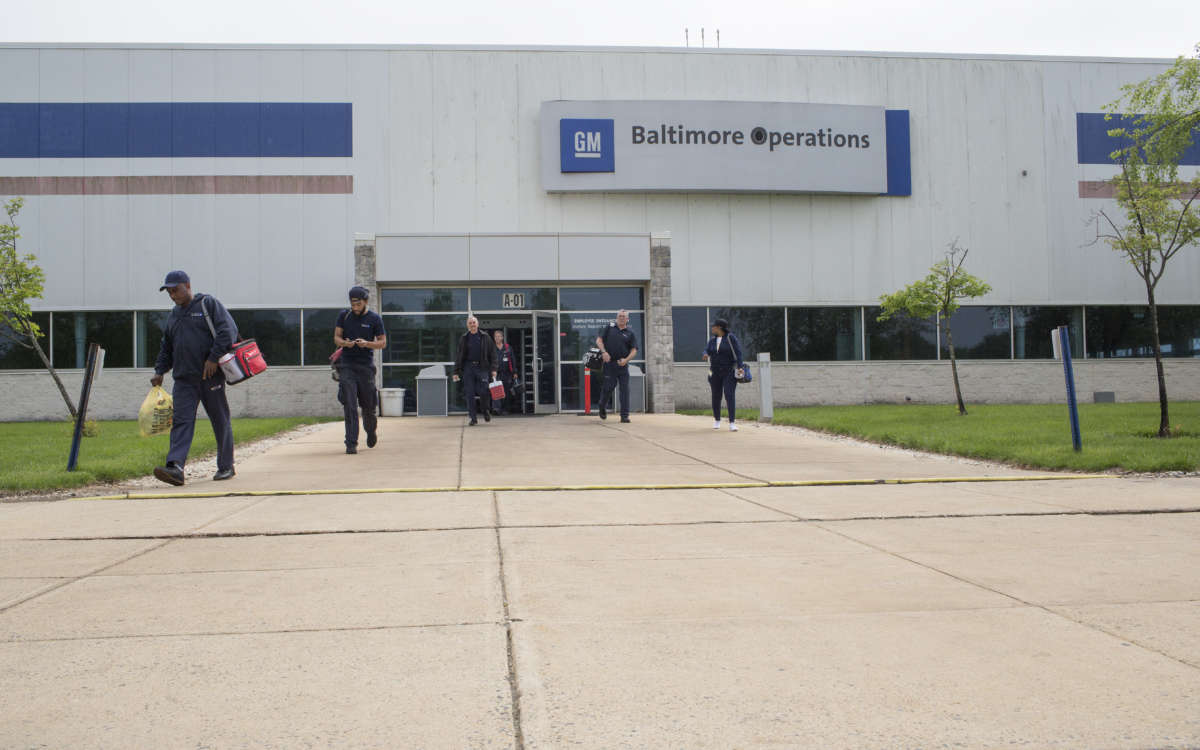
Researchers at the Perelman School of Medicine at the University of Pennsylvania and the Massachusetts General Hospital led the study that was published in JAMA Internal Medicine. From a variety of data sources, researchers gathered the number of opioid-related deaths between 1999 and 2016 in 112 counties near major automotive manufacturing plants; 29 of the counties had an automotive assembly plant closure during the study period. Researchers found that in those counties where automotive assembly plants had closed five years earlier, opioid deaths were about 85 percent higher among people between the ages of 16 and 65 compared to counties where such plants remained open.
“Major economic events, such as plant closures, can affect a person’s view of how their life might be in the future,” Atheendar Venkataramani, the study’s lead author and a professor of medicine at the University of Pennsylvania, said in a news release. “These changes can have a profound effect on a person’s mental well-being, and could consequently influence the risk of substance use.”
After an automotive plant closed, the group with the largest increase in opioid overdose fatalities was non-Hispanic white men between 18-34 years old, followed by non-Hispanic white men ages 35-65 years old.
While the study shows a large association between plant closures and fatal opioid overdoses, the authors emphasize that the closures are not the only reason for the country’s opioid crisis. Indeed, the prevalence of prescription opioids is a notable factor, too. However, the researchers hope that this study will raise concerns around underlying factors associated with the opioid crisis. Solutions to the crisis, the study states, should “likely involve complementary interventions to reduce the prescription and illicit opioid supply as well as interventions to diagnose and treat substance use disorders in regions of the country hardest hit by structural economic change.”
“Our results are most relevant for the worsening population health trends in the industrial Midwest and South, regions that have experienced some of the largest increases in opioid overdose deaths and in which the automotive production and other manufacturing industries have long been economically and culturally significant,” Venkataramani said in the news release. “While we as clinicians recognize and take very seriously the issue of overprescribing, our study reinforces that addressing the opioid overdose crisis in a meaningful way requires concurrent and complimentary [sic] approaches to diagnosing and treating substance use disorders in regions of the countries hardest hit by structural economic change.”
Until then, the researchers suggest that there are health policy changes that can be implemented immediately.
“There is an urgent need to rapidly lower the threshold for accessing evidence-based treatment for substance use disorders, for example, at the level of state Medicaid policy and private payor utilization management,” senior author and co-study lead Alexander Tsai, MD, an associate professor of psychiatry at the Massachusetts General Hospital and Harvard Medical School, said in the news release.
It is estimated that more than 130 people die every day as a result of opioid overdose.
Important Message: Please Read
For 25 years, Truthout has survived by publishing impactful investigative journalism and analysis; distributing full editions 365 days a year; and building a community of readers who support us with small, hard-earned donations.
Eighty percent of our $3 million yearly budget comes from small donors alone. Of those, 8,000 readers support us with monthly donations. Back in 2018, when Facebook decided to suppress the circulation of posts made by organizations, thereby cutting readers off from seeing many articles shared by the news organizations they had intentionally decided to follow, Truthout’s total traffic declined by 40 percent, as nearly all of our traffic from that platform disappeared.
Now, Google has recently rolled out its AI search bar, providing AI summaries instead of directing readers to our site. Google Search is our single largest source of traffic; it’s the route by which nearly one third of our readers find us. Much like in 2018, a shocking 40 percent of our Google traffic has disappeared overnight.
It will not be easy for Truthout to shoulder this blow. Nor will it be easy for our peers and collaborators — news sites that depend on traffic and aren’t bankrolled by large corporations.
If you can support Truthout with a donation today, you can help us resist the AI onslaught. Please give today.