Truthout is a vital news source and a living history of political struggle. If you think our work is valuable, support us with a donation of any size.
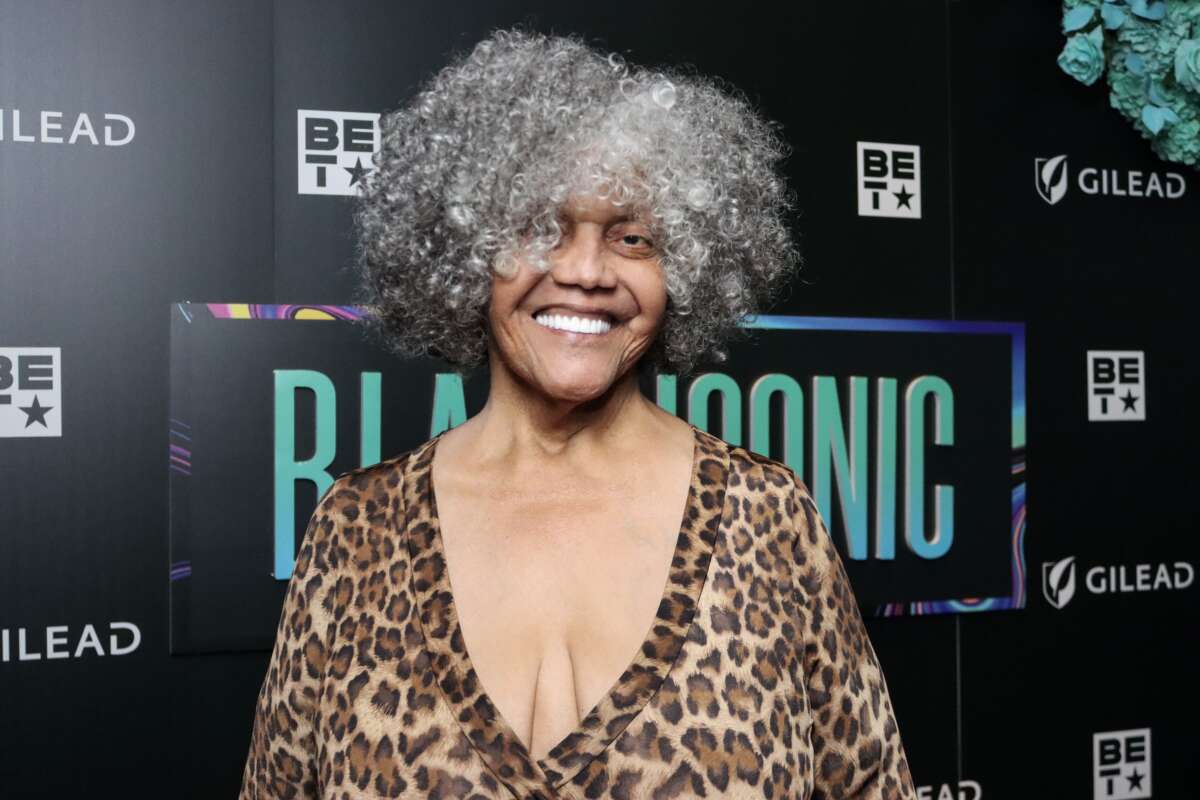
Miss Major Griffin-Gracy joined the ancestors last week. In these times of intensified fascism — marked by racist anti-trans violence and further abandonment by liberal politicians — it’s harder to know where to find anything other than despair without her here. A freedom fighter and glamour gurl until the end, Major is probably most famous for being a survivor of the 1969 anti-police uprising at New York’s Stonewall Inn. However, for those fortunate enough to inhabit her orbit, she’s a mother and mentor who held on to us when others threw us out.
Major began transitioning with hormones from a dealer who worked out of Riverview amusement park, in her hometown of Chicago. As a teenager, she followed an all-trans and gender-expansive drag club act called the Jewel Box Revue to New York City, where she navigated life as a performer and sex worker, staying between apartments in Upper Manhattan, the Avenues downtown, and occasionally Bellevue hospital and Riker’s Island. In the 1970s she spent three years upstate in Dannemora prison, where she was politicized by Frank “Big Black” Smith, who was transferred there after he helped organize the 1971 uprising at Attica. His “all of us or none” mentality stayed with her, and in her public speeches she often wove in remarks about international struggles like Palestinian liberation and the demand for justice for Jennifer Laude, a Filipina sex worker murdered by a U.S. marine.
Major believed that you can’t separate the personal from the political. The fierceness of her commitment to living in the messiness of revolt is beautifully chronicled in the documentary MAJOR!, and later in the film projects The Personal Things and Criminal Queers. She taught many of us why sex work must be decriminalized, why cops should not be allowed at Pride (or anywhere), and how abolition is intimately tied to trans liberation.
Most people become calcified in the gender binary, but Major was always curious about new ways to challenge norms. She went by “any and all” pronouns, and while she was always collecting new perfumes and hair styles, she knew realness was a trap when it comes to gender. As head of the Transgender Gender-Variant & Intersex Justice Project in San Francisco, she encouraged us all to “embrace the brick,” as everyone is valuable and has a place in the struggle. Her bonds with her beloved sisters were strong, but she also surrounded herself with young people, evidenced by the multigenerational assemblage of us who tended to her while she was in hospice these past weeks in Little Rock.
Major tempered the bitterness in life with sweetness. A kidney transplant survivor, she rode her friend Thom’s spare kidney hard, for years taking her morning coffee with a half-cup of sugar. When her partner Beck gave birth to their kid Asaiah in 2021, it was the first time she started drinking water on a regular basis while maintaining other pleasurable habits, like See’s Candies fudge, and sex. She not only wanted to live as herself, but she wanted to have a good time doing it, and she did.
Like us all, Major wasn’t immune to grief, but she often said she was “not a depressed person.” That optimism was magnetic. Against naivety, it aligned with the histories she held. From psych wards and solitary confinement cells to HIV/AIDS clinics and the mobile needle exchange she drove around San Francisco’s Tenderloin, the political organizing she did braided her life with a commitment to collective liberation that fed her, as she fed so many of us.
Miss Major never abandoned the struggle against fascism, which is to say, the fight to free us all.
“A wall is just a wall,” Assata Shakur, another revolutionary who also recently passed, reminds us. This was also Major’s philosophy: There is always a way around a problem or an alternative escape route. It’s how she materialized the expansion of the Tenderloin AIDS Resource Center (TARC) when she worked there in the 1990s. Never one to wait for approval from The Powers That Be, she sledgehammered a hole in a wall separating TARC’s existing office to join it with the space next door. This became a trans drop-in center called GiGi’s, a place where her gurls were the focus — a big shift within an organization that had previously prioritized gay men.
A couple weeks back, Major said she wasn’t sure she was ready to go, that she thought there was still work she had to do. The collision of her relentless vitality with the condition of her human body was stark, but we assured her that there’s an army of people she’d inspired to keep the work going, and we recruit.
Major never abandoned the struggle against fascism, which is to say, the fight to free us all. In these days between, after Major has left her body, we might stay in sadness because anything else feels impossible. Yet the way to honor Major is to keep hammering holes in the walls that confine us, and to expand the trans and queer spaces she built. Grief can transform into joyful rage by the reminder that Major is indeed, still fucking here.
Press freedom is under attack
As Trump cracks down on political speech, independent media is increasingly necessary.
Truthout produces reporting you won’t see in the mainstream: journalism from the frontlines of global conflict, interviews with grassroots movement leaders, high-quality legal analysis and more.
Our work is possible thanks to reader support. Help Truthout catalyze change and social justice — make a tax-deductible monthly or one-time donation today.