Truthout is a vital news source and a living history of political struggle. If you think our work is valuable, support us with a donation of any size.
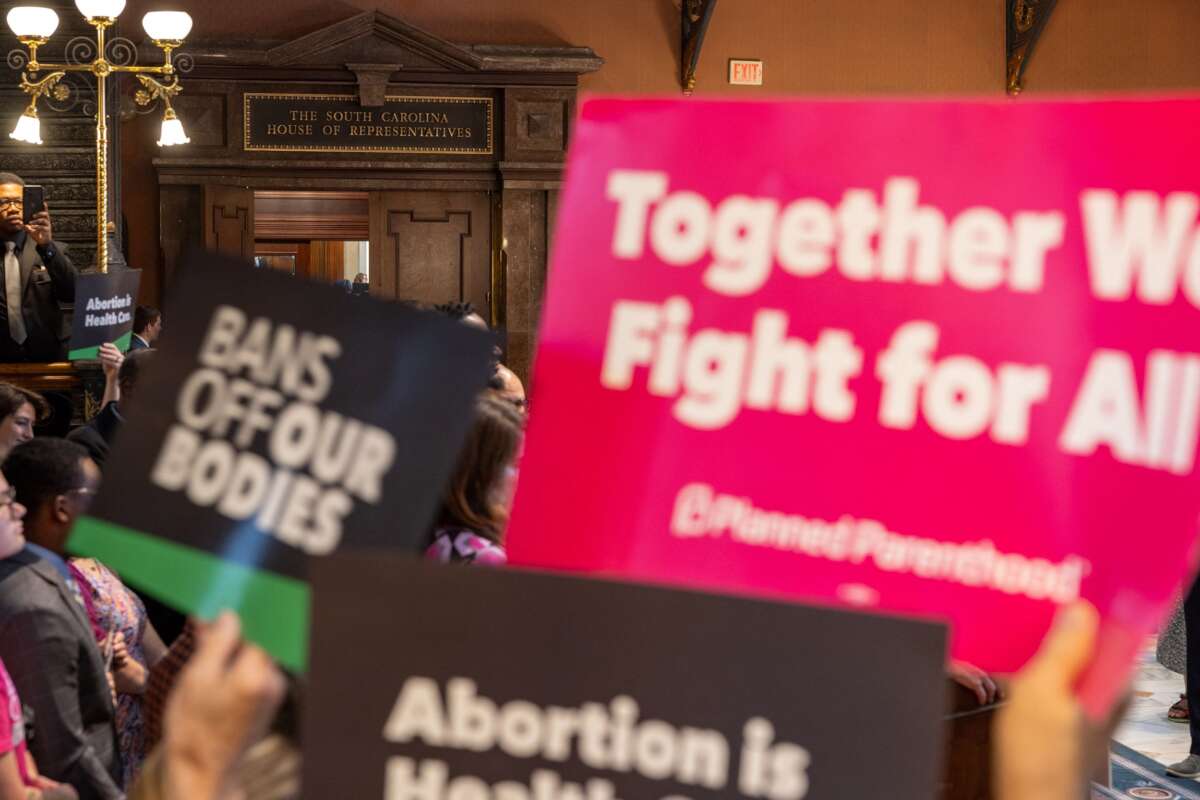
A bill up for consideration in South Carolina’s GOP-dominant state legislature would ban abortion outright and implement major restrictions on contraceptives.
South Carolina already has one of the most restrictive abortion laws in the country, banning the procedure after a supposed embryonic “heartbeat” is detected, usually after around six weeks of pregnancy. The law allows abortions up to 12 weeks of pregnancy if a person’s life is endangered by their pregnancy, or in cases of rape and incest — but the vague language of such statues often makes them difficult for providers to abide by.
The new proposal, sponsored by Sen. Richard Cash, would essentially equate abortion with homicide. It eliminates exceptions for rape and incest entirely, leaving only the narrow life-of-the-pregnant-person exception on the books.
Individuals who receive or provide an abortion could be imprisoned for up to 30 years under the bill’s terms. The legislation also bans the use of contraceptives that work by preventing fertilized eggs from implanting on the uterine wall, which include methods like intrauterine devices (IUDs) and Plan B emergency contraception. Critics warn the bill could also lead to the criminalization of in vitro fertilization.
Medical experts do not consider a fertilized egg to be the start of a pregnancy — a pregnancy only begins when a fertilized egg begin to develop, which happens when an egg is fertilized and implants on the uterine wall. Therefore, such birth control methods (oftentimes derided by anti-reproductive rights activists as “abortifacients”) are not themselves abortions.
The bill also bans doctors in the state from discussing abortion with patients, including which states they could travel to in order to undergo the procedure.
The bill was originally submitted in February, but is getting attention now because it was given a public hearing last month, and is set for another hearing on Tuesday.
During the first round of public testimony on the bill, many participants blasted the all-male Senate committee for proposing the dangerous new restrictions on abortion and birth control.
“This bill means that a woman like me, who has received the worst news of her life that her child had a fatal fetal anomaly and was going to die no matter what, would be forced to carry that child, holding on to false hope while needlessly suffering,” said Tori Nardone, communications manager for the Women’s Rights and Empowerment Network.
“I am faced with a legal minefield,” said Natalie Gregory, an OB-GYN based in South Carolina, who noted the law provides no additional guidance on what constitutes a life-saving procedure.
“This is the most extreme, heinous bill restricting reproductive health care that we have faced yet in South Carolina, and the fact that lawmakers are fast-tracking it for passage should raise alarm bells for every person in this state,” read a statement from Planned Parenthood South Atlantic director Vicki Ringer.
The likelihood of the bill advancing is unknown at this time. Similarly extreme bills have been offered and rejected in the state legislature since the U.S. Supreme Court’s 2022 overturn of abortion protections established by Roe v. Wade. But there are notable changes this time around, including the fact that Republicans have replaced three women from their own party, through primaries during the last election cycle, with men harboring stricter views on abortion.
Passage of the bill into law would contradict South Carolinians’ preferences when it comes to reproductive freedoms. Polling from last year, for example, found that 48 percent of residents opposed the state’s six-week abortion ban, while only 31 percent supported it. Implementing a ban that forbids abortion at all stages of pregnancy would undoubtedly be met with opposition.
Press freedom is under attack
As Trump cracks down on political speech, independent media is increasingly necessary.
Truthout produces reporting you won’t see in the mainstream: journalism from the frontlines of global conflict, interviews with grassroots movement leaders, high-quality legal analysis and more.
Our work is possible thanks to reader support. Help Truthout catalyze change and social justice — make a tax-deductible monthly or one-time donation today.