Did you know that Truthout is a nonprofit and independently funded by readers like you? If you value what we do, please support our work with a donation.
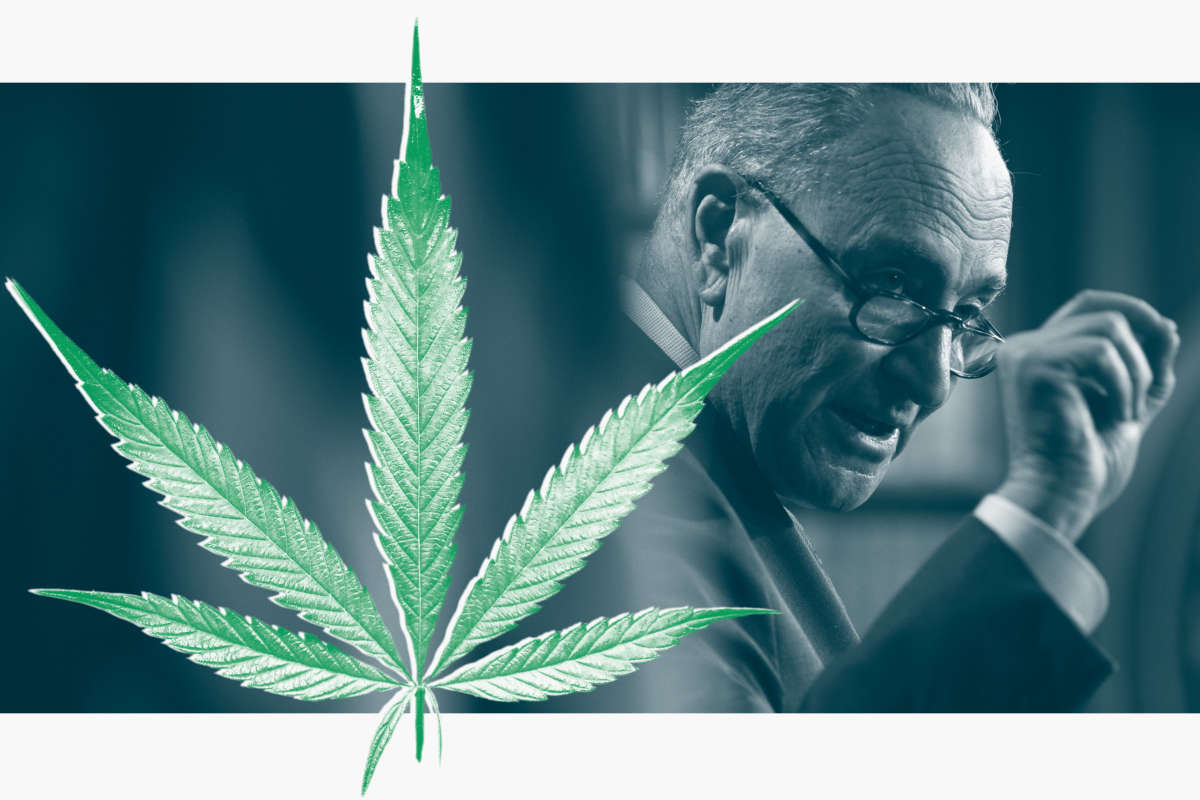
Three Democratic senators announced this week that they would introduce legislation that would remove marijuana from a federal list of prohibited drugs, effectively legalizing the recreational use of cannabis for adults in the United States.
Senate Majority Leader Chuck Schumer (D-New York), Sen. Cory Booker (D-New Jersey) and Sen. Ron Wyden (D-Oregon) released a statement on Tuesday announcing their planned legislation, which they said will come about sometime later this year.
The legalization of marijuana was a social justice issue, the lawmakers said.
“The War on Drugs has been a war on people — particularly people of color,” the statement from the three senators read. “Ending the federal marijuana prohibition is necessary to right the wrongs of this failed war and end decades of harm inflicted on communities of color across the country.”
Beyond simply legalizing marijuana, the senators also noted that more had to be done to address harms caused by the criminalization of the drug in the past, writing, “we must also enact measures that will lift up people who were unfairly targeted in the War on Drugs.”
The legislation could come soon. According to the statement, a “discussion draft” dedicated to restorative justice, protecting public health and taxation for cannabis will be released “in the early part of this year.”
The announcement was praised by a number of pro-legalization voices.
“After years of marijuana policy reform being neglected and mocked by Mitch McConnell, it is heartening to see these Senate leaders working together to repeal the senseless and cruel policy of marijuana prohibition,” said Justin Strekal, political director for the National Organization for the Reform of Marijuana Laws (NORML).
“This is a big deal,” opined Udi Ofer, American Civil Liberties Union’s deputy national political director. “Schumer will make marijuana reform a top priority for the 117th Congress, saying the issue intersects with both racial and economic justice, which is totally right.”
While many are hopeful about the issue getting an eventual vote in the Senate, legalization is not a foregone, inevitable conclusion at this point. Indeed, a number of hurdles remain for its passage.
A filibuster from Republicans in the Senate could feasibly block the bill from ever being passed. But GOP members in that chamber aren’t the only ones who might try to stop the bill’s passage, as moderate Democratic senators could also vote against passage even if a filibuster isn’t an issue.
And while the bill would likely be supported in the Democratic-controlled House of Representatives, where a similar bill passed by a vote of 228-164 in December, less clear is how President Joe Biden would react to such a bill reaching his desk for his signature. Biden indicated during the 2020 presidential campaign that he was in favor of decriminalizing the drug, but not for making it completely legal.
Polling shows strong support for the legalization of cannabis. A Gallup poll conducted shortly after the presidential race was held last year found that 68 percent of Americans were in favor of making marijuana legal throughout the United States.
Press freedom is under attack
As Trump cracks down on political speech, independent media is increasingly necessary.
Truthout produces reporting you won’t see in the mainstream: journalism from the frontlines of global conflict, interviews with grassroots movement leaders, high-quality legal analysis and more.
Our work is possible thanks to reader support. Help Truthout catalyze change and social justice — make a tax-deductible monthly or one-time donation today.