Did you know that Truthout is a nonprofit and independently funded by readers like you? If you value what we do, please support our work with a donation.
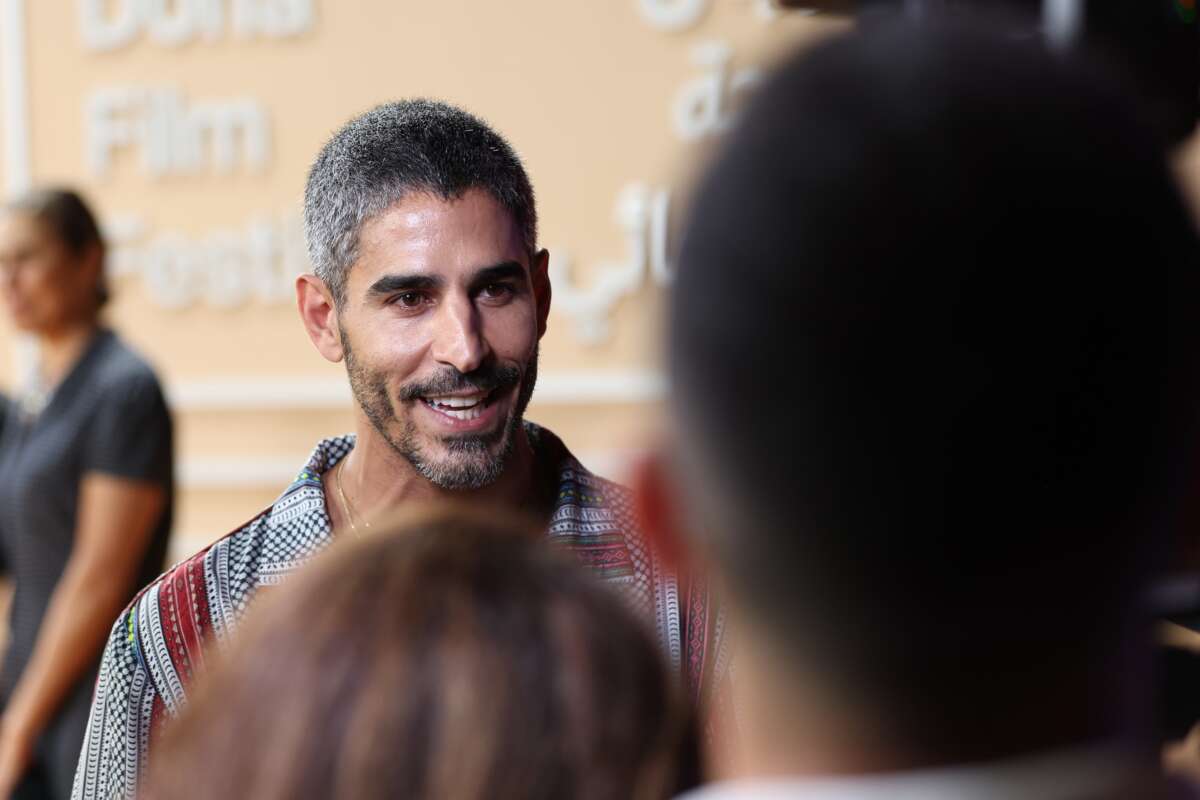
Advocates are calling for the release of well-known American-Kuwaiti journalist Ahmed Shihab-Eldin from detention in Kuwait, where he has been detained for over a month after sharing content related to the U.S. and Israel’s war on Iran.
Shihab-Eldin was arrested by Kuwaiti authorities on March 3. The journalist, who has millions of followers across his social media platforms and has worked for numerous Western outlets, has been detained since then and has had limited access to his lawyer for six weeks.
He is reportedly facing charges in relation to social media posts he has made sharing content on the war, though little else has been made public about his case. The Committee to Protect Journalists (CPJ) said that he is charged with “spreading false information, harming national security, and misusing his mobile phone — vague and overly broad accusations that are routinely used to silence independent journalists.”
Shihab-Eldin was arrested just a day after the Kuwaiti government announced a crackdown on journalism related to the war on Iran and other military activity. This included a ban on “any content that insults brotherly or friendly countries or that could harm Kuwait’s foreign relations,” as Drop Site reported. Kuwaiti authorities also enacted a law on March 15 that punishes anyone who “disseminates news, publishes statements, or spreads false rumors related to military entities” with up to 10 years in prison. Kuwait, a monarchy closely allied to the United States, routinely ranks in the lowest-third globally for press freedoms.
CPJ pointed out that Shihab-Eldin’s last posts on his Substack account showed footage of the U.S. fighter jet that crashed over Kuwait early in the war, as well as other videos showing strikes. The footage he shared of the fighter jet was taken from CNN, and was publicly available. His other accounts on Instagram and X appear to have been taken down.
“We call on Kuwait to release Ahmed Shihab-Eldin and drop all charges against him,” said Sara Qudah, CPJ’s Middle East and North Africa regional director. “Journalism is not a crime, and Shihab-Eldin’s case reflects a broader pattern of using national security laws to stifle scrutiny and control the narrative.”
Shihab-Eldin is a prominent journalist who has worked for numerous U.S. and Western outlets, including PBS, The New York Times, HuffPost, and others. He was born in the U.S., and has appeared as a guest on broadcast outlets including BBC, CNN, NBC, and MSNBC.
His arrest is part of a broader pattern of crackdowns on journalism across Gulf countries. Kuwait, which has also been purging and denaturalizing thousands of foreign workers, has been conducting dozens of arrests of civilians and critics in increasing repression of speech in the country.
Such crackdowns have “transformed Kuwait, once relatively free in terms of public freedoms compared to its neighbours, into a police state, that suppresses dissenting opinions, imprisons those who express them and uses citizenship as a weapon to punish public opponents,” said the Gulf Centre for Human Rights, per The Guardian.
Numerous journalists and rights advocates have spoken out for Shihab-Eldin’s release.
“One of the most gentle souls this genocide has brought into my life is Ahmed Shihab-Eldin, a journalist of rare strength, unwavering integrity, and deep compassion,” said Francesca Albanese, UN special rapporteur for the occupied Palestinian territories, in a post on social media calling for his release. “Journalism is not a crime.”
“This is a disgrace,” said journalist Barry Malone, who has previously worked for Reuters and Al Jazeera. “Ahmed is a friend and former colleague, and one of the most professional, righteous, and rigorous journalists I know. We need to make noise for him.”
The Trump administration does not appear to have spoken out against Shihab-Eldin’s detention. By contrast, it has actively sought to censor press coverage of the Iran war, especially in relation to the U.S.’s losses and casualties. The administration has also arrested numerous Iranian immigrants and sought to detain and deport them amid the war.
An urgent fundraising appeal: 72 Hours to raise $29,000
Truthout is one of only a few platforms for justice-oriented, grassroots journalism. Today, we face an existential threat.
Due to Google’s launch of AI search, we’ve seen a drastic plunge in our site traffic and, as a result, our revenue. We lost 15 percent of our readership overnight. This was a readership we painstakingly built over decades, and it vanished because Google chose corporate greed over a healthy democracy.
We are fundraising right now to meet our basic operating expenses. If you can support Truthout with a one-time or monthly donation, you will make a significant impact on our work. Anything you can do makes a difference — we appreciate your support.