Part of the Series
Struggle and Solidarity: Writing Toward Palestinian Liberation
Recently, I was running down the street, carrying food for my friend in northern Gaza, with a tank speeding behind me like a predatory beast. The ground trembled under the weight of its treads, and my breath quickened in a race I could never win. My legs began to give out, the terror heavier than my ability to keep going. I felt myself surrendering to what I thought was my inevitable fate … until I woke up.
It was 8:00 in the morning. My body was shaking, my heart racing. It had only been a nightmare — but a nightmare rooted in the reality of war, in the deep psychological harm that has marked us and continues to haunt us every day.
A door slamming shut is enough to make our bodies jolt involuntarily, convinced we’re hearing an explosion. And every time we try to heal, we realize that this fear has been growing inside us during months of death under Israeli siege.
“The psychological situation today [in Gaza] is more complex and more dangerous than at the beginning of the war,” said Dr. Mohammad, a mental health specialist working at a counseling center in Deir al-Balah who asked to keep his last name private. He told me:
At first, the psychological reactions were acute but predictable — fear, panic, anxiety. Today, we have entered a stage of chronic trauma fatigue, where people live in a state of emotional numbness, loss of meaning, and internal fragmentation. People don’t cry as they did in the early days; instead, they look at you with empty eyes, as if saying goodbye to life without leaving it. There is no expression of emotion. People unconsciously use defense mechanisms such as repression and isolation. They speak and act as if death were just another story to tell.
In speaking with him, I realized I am not alone — all of us across Gaza are facing this trauma. He said the symptoms he sees repeatedly include nightmares, panic attacks, inability to concentrate, survivor’s guilt, insomnia, disorientation, dissociative symptoms, denial, and unfocused anger. He has also observed a rise in self-harm attempts, especially among teenagers, alongside severe and almost constant depressive symptoms.
“People don’t cry as they did in the early days; instead, they look at you with empty eyes, as if saying goodbye to life without leaving it.”
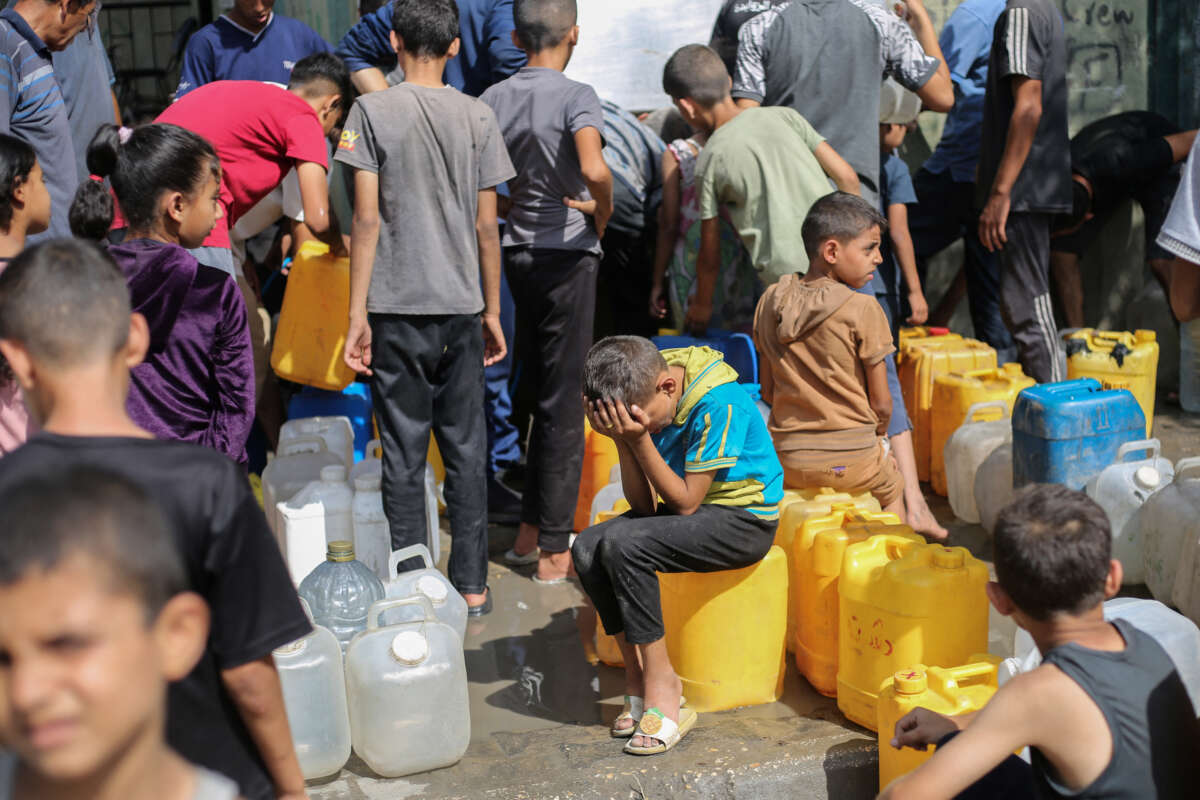
Dr. Mohammad explained that the psychological toll varies across age groups. Children often show behavioral symptoms such as bedwetting, excessive clinginess to their mothers, sleep disturbances, stuttering, or aggression. Through their play, they may reenact scenes of bombardment. He has seen 5-year-olds speak of “martyrdom” and “occupation” as part of their daily awareness. Teenagers tend to either rebel or withdraw, often struggling with identity crises and profound hopelessness. Adults live with the constant push-and-pull of survival, guilt, and responsibility. The elderly may face trauma in silence, rarely seeking help despite their deep suffering.
“The collective trauma in Gaza is not a single moment, but a continuous accumulation over years,” Dr. Mohammad told me. “We are talking about a generation born and raised in an environment of fear, loss, and destruction. Everyone is affected to some degree. It is not an individual trauma, but a structural one that wounds the very social fabric and reshapes collective consciousness.”
Children — those who grew up under the sounds of missiles, loss, and hardship in an environment that denies them a healthy childhood — bear the heaviest scars. Among them is my 4-year-old cousin Jinan. When Israeli warplanes bombed their home, Jinan survived and was pulled from the rubble by civil defense workers, but her father, mother, and all her siblings were killed. Her life was turned upside down in a single moment. Today, when she cries, she tells her grandmother, “I want to go to the rubble of our house. I want to talk to Mama.”
I asked Dr. Mohammad about the long-term impact of the lack of consistent psychological support for these children. “The ongoing absence of mental health care puts them at risk of developing chronic disorders such as PTSD, anxiety, depression, and even personality disorders in the future. It also affects their cognitive development, their ability to form healthy relationships, and their safe integration into society,” he said, adding that children are among the groups that feel most forgotten by the international community. The questions he hears them ask most often are: “Why is no one protecting us?” and “Why is the world silent?”
When I asked him how he personally copes, both as a psychologist and as a human being, with the sheer amount of pain he witnesses every day, he replied: “Honestly? Sometimes I don’t cope. I allow myself to cry, to be tired, to feel hopeless. But what keeps me standing are the children who still smile despite everything, my colleagues who keep working despite their grief, and the people who continue to seek help. This shared resilience is my real therapy.”
On the possibility of healing under the current conditions, Dr. Mohammad said, “Hope exists, but it is fragile and conditional. You cannot speak of psychological recovery while war, killing, destruction, hunger, and both physical and spiritual bleeding continue. Some cases are simply beyond our capacity right now — children who have lost their entire families, people who witnessed massacres firsthand without access to a safe environment or consistent support. Those with prior mental health histories have also seen their conditions worsen dramatically.”
“Do not let the next generations grow up from the ashes of war without healing.”
He stressed that the psychological and human dimension of Gaza is largely absent from international reports, which tend to focus on numbers and material losses. “The human spirit cannot easily be translated into metrics — yet it is the core,” he told me. “Covering trauma requires time, effort, and a high level of professionalism, which fast-paced media coverage often lacks.”
Currently only a handful of mental health counseling centers operate within Gaza, and facilities like Dr. Mohammad’s remain limited in number and capacity. When asked about the urgent needs for mental health support in Gaza, he said, “We need flexible, community-based emergency interventions; trained staff; medications; psychosocial support tools; safe spaces for children; and group therapy programs. We also need long-term plans that go beyond ‘temporary relief’ and build a vision for community recovery.”
Dr. Mohammad ended our conversation with a message to the international community and global mental health organizations: “You are required now to do more than condemn. Gaza is not only a humanitarian issue — it is a moral, psychological, and cultural one. We ask for real support, urgent trauma response, and genuine investment in building a sustainable mental health system. Do not let the next generations grow up from the ashes of war without healing.”
Our most important fundraising appeal of the year
December is the most critical time of year for Truthout, because our nonprofit news is funded almost entirely by individual donations from readers like you. So before you navigate away, we ask that you take just a second to support Truthout with a tax-deductible donation.
This year is a little different. We are up against a far-reaching, wide-scale attack on press freedom coming from the Trump administration. 2025 was a year of frightening censorship, news industry corporate consolidation, and worsening financial conditions for progressive nonprofits across the board.
We can only resist Trump’s agenda by cultivating a strong base of support. The right-wing mediasphere is funded comfortably by billionaire owners and venture capitalist philanthropists. At Truthout, we have you.
We’ve set an ambitious target for our year-end campaign — a goal of $250,000 to keep up our fight against authoritarianism in 2026. Please take a meaningful action in this fight: make a one-time or monthly donation to Truthout before December 31. If you have the means, please dig deep.