Honest, paywall-free news is rare. Please support our boldly independent journalism with a donation of any size.
Organizers in Florida have collected more than a million signatures to put constitutional amendments protecting abortion access and legalizing marijuana on the 2024 ballot.
The abortion rights ballot initiative was launched shortly after Gov. Ron DeSantis (R) signed a six-week abortion ban into law. Implementation of that law is currently on hold as the state’s conservative Supreme Court, which has been overhauled by DeSantis in the past four years, rules on Florida’s current 15-week abortion ban.
Floridians Protecting Freedom, a statewide campaign of allied organizations working to enshrine abortion rights in the state’s constitution — including Planned Parenthood Action Fund and the American Civil Liberties Union (ACLU) of Florida — has raised more than $5 million in support of the ballot initiative in less than two months.
“When reproductive rights have been on the ballot in other states post the Supreme Court’s decision in Dobbs in 2022, reproductive freedom has won in every single state where voters have had a chance to weigh in,” Ciara Torres-Spelliscy, a Stetson University law professor, told WUSF News.
For the ballot initiative to be approved for the 2024 ballot, it must receive about 891,000 signatures from voters in the state before February 1, 2024. If the initiative is approved to be on the ballot, the proposal would need 60 percent of the vote for it to successfully enshrine abortion access in the state.
“We need abortion to be explicitly named as a constitutionally protected right because until the makeup of the legislature changes, they are going to be constantly putting forward extremist anti-abortion legislation,” Amy Weintraub, a member of the group Progress Florida, told WUSF.
Conservatives in the state are organizing their opposition to the ballot initiative and have called the proposal’s language vague and misleading. Abortion advocates are concerned that the conservative state Supreme Court, which can keep an amendment off the ballot if it is deemed confusing to voters, may attempt to obstruct the initiative if it is challenged by conservatives, even if it receives the necessary number of signatures.
“We wanted to make sure that this language was as defensible as possible and that it met the standards that Florida set. We didn’t want to give anybody any reason to try to rule against this amendment,” Lauren Brenzel, campaign director for Floridians Protecting Freedom, told WUSF.
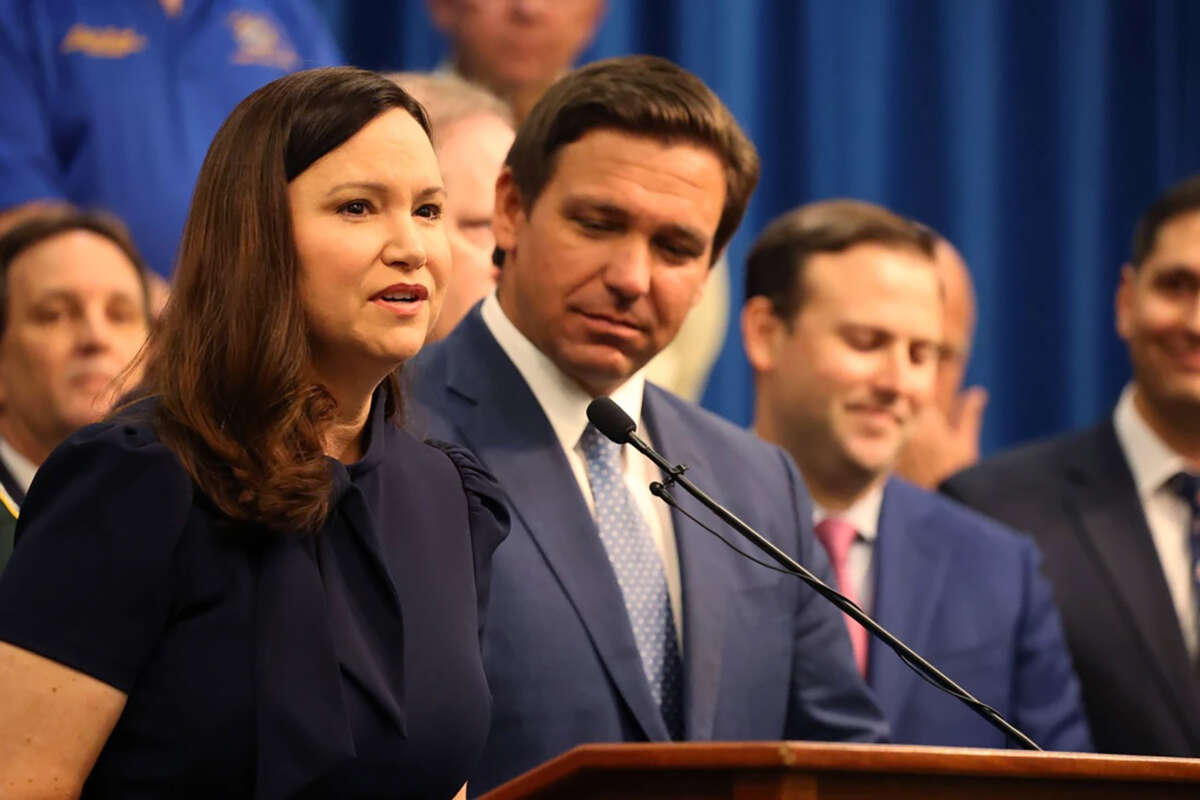
In the past five years, Florida’s Supreme Court has struck down four out of nine citizen initiatives it reviewed. Last Monday, the Florida Supreme Court granted a request from state Attorney General Ashley Moody (R) for more time to challenge another proposed ballot initiative which would legalize recreational marijuana in the state. Moody is expected to argue that the proposal does not meet the state requirements to be included on the ballot because it is vague and may confuse voters.
The ACLU filed a brief in response to Moody’s request with the Supreme Court, criticizing the court’s history of striking down ballot initiatives and saying that the justice’s handling of ballot initiatives is an “acrobatic exercise.”
“The ACLU is arguing that the Supreme Court now has a history over the last several years in Florida of striking down these initiatives,” Will Cooper, a constitutional attorney, told WFLA. “If the Supreme Court really does want to let the people speak and get out of the business of striking these initiatives down and acted by the people of Florida, I think they certainly have a sufficient basis to let it stand.”
The recreational marijuana ballot initiative has received more than one million signatures, which is more than enough to qualify. If the Florida Supreme Court doesn’t rule on the issue by April 1, 2024, then the constitutional amendment will likely make it to the 2024 ballot.
“I think it’s going to be a tough fight, and I think it could go either way,” Cooper told WFLA. “The key is the Supreme Court in Florida.”
An urgent fundraising appeal: 8 Days to raise $46,000
Truthout is one of only a few platforms for justice-oriented, grassroots journalism. Today, we face an existential threat.
Due to Google’s launch of AI search, we’ve seen a drastic plunge in our site traffic and, as a result, our revenue. We lost 15 percent of our readership overnight. This was a readership we painstakingly built over decades, and it vanished because Google chose corporate greed over a healthy democracy.
We are fundraising right now to meet our basic operating expenses. If you can support Truthout with a one-time or monthly donation, you will make a significant impact on our work. Anything you can do makes a difference — we appreciate your support.