Truthout is a vital news source and a living history of political struggle. If you think our work is valuable, support us with a donation of any size.
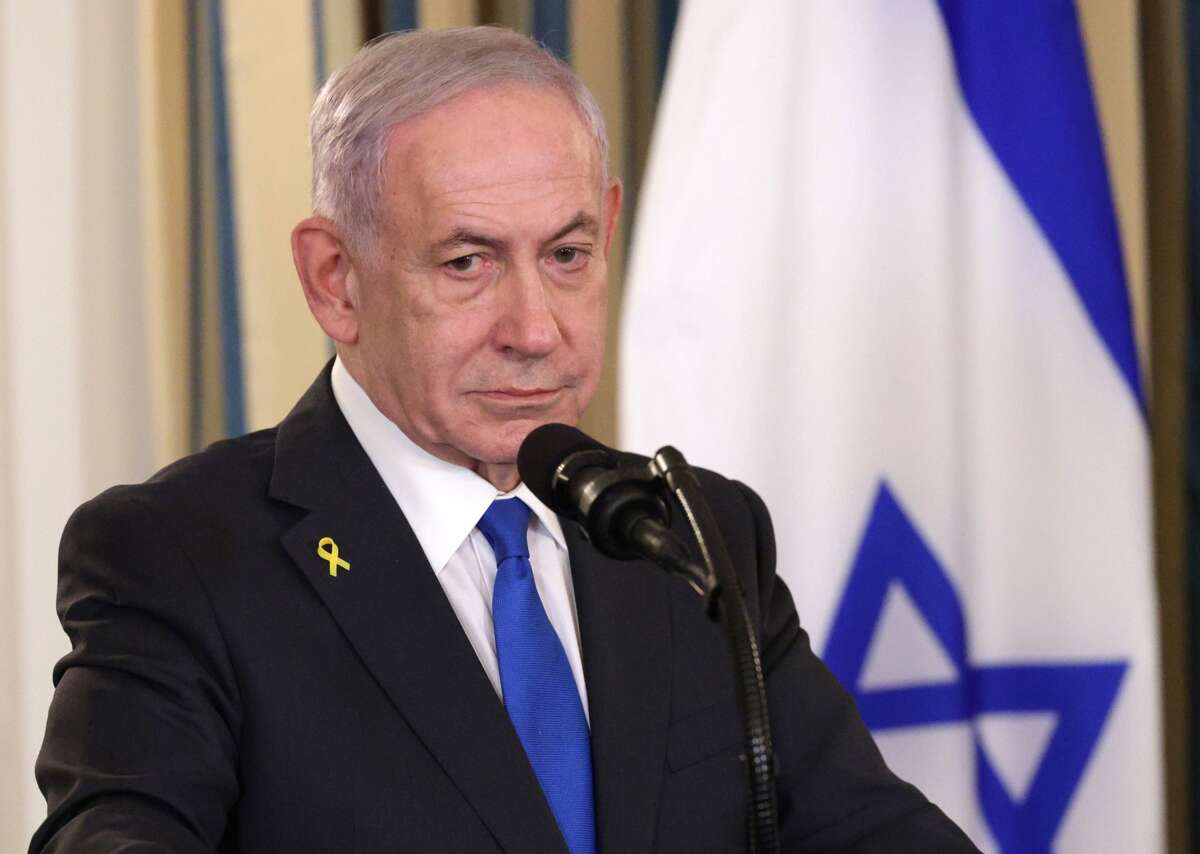
Just before the first phase of a Gaza ceasefire agreement went into effect on Friday morning, Israeli Prime Minister Benjamin Netanyahu vowed a return to Israel’s slaughter if Hamas isn’t disarmed, a provision not part of the current deal for a partial withdrawal and captive exchange.
In a televised address delivered just before the ceasefire went into effect, Netanyahu said that the next stages of the plan involve the disarmament of Hamas and the demilitarization of Gaza, though there have been few reports on the actual future stages of the agreement.
“We are gripping Hamas from all sides in preparation for the next stages of the plan, in which Hamas will be disarmed and Gaza will be demilitarized,” Netanyahu said, per a translation by The Associated Press.
“If this is achieved the easy way — so be it. If not — it will be achieved the hard way,” he said.
Disarmament of the Palestinian group is included in President Donald Trump’s broader plan, introduced last week, but Hamas has not agreed to that provision and has resisted previous similar proposals. The current agreement only involves a short period until both sides release captives, and negotiations for future steps are still ongoing.
The Trump administration is committed to ensuring that the entire plan is carried out, officials have said. If implemented as written, Hamas would have to make numerous major concessions, as the group has done numerous times in attempts to strike a deal with Israel.
Axios reports that, according to two U.S. officials, Trump gave a guarantee to Hamas that Israel would not break the ceasefire and resume hostilities. This would be backed by the presence of a U.S. troop-led task force in Israel, officials said.
However, when Israel infamously broke the ceasefire agreement that began in tandem with Trump’s second term, Trump refused to take action — and spent subsequent months carrying out airstrikes to back Israel’s regional wars while also levying sanctions on a wide variety of groups he saw as opponents to Israel. He also moved forth with a $6 billion weapons sale to Israel just weeks after officials declared an Israeli-made famine in Gaza.
Netanyahu has previously pledged that Israel will continue its slaughter even if Hamas agreed to a deal to release captives. He has also said that he is “very much” committed to the idea of “Greater Israel,” an extremist ideology which involves Israeli conquest of all of historic Palestine and parts of other Middle Eastern countries.
Top members of Netanyahu’s cabinet, Security Minister Itamar Ben-Gvir and Finance Minister Bezalel Smotrich voted against the ceasefire because of its provisions to release roughly 2,000 Palestinian captives held in Israeli prisons.
Like Netanyahu, Smotrich also insisted that Israel continue its slaughter in Gaza and that Hamas must be destroyed after Israel receives the last of its captives back.
The Israeli ministers’ threats to defy the agreement — which grants huge leeway and power over Gaza to Israel — could add fuel to fears that Israel will break the ceasefire agreement, as it has done for decades in conflicts with Palestinians and in surrounding countries. Analysts say it is clear Netanyahu and his government don’t actually want a ceasefire, and have openly sabotaged ceasefire negotiations for over a year.
An urgent fundraising appeal: 24 Hours to raise $21,000
Truthout is one of only a few platforms for justice-oriented, grassroots journalism. Today, we face an existential threat.
Due to Google’s launch of AI search, we’ve seen a drastic plunge in our site traffic and, as a result, our revenue. We lost 15 percent of our readership overnight. This was a readership we painstakingly built over decades, and it vanished because Google chose corporate greed over a healthy democracy.
We are fundraising right now to meet our basic operating expenses. If you can support Truthout with a one-time or monthly donation, you will make a significant impact on our work. Anything you can do makes a difference — we appreciate your support.