
Honest, paywall-free news is rare. Please support our boldly independent journalism with a donation of any size.
We have often honored election traditions in American politics. This is particularly true of those election cycles that fall every four years when The Congress and White House are at stake. Over the last few decades we have developed an unfortunate tradition of ignoring income equality and associated issues. The deafening silence on this issue has — not accidentally — coincided with the precipitous decline of middle and lowering earners' share of the pie. Our limping, wheezing middle and lower classes are now very angry. What separates this mighty mass of folks, is what they are most angry about. Some years social issues and coded appeals to good ol' days dominate. Occasionally millions are roused with a passion for one path forward versus another. For some, lower services are preferable to higher taxes. For others, more services and different tax burdens offer the solution. Either way, we generally elide direct discussion of income and wealth distribution.
Decision 2012 will be a $2-3 billion exercise in evasion of the distributional elephant — no partisan reference intended — in the national living room. We have seen accelerating upward re-allocation of income and wealth since the late 1970s. America is now 40 years into one of the world's boldest experiments with upward redistribution. The national economy is showing severe signs of strain from decades spent on the present course. Before we get to the sea change and how it will influence the election, let's take a look at the changing fortunes of higher and lower earners.

Figure 1 US Census Data, Author's Calculations
Figure 1 above looks at the percentage of household income that goes to the 40% lowest earning American families versus the income share that goes to America's 5% highest earning families. You can think of the blue area of the chart as representative of 2 in 5 families. You can think of the red area as the share of national aggregate income earned by the most affluent 1 in 20 households. Many in the blue area either do work for, or seek to work for, families in the red area. That is how our servant, oops I mean service, economy works. Way back in the 1960s and 1970s the bottom 40% of households earned almost as much as the top 5% of households. Those days are over. Today the top 5% earn almost twice as much as the bottom 40%. One in twenty households at the top takes home almost $2 in income for every $1 that goes to the 8 in 20 households at the bottom.
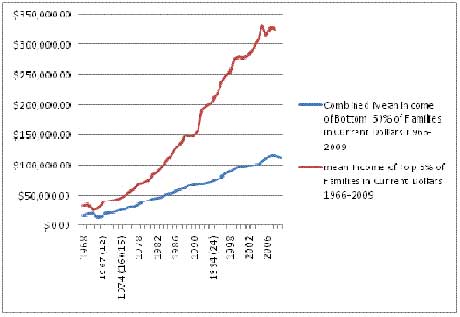
Figure 2 US Census, Authors Calculations
Figure 2 above looks at the incomes of various groups. If we take and add the mean income levels of each of the three lowest quintiles, 20% groups, we get an idea of how incomes have changed for the lowest income earning 60% of the economy. If we do likewise for the top 5% of income earners we can see how this group did over the last 40 years. Figure 2 displays a yawning gap between a high income earning few and multitudes on the other end of the spectrum. In short, income distribution has become so stilted, so fast that not talking about it is getting harder and harder.
Changing fortunes have left many threatened and angry. Shrill cries about better days of greater opportunity are absolutely rooted in economic facts. We don't discuss these issues so we end up with bizarre and intense proxy arguments. A significant portion of the electorate sees themselves and their children as in economic harm's way. They are largely correct. This is and will continue to come to a head around social spending and taxation. For several decades our towns, states and federal government played a game. We slowly cut some taxes and social spending and increased others. All of this was papered over by rising personal, corporate and governmental debt levels. From 2008-2010 corporate and personal debt levels fell while state debt level soared. We really can't do much more of that. Sliding Dollars on world markets, rising commodity prices, S & P warnings about or debt make this clear. Towns, states and Washington can't borrow to keep high spending and low taxes going any more. We actually need to cut total spending and raise tax collection.
Decision 2012 will be populated by an increasingly nervous group that wants to safeguard its fortunes pitted against angry groups that want change. Those that want change will be divided into those who want to struggle forward with less services and lower taxes arrayed against those who want more services and higher taxes — principally for others. Distributional issues will be largely ignored. We will hear about tax burdens, engines of economic dynamism, under taxed rich people and large corporations. We likely won't hear about a system that no longer can continue on the present track. 40 years of upward wealth distribution means we can't keep taxes and spending on the present track. One or both have to change. Which way we go will determine if we stay on the present income distribution course or move in the opposite direction. This will not be openly debated or engaged. Just like in Wisconsin, it will boil, and maybe boil over.
An important fundraising appeal: 48 Hours to raise $22,000
Truthout is one of only a few platforms for justice-oriented, grassroots journalism. Today, as political censorship from the right intensifies, we have no choice but to ask for your help.
We are fundraising right now to cover our basic operating expenses. If you can support Truthout with a one-time or monthly donation, you will make a significant impact on our work. Anything you can do makes a difference — we appreciate your support.