Truthout is a vital news source and a living history of political struggle. If you think our work is valuable, support us with a donation of any size.
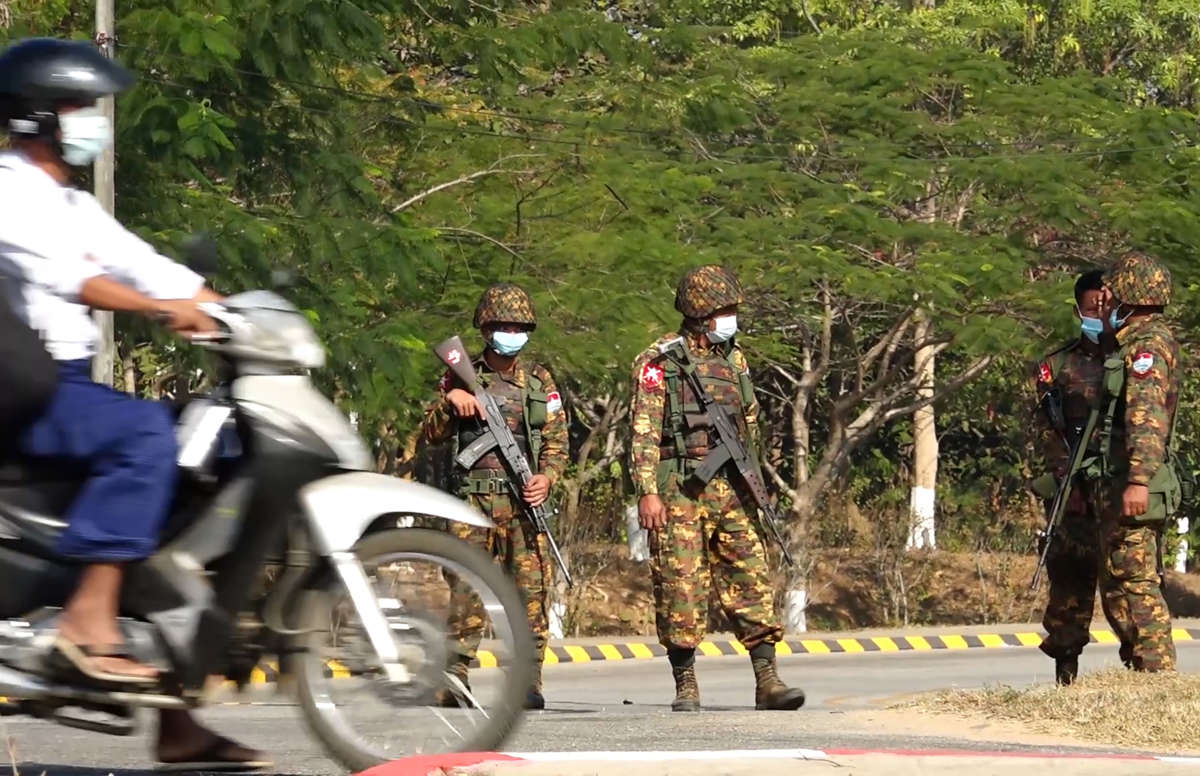
Long-simmering fears of a military-led subversion of Burma’s (also known as Myanmar) recent steps toward democracy became reality early Monday as the nation’s armed forces arrested civilian leader Daw Aung San Suu Kyi and announced a one-year state of emergency that transfers power to Min Aung Hlaing, the Southeast Asian country’s top general.
In an announcement broadcast on state television Monday morning, the military justified its seizure of power with claims of widespread fraud in November parliamentary elections which Suu Kyi’s National League for Democracy party won in a landslide. Myanmar’s election commission officially rejected the military’s claims of fraud as baseless last week.
The military takeover and the detention of Suu Kyi — a Nobel Peace Prize recipient who, since becoming head of government, has been accused of complicity in the Burmese military’s genocidal assault on Myanmar’s Rohingya Muslim minority — was swiftly condemned by international human rights organizations, United Nations experts, and peace activists as a dangerous attack on democracy.
“This is an ominous moment for people in Myanmar, and threatens a severe worsening of military repression and impunity,” Ming Yu Hah, Amnesty International’s deputy campaigns director for Southeast Asia, said in a statement. “The concurrent arrests of prominent political activists and human rights defenders sends a chilling message that the military authorities will not tolerate any dissent amid today’s unfolding events.”
“Previous military coups and crackdowns in Myanmar have seen large scale violence and extrajudicial killings by security forces,” she continued. “Reports of a telecommunications blackout pose a further threat to the population at such a volatile time — especially as Myanmar battles a pandemic, and as internal conflict against armed groups puts civilians at risk in several parts of the country. It is vital that full phone and internet services be resumed immediately.”
Paul Kawika Martin, senior director for policy and political affairs at U.S.-based advocacy group Peace Action, tweeted that “international nonmilitary action including by the president of the United States needs to occur on the Myanmar army after its coup d’état and detention of Aung San Suu Kyi and other senior ruling party figures.”
“Great care needs to be taken that those actions keep innocents safe,” added Martin.
As the coup unfolded early Monday — the day Myanmar’s new parliamentary session was set to begin — White House Press Secretary Jen Psaki issued a statement declaring that the U.S. is “alarmed by reports that the Burmese military has taken steps to undermine the country’s democratic transition, including the arrest of State Counselor Aung San Suu Kyi and other civilian officials.”
Concerns that Myanmar’s military could attempt a power-grab in the wake of the November elections had been on the rise in recent days as top officials with the powerful armed forces refused to rule out the possibility of a coup.
“Fears grew after army chief General Min Aung Hlaing — arguably Myanmar’s most powerful individual — …said the country’s constitution could be ‘revoked’ under certain circumstances,” The Guardian reported last week.
As the Associated Press pointed out, Myanmar’s “2008 constitution, implemented during military rule, has a clause that says in cases of national emergency, the president in coordination with the military-dominated National Defense and Security Council can issue an emergency decree to hand over the government’s executive, legislative, and judicial powers to the military commander-in-chief.”
“The clause had been described by New York-based Human Rights Watch as a ‘coup mechanism in waiting,'” AP noted.
Tom Andrews, United Nations Special Rapporteur on the situation of human rights in Myanmar, called Monday’s developments “very disturbing” and said that “what many have feared is indeed unfolding in Myanmar.”
“Communications lines are down so, by design, communication is difficult,” Andrews added. “But apparently the state counselor and many others have been detained by the military. Outrageous.”
An urgent fundraising appeal: 6 Days to raise $36,000
Thank you for reading Truthout today. We have a brief message before you go —
Unfortunately, donations are down for Truthout at a time when media is under immense pressure. Trump is arresting journalists, Big Tech is censoring independent news, and economic conditions for media have been worsening for years.
Simultaneously, movement media is vital in the fight against Trump’s authoritarian reign. Our mandate to tell the truth, share strategies for resistance, and speak against fascism is ever more urgent in this deluge of political censorship. Yet, we are struggling to meet our publishing costs when our work is so urgently needed.
If you can support Truthout with a one-time or monthly donation, you will make a significant impact on our work. Please give today during our fundraiser (6 days left).