Support justice-driven, accurate and transparent news — make a quick donation to Truthout today!
Measles cases in the United States have surpassed the highest numbers seen in over three decades — despite the fact that the virus was deemed virtually eradicated around the year 2000.
At least 1,277 confirmed cases have been identified in 38 states and Washington, D.C. Around 155 people have required hospitalization, with three individuals — two otherwise healthy children and one adult, all unvaccinated — having died so far.
Those were the first deaths from measles in the U.S. since 2015, and the first youth deaths from the virus since 2003.
According to the Centers for Disease Control and Prevention (CDC), 92 percent of those who have contracted measles were unvaccinated or had an unknown vaccination status.
The last time measles numbers reached higher than 2025’s count was in 1992, when around 2,100 infections were recorded. If nothing significant is done to mitigate the spread of measles this year, it’s possible that record could be breached, too.
The threshold reached this year is seen as a policy failure by many public health experts, who have noted that, with few exceptions, the virus was negligible more than two decades ago.
“It’s devastating. We worked so hard to eliminate the threat of measles and to keep it at bay,” said Claire Hannan, executive director of the Association of Immunization Managers, speaking to The Washington Post.
Measles isn’t just potentially deadly — it can also have long-term health effects, including damage to a person’s lungs or respiratory system. In some cases, measles can even result in permanent brain damage.
Measles has become more prominent in recent years due to low vaccination rates. During the 2023-24 school year alone, the nationwide rate of measles, mumps and rubella (MMR) vaccinations decreased to around 93 percent. A threshold of 95 percent is the target goal for that vaccine to reduce the spread of those ailments.
As a result of anti-vaxxers gaining more prominence in recent years, measles rates have jumped in the past decade. From 2000 to 2009, there was a yearly average of around 71.4 measles cases across the U.S.; from 2015 to 2024, that number went up to around 256.9 cases per year.
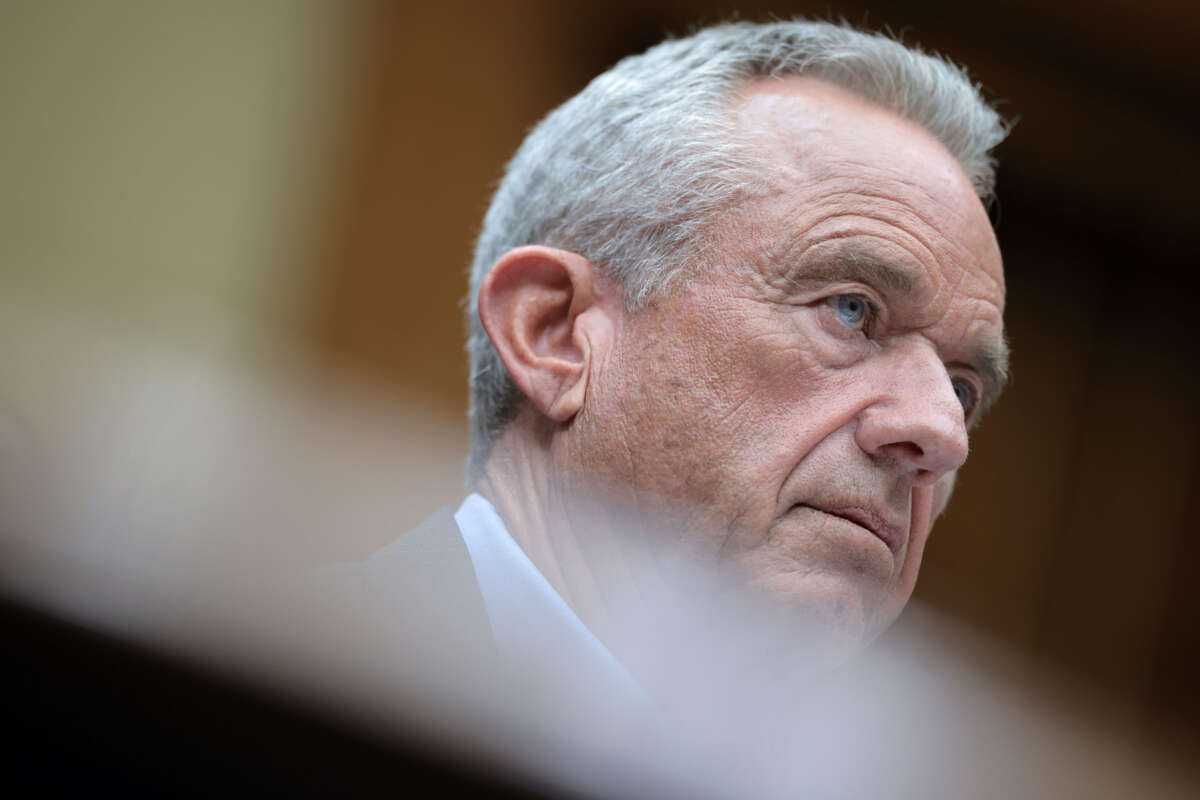
Despite this year having the highest rate of measles so far in the 21st century, Health and Human Services (HHS) Secretary Robert F. Kennedy Jr. — himself a noted anti-vaxxer — has downplayed the gravity of the virus’s spread.
“We have measles outbreaks every year,” Kennedy said in February, when an outbreak in Texas surpassed 100 cases.
That characterization is false, and ignores the growing number of cases and outbreaks seen in recent years.
In April, Kennedy acknowledged that vaccines were the most effective way to prevent the spread of measles, but continued to misinform people by suggesting ineffective ways to treat the virus, including cod liver oil and Vitamin A supplements. As a result, many parents attempted to treat their children with those methods and ended up making them more sick.
Disinformation spread by Kennedy and others have made efforts to stop the spread of measles more challenging, doctors in affected areas have said.
“Countering the misinformation put out there about using vitamin A for treatment of measles has been a struggle, an upward struggle,” Texas-based pediatrician Ana Montanez told NBC News.
Holding Trump accountable for his illegal war on Iran
The devastating American and Israeli attacks have killed hundreds of Iranians, and the death toll continues to rise.
As independent media, what we do next matters a lot. It’s up to us to report the truth, demand accountability, and reckon with the consequences of U.S. militarism at this cataclysmic historical moment.
Trump may be an authoritarian, but he is not entirely invulnerable, nor are the elected officials who have given him pass after pass. We cannot let him believe for a second longer that he can get away with something this wildly illegal or recklessly dangerous without accountability.
We ask for your support as we carry out our media resistance to unchecked militarism. Please make a tax-deductible one-time or monthly donation to Truthout.