Did you know that Truthout is a nonprofit and independently funded by readers like you? If you value what we do, please support our work with a donation.
Even before Donald Trump launched a war on Iran, his presidency had heightened the strain on millions of people in the United States struggling with high prices and precarious work. Now, as the U.S. and Israel escalate their violence in the Middle East, pressures at home are intensifying.
Higher prices at the gas pump make the war-related surge in energy costs visible to all. Less apparent are disruptions to global fertilizer supplies resulting from the closure of the Strait of Hormuz. Combined with widespread drought and the impacts of tariffs, the fertilizer shortage could cut food supplies, worsening the affordability crisis and spreading food insecurity.
These converging shocks are testing our communities. But what we know is that the most reliable form of resilience is not individual wealth or distant institutions, but solidarity — the power of ordinary people to collectively meet their needs and determine the conditions of their lives.
Why Community Matters Now
Many people think of community resilience as the ability to withstand abrupt shocks, like a natural disaster. But resilience is much more far-reaching, as the people of Minneapolis are demonstrating.
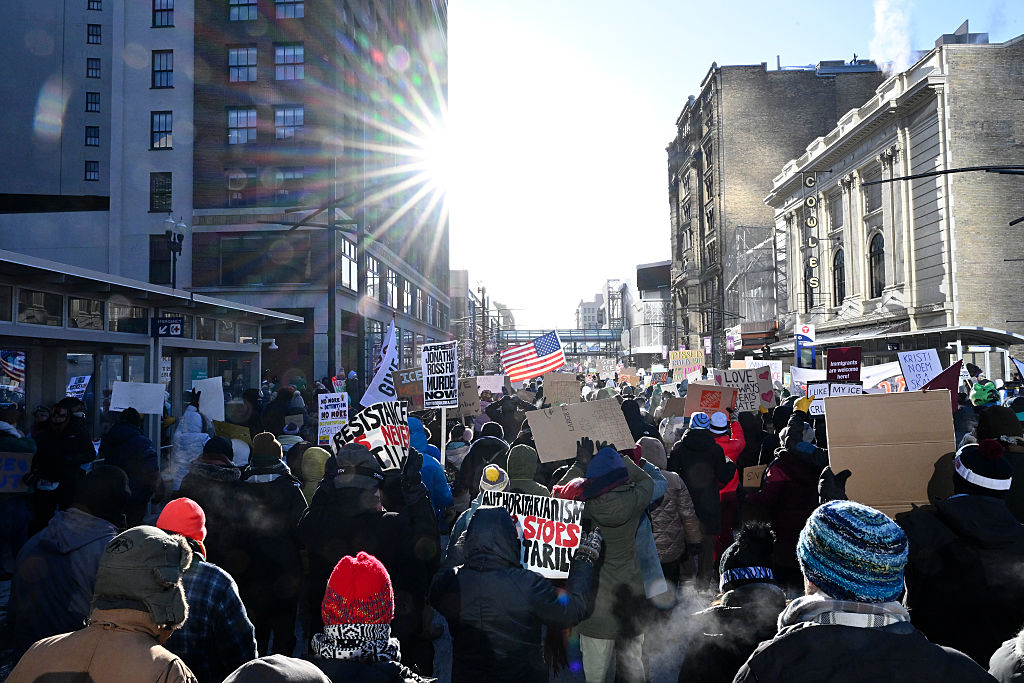
As federal immigration enforcement surged into the Twin Cities — detaining and deporting people, and brutalizing protesters — ordinary people mobilized. Volunteers met detainees who were released from the Whipple Federal Building with nothing but the clothes on their backs, often in subzero temperatures. They made sure someone was waiting in a warm car with coats, food, transportation, and access to phones. Others organized grocery deliveries to families afraid to leave their homes, or helped ensure children could travel safely to and from school, or tracked Immigration and Customs Enforcement (ICE) raids in real time.
These efforts did not emerge overnight. They were possible because Minneapolis already had a powerful scaffolding of relationships, organizations, and mutual aid practices. Mass protests following the 2020 police-perpetrated killing of George Floyd deepened relationships and coordination across the city. When ICE surged, people knew how to respond and who to call.
Community and solidarity are superpowers that ICE hadn’t expected. Federal agents would have known how to crush a small, violent uprising. They had no idea how to handle thousands of neighbors showing up nonviolently to support people they might not even know.
What Minneapolis demonstrates is the power of solidarity. Well-organized communities form infrastructure capable of resisting authoritarianism. Together with other communities, they can build movements capable of resisting ecocide, ending wars, and pushing back on systemic racism.
The same scaffolding is how we can rebuild from the damage caused by Trump 2.0, and envision a future beyond today’s ecological and societal crises. Community is also an answer to epidemic levels of loneliness and the mental health challenges of isolation, and the powerlessness that results.
A Foundation for Survival and Resistance
I once interviewed Berito Kuwar U’wa, an activist from a Colombian Indigenous community, for YES! Magazine. I was curious how people could live with no banks, no mortgages, and no corporations. “How do you build a house?” I asked him.
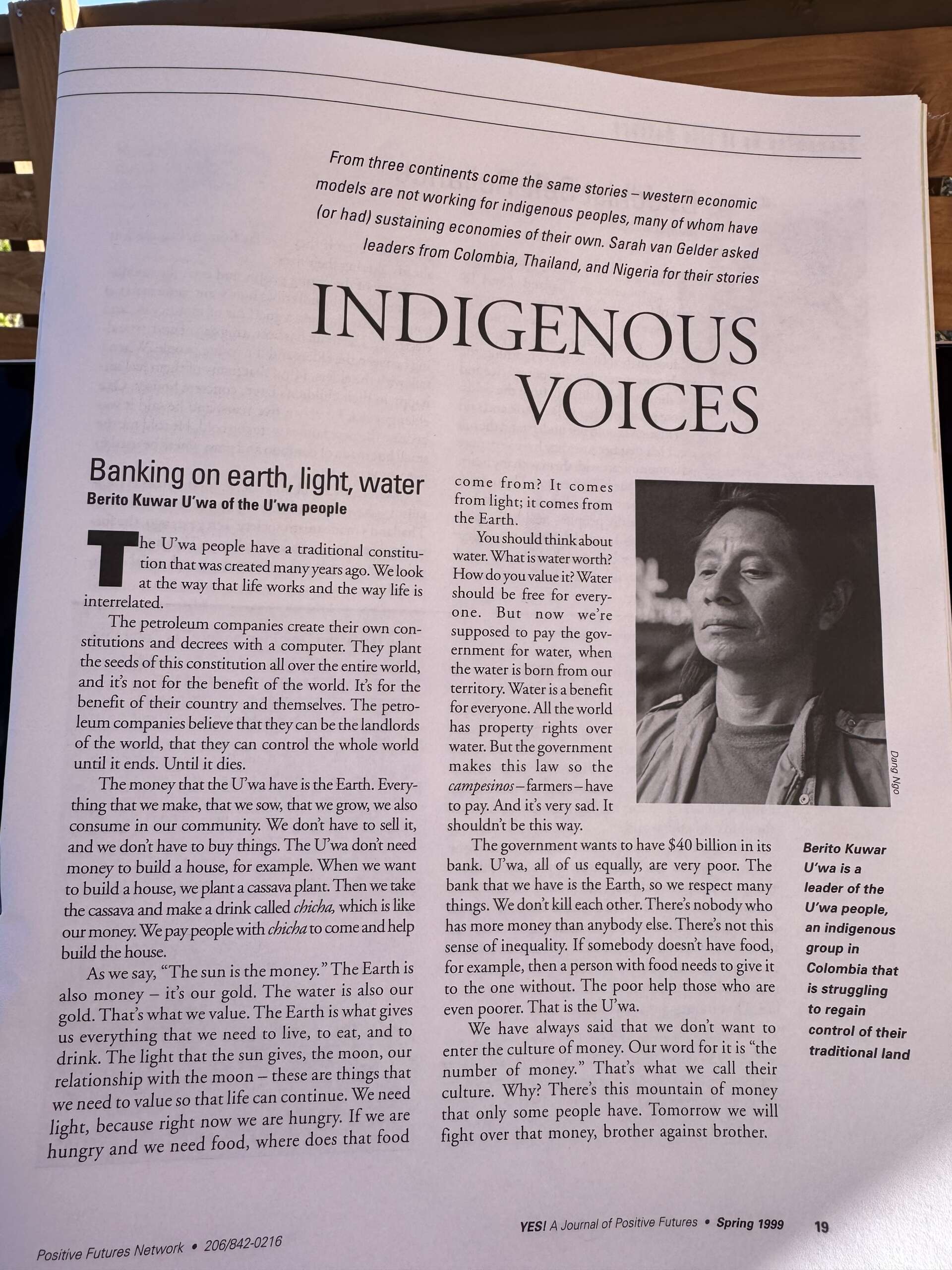
You start by planting a cassava plant, which, when harvested, can be made into a popular beverage, he told me. Then you invite friends and neighbors. Those assembled help build your house and enjoy a party to celebrate.
Consider the implications: There’s no mortgage. No bank. The natural world, which you and your ancestors have always cared for, provides the materials for the house and the ingredients for the party. The only people you owe a debt to are those who helped build the house. So when they invite you to help with their project, and celebrate with a party, you lend a hand. That is how community is woven.
Across time and place, our ancestors found ways to meet needs collectively.
Among Indigenous peoples of the Pacific Northwest, community is deepened in potlatches, where families earn respect and status by how much they give away. European settlers also developed traditions of sharing, from barn raisings to collective harvests.
Before the Civil War, free Black communities formed mutual aid societies that pooled resources for burial costs, built schools and churches, and organized for the abolition of slavery. During Reconstruction, the practice grew as Black families excluded from white society took care of their own communities and worked to protect themselves from white supremacist violence. Today, mutual aid networks continue those traditions, helping families weather economic hardship and state repression alike.
Across time and place, our ancestors found ways to meet needs collectively — not as charity, but as a shared commitment to one another.
What Now?
“We need to see progress not in terms of ‘having more’ but in terms of growing our souls by creating community, mutual self-sufficiency, and cooperative relations.” These words by the celebrated Detroit activist, author, and ancestor Grace Lee Boggs show a way forward.
Across the country, communities are building networks of care and resistance: maker spaces, pea patch gardens, food forests, tenant unions, mutual aid networks, cooperatives, and grassroots organizations that meet immediate needs while building long-term power.
History suggests that the most meaningful gains — from labor rights to voting rights — have come not from elected leaders or corporate CEOs, but from sustained pressure by organized movements. Change happens when people act together, rooted in communities and connecting at scale.
Together we can free ourselves from the powerlessness that comes with living in a fragmented, capitalist society.
In the face of war and economic and ecological crises, rebuilding community is not a nostalgic project. It is a practical and necessary one.
Community is how people share resources when systems fail. It is how we protect one another when institutions cause harm. It is how we generate the power needed to challenge injustice and build alternatives.
The disruptions now unfolding are multiplying: Energy and food supplies are under threat from a war of choice, while authoritarian overreach intensifies along with the targeting of dissidents and people of color. The climate crisis is worsening. Isolation and despair are commonplace. Families and communities across the United States are being tested. The question is not whether we will face hardship, but how we will face it.
Alone, our options are limited. Together, we have many more possibilities. We can form rapid response and mutual aid networks. We can organize community gardens to help offset high food prices. We can, together, insist that our elected leaders are accountable to us, not to big money interests. Together we can free ourselves from the powerlessness that comes with living in a fragmented, capitalist society and exercise our right to envision and build the world we want to live in.
Note: I believe community is our best hope for building resilience, resisting fascism, and creating a better world, but working together isn’t always easy. I created a free zine with ways to help groups connect, grow, and build equity, whether they’re just starting out or have worked together for years. Download it and share it, and stay in touch!
Media that fights fascism
Truthout is funded almost entirely by readers — that’s why we can speak truth to power and cut against the mainstream narrative. But independent journalists at Truthout face mounting political repression under Trump.
We rely on your support to survive McCarthyist censorship. Please make a tax-deductible one-time or monthly donation.