Truthout is a vital news source and a living history of political struggle. If you think our work is valuable, support us with a donation of any size.
As President Donald Trump exploits fear about fentanyl to justify military aggression in Latin America, experts warn that his administration’s choice to slash federal support for public health programs threatens to erode progress in reducing fatal overdoses linked to synthetic opioids.
Trump issued an executive order on Monday declaring fentanyl a “weapon of mass destruction” that could be weaponized for “concentrated, large-scale terror attacks by organized adversaries.” Experts say fentanyl is not used as a weapon and dismissed the order as a public relations ploy as the administration struggles to explain its legal justification for waging a deadly international drug war without approval from Congress.
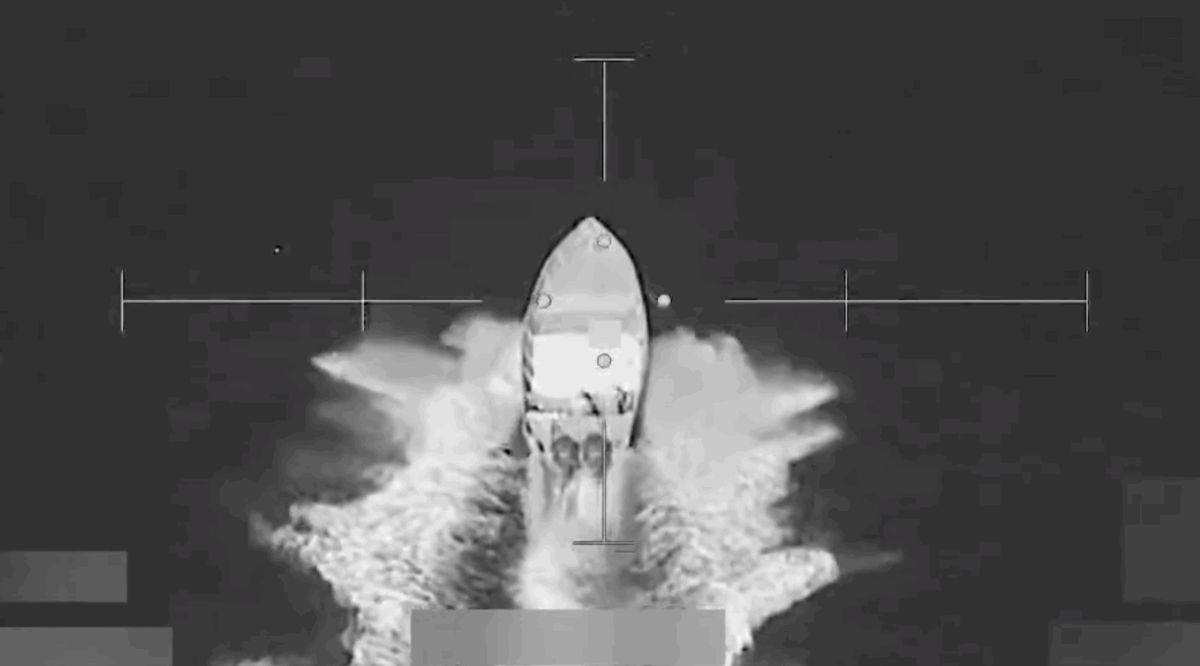
The order is the latest line in a series of massive escalations in Trump’s drug war. Trump and his “Secretary of War” Pete Hegseth are engaged military adventurism in the Caribbean Sea and Pacific Ocean, building up significant U.S. naval forces near Venezuela and blowing up boats the administration accuses of ferrying drugs in a campaign experts have classified as extrajudicial killings. Trump has ordered a naval blockade around Venezuela while threatening to oust President Nicolas Maduro.
The administration has spent months attempting to tie Maduro, and Venezuelans more broadly, to drug crimes in the U.S. while labeling such crimes as terrorism. After taking office, Trump declared the Venezuelan prison gang Tren de Aragua a “foreign terrorist organization” and called Maduro a “narco-terrorist” while rounding up Venezuelan immigrants and removing them to a notorious El Salvadoran prison. Most had no criminal convictions.
U.S. airstrikes have sunk at least 28 boats and killed more than 100 people since September, according to reports and to Zeteo’s strike tracker. The administration claims the boats are engaged in “narco-terrorist” activity, but the White House and Pentagon have not publicly released evidence that the victims are drug traffickers. The family of one man killed in a September 15 strike has said that the U.S. illegally murdered a law-abiding fisherman from Colombia, not a drug smuggler.
If any of the boats destroyed from the sky were ferrying drugs, it would most likely be cocaine, which is primarily produced in northwestern South America. Overdoses often involve multiple substances, but the overdose crisis is generally fueled by powerful synthetic stimulants, opioids, and tranquilizers — not cocaine, which is derived from the coca plant and is used by only a fragment of the population. Cocaine is typically more expensive than synthetics.
Maritza Perez Medina, director of federal affairs at the Drug Policy Alliance, said bullying Venezuela and attacking small boats will do nothing to prevent people from using fentanyl in the U.S. and could make the overdose crisis worse.
“This administration is not thinking in terms of solutions,” Medina said in an interview. “They are clearly using people’s fear of fentanyl as a pretext for implementing the president’s agenda, which includes taking away our civil liberties and actually putting us in more danger by potentially creating conflicts in other parts of the world.”
As a prescription drug, fentanyl is an opioid painkiller typically used in surgery and emergency rooms. “Fentanyl,” “fent,” or “fetty” are also catch-all terms for a class of synthetic opioids typically produced in Mexico (not Venezuela) that replaced heroin and prescription painkillers such as Oxycontin as law enforcement intervened in the illicit drug supply. Compact and potent, synthetics are easier to produce and smuggle than plant-derived opium, cocaine, and heroin and became the go-to for cartels dodging the U.S. government’s multibillion-dollar drug interdiction systems.
A harsh crackdown on painkiller prescribing in the U.S. and the rise of fentanyl over the past 15 years is associated with a surge in fatal overdoses that peaked during the COVID-19 pandemic and has long provided fodder for political fearmongering. However, from 2023 to 2024 the Centers for Disease Control recorded a nearly 24 percent decrease in overdose deaths linked to opioids, stimulants, alcohol, and other drugs, a remarkable decline after more than a decade of crisis.
Nabarun Dasgupta, a senior scientist at the University of North Carolina’s Injury Prevention Research Center and opioid data lab, told Truthout in May that years of difficult work by frontline activists and public investments in health care were finally paying dividends. Overdose deaths in mid-2024 were down 30 percent compared to peak levels in mid-2023, and Dasgupta credited easier access to addiction treatment and frontline harm reduction services, not drug policing or the Border Patrol.
“In every single community across the nation, there are people who have responded to this huge tragedy we’ve all been experiencing,” Dasgupta said in May. “And the work and the effort that is done on a day-in and day-out basis where people in communities are taking care of each other — that is at the heart of what is driving this decline.”
Medina said the Trump administration has taken the nation in the opposite direction with its assault on the federal agencies, including the Department of Health and Human Services (HHS), which oversees and funds research and public health efforts to reduce overdoses and drug addiction.
“If we really wanted to address drug use, we would start with investing in HHS, which is being decimated under Trump,” Medina said.
Along with deep cuts to Medicaid, the insurance program for lower-income people that has funded a much-need expansion in addiction treatment, Trump and Republicans in Congress have decimated budgets and staffing at the Substance Abuse and Mental Health Services Administration, according to STATNews. The agency is now under the purview of Health Secretary Robert F. Kennedy Jr., a conspiracy theorist who promotes farm labor as an unproven alternative to rehab.
“I actually do think that with this executive order and the other actions we are seeing from the Trump administration, we are creating more stigma, exposing more people to criminal penalties, and we are taking away the supports that are keeping people alive,” Medina said. “And that means we are going to see overdose numbers increase again, and that is the saddest part of all of this.”
While the White House claims that its strikes on boats are stopping drugs from killing millions of Americans, Susie Wiles, Trump’s chief of staff, told Vanity Fair that the president wants to blow up boats until Maduro “cries uncle.” Maduro has reportedly agreed to meet multiple White House demands in exchange for sanctions relief and amnesty, including greater access to Venezuela’s vast oil reserves and a commitment to resign after a political transition. Trump has reportedly ordered spies to infiltrate the struggling country.
Rep. Ro Khanna, a Democrat from California, was included in at least one closed-door briefing with administration officials about the boat strikes. Khanna pointed out that the Trump administration had interdicted 10 tons of cocaine, but recently pardoned former Honduran President, Juan Orlando Hernández, who was serving a lengthy prison sentence in the U.S. for facilitating the smuggling of 400 tons of cocaine into the country.
“Congress is really to blame for these endless wars. We are not willing to assert our constitutional authority,” Khanna said in an interview with Breaking Points on Thursday.
The unilateral airstrikes and provocations against Venezuela have enraged Democrats and a handful of isolationist Republicans, including Sen. Rand Paul and Rep. Thomas Massie of Kentucky. On December 17, the Republican majority in the House narrowly rejected a bipartisan war powers resolution that would have prohibited military action against Venezuela without congressional approval.
“They are provoking a war, and if there’s one incident that takes place, they can blame Maduro and use that as justification to have a regime change war,” said Khanna, who backed the resolution. “The American people have rejected this, and yet this administration is doing exactly what the American people don’t want.”
Normon Solomon, a media critic and director of the Institute for Public Accuracy, said presidents have ignored war powers resolutions passed by Congress since the War Powers Act became law in 1973. However, pressuring lawmakers is still an effective way to oppose U.S. militarism. According to Solomon, it’s crucial that constituents tell members of the House and Senate to block Trump’s aggression.
“The congressional actions on this score that really matter most in terms of actually affecting the chances of worsening warfare have to do with altering the political dynamics and media atmosphere related to impending war,” Solomon said in an email. “An outcry is needed in every way possible.”
Holding Trump accountable for his illegal war on Iran
The devastating American and Israeli attacks have killed hundreds of Iranians, and the death toll continues to rise.
As independent media, what we do next matters a lot. It’s up to us to report the truth, demand accountability, and reckon with the consequences of U.S. militarism at this cataclysmic historical moment.
Trump may be an authoritarian, but he is not entirely invulnerable, nor are the elected officials who have given him pass after pass. We cannot let him believe for a second longer that he can get away with something this wildly illegal or recklessly dangerous without accountability.
We ask for your support as we carry out our media resistance to unchecked militarism. Please make a tax-deductible one-time or monthly donation to Truthout.