Did you know that Truthout is a nonprofit and independently funded by readers like you? If you value what we do, please support our work with a donation.
The national legal landscape has become just a little bit brighter for those who have been working tirelessly to help abortion seekers in Republican-controlled areas cross state lines to access abortion care.
Reproductive rights advocates nationwide are hopeful that last week’s decision about an Indiana law by the Seventh Circuit Court of Appeals could potentially have wide-reaching implications for nationwide efforts to protect patients’ right to access abortion information and enable more health care providers to continue assisting abortion seekers.
In a significant win for abortion rights in the post-Roe U.S., on August 18 the Seventh Circuit Court of Appeals struck down an Indiana law that barred abortion providers from helping minors find abortions outside of the state or even sharing information about abortion. This ruling has nationwide implications because it could lead to further free speech protections for those who share abortion information and support travel for abortion seekers.
It has been three years since Indiana’s total abortion ban took effect, outlawing nearly every abortion in the state. For three years, reproductive health providers have been forced to turn away abortion seekers, their hands tied by the state’s draconian ban.
However, reproductive health providers in Indiana, like Planned Parenthood, didn’t just turn people away without support — they did their best to help abortion seekers figure out where they could get an abortion. Abortion is legal in surrounding states, including Michigan, Ohio, and Illinois, the latter of which has fast become a hub for abortion seekers from across the country. After Indiana’s total abortion took effect, the state’s Planned Parenthood continued to provide information about abortion care to abortion seekers, including minors; helped them find a clinic in a neighboring state; and helped minors book an appointment.
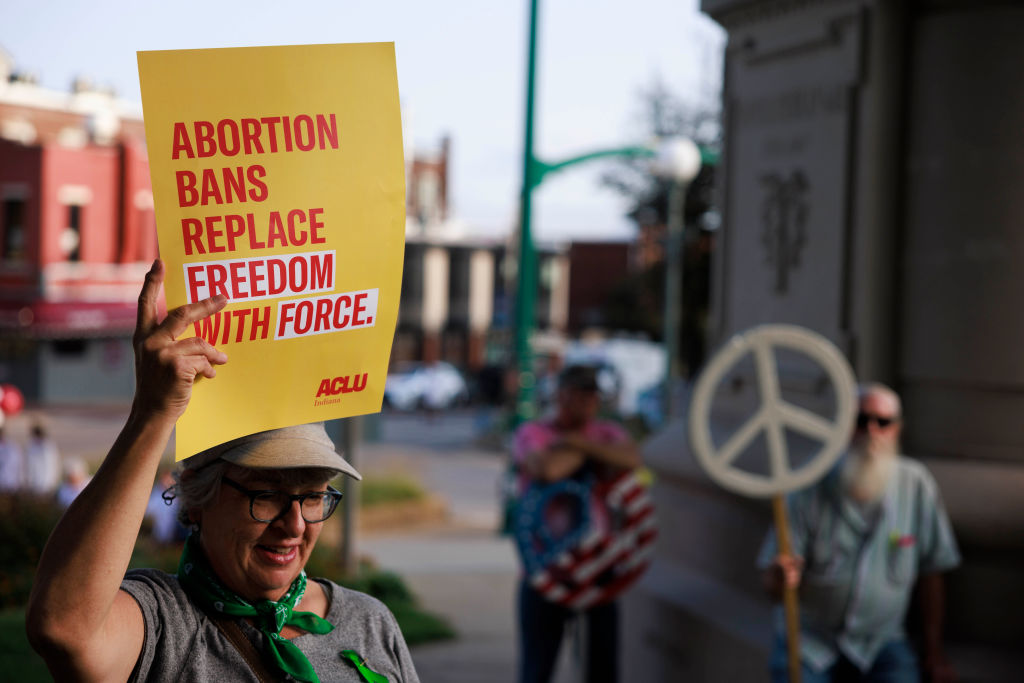
That didn’t sit well with Indiana abortion opponents, who argued that sharing information about abortion with minors is illegal. In 2017, Indiana enacted an “aid-or-assist” law, which bans helping a minor access an abortion without explicit parental consent. That law, coupled with the state’s total abortion ban, emboldened abortion opponents to keep reproductive health care providers from sharing information with or even helping a minor find a clinic outside of the state. Even discussing abortion with a minor should be considered a violation of that law, Indiana’s Attorney General Todd Rokita argued in court filings.
Not so, said the Seventh Circuit Court of Appeals in Planned Parenthood v. Commissioner of the Indiana State Department of Health. In a stinging rebuke of hardliners’ desperate attempt to crush anyone seeking a safe, legal abortion anywhere, the court upheld a permanent injunction against the “aid-or-assist” law. A minor has the right to access information about abortion services from reproductive health care providers without parental consent, the court ruled. The “aid-or-assist” law would constitute a content-based restriction on protected speech and is therefore unconstitutional.
The Seventh Circuit has ruled that states cannot keep their citizens, including minors, from learning about or seeking abortion services outside the state.
This ruling has wide-reaching implications, as states with abortion bans have tried new and increasingly draconian means of stopping any information or access to abortion services for their own citizens.
While a state can ban abortion, per the Dobbs ruling, the Seventh Circuit has ruled that states cannot keep their citizens, including minors, from learning about or seeking abortion services outside the state. The fundamental right to share and consume information (a.k.a. freedom of speech) cannot be infringed upon just because some far right lawmakers don’t like that kind of speech. Helping someone to obtain an abortion outside of a banned state, and talking about abortion, including to those under the age of 18, are both protected by the Constitution.
Abortion opponents in Indiana can choose to appeal this case to the Supreme Court. But if they do, the Seventh Circuit might have created its own safety valve to preserve this opinion. As Madiba K. Dennie astutely notes at Balls and Strikes, the Seventh Circuit used the recent Supreme Court decision Chiles v. Salazar, which struck down Colorado’s ban on conversion therapy because it infringed on the First Amendment. According to the Supreme Court, sharing information about conversion therapy is protected speech, and therefore cannot be banned. Using that same logic, speaking to an abortion provider or sharing information about abortion should also be protected speech. The Seventh Circuit might have just insulated this ruling from a possible Supreme Court reversal.
If this ruling stands, it applies well beyond Indiana’s borders. Sharing information and even helping someone obtain an abortion outside of a banned state are now ruled to be constitutionally protected acts.
If this ruling stands, it applies well beyond Indiana’s borders. Sharing information and even helping someone obtain an abortion outside of a banned state are now ruled to be constitutionally protected acts. For advocates in states like Texas, Mississippi, and Louisiana, with total abortion bans and attorneys general who may be willing to pursue litigation against those who assist abortion seekers, this ruling could serve as a bulwark against criminalization.
There have been myriad attempts from banned states to restrict or ban abortion seekers from traveling out of state for care, and to clamp down on information-sharing or even funding support for those leaving the state. Texas Attorney General Ken Paxton sued the City of San Antonio, Texas, for creating a fund dedicated to helping abortion seekers travel out of state for care, resulting in the city shutting down its fund. Last year, Texas lawmakers introduced a bill that would make it a second-degree felony to “knowingly transport or fund the transportation of an unemancipated minor from Texas” to another state or country to obtain an abortion without written parental consent. Violators would face up to 20 years in prison. If that bill ever does become law, it would almost certainly be blocked — and the Seventh Circuit’s ruling would likely be the basis.
This ruling won’t undo Indiana’s total abortion ban, and it won’t allow abortion providers to help patients access care in their own state. That’s a tragedy, part of the ongoing crisis that Dobbs unleashed. But it does give some protection to those who have been working tirelessly for years to help abortion seekers access care outside of their state. It is unconscionable that our Supreme Court has forced pregnant people to have to travel hundreds or even thousands of miles from their home just to access a basic health care service. But it isn’t a crime to help them. In fact, it is one of the highest callings of empathy and compassion. And this ruling makes it a little bit less fraught to do that vital work.
Press freedom is under attack
As Trump cracks down on political speech, independent media is increasingly necessary.
Truthout produces reporting you won’t see in the mainstream: journalism from the frontlines of global conflict, interviews with grassroots movement leaders, high-quality legal analysis and more.
Our work is possible thanks to reader support. Help Truthout catalyze change and social justice — make a tax-deductible monthly or one-time donation today.