Did you know that Truthout is a nonprofit and independently funded by readers like you? If you value what we do, please support our work with a donation.
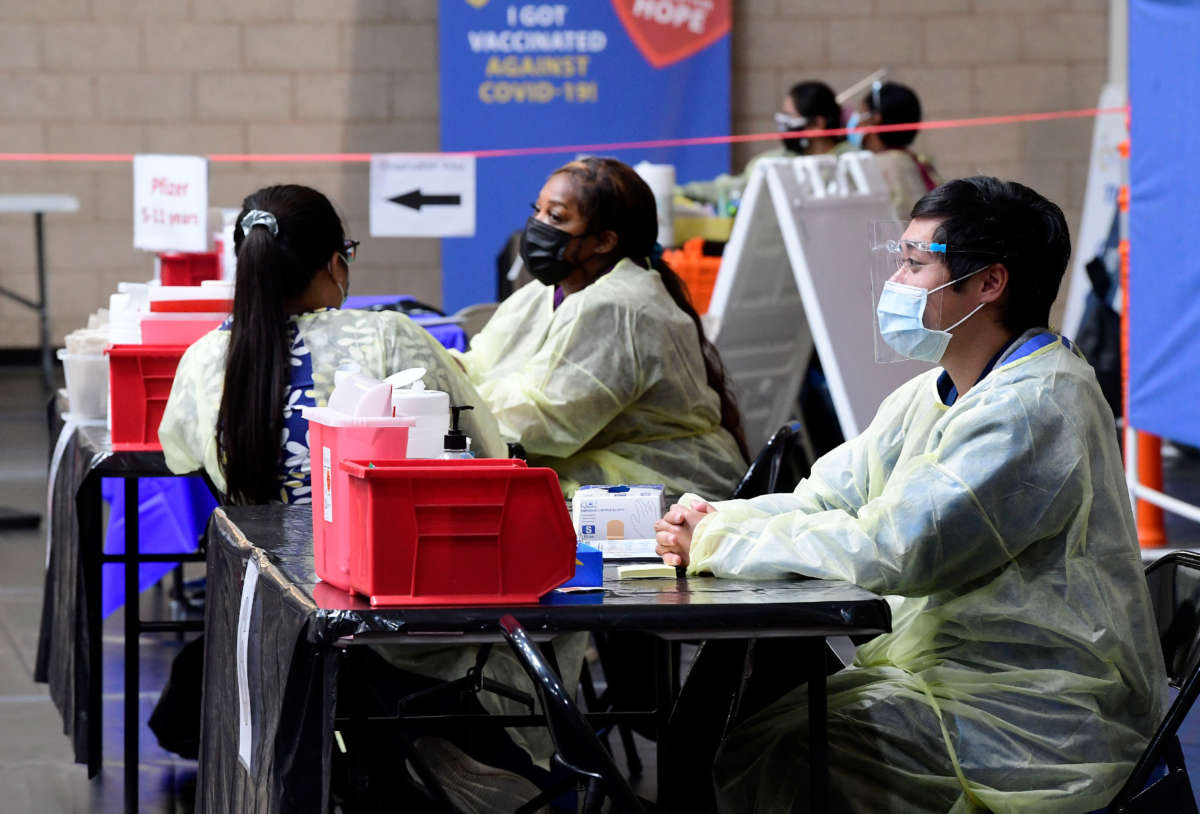
Two prominent Democratic senators have requested a Government Accountability Office study of why covid vaccination rates remain far lower among Medicaid enrollees than the general population and what barriers are impeding state efforts to increase immunizations among program beneficiaries, low-income people who have been disproportionately affected by the virus.
Sens. Robert Casey Jr. of Pennsylvania and Ron Wyden of Oregon asked for the inquiry, citing recent stories by KHN and Roll Call that have highlighted the problem and states’ ongoing struggle to raise vaccination rates, according to a letter to the GAO that was provided to KHN. A KHN article published in February reported data from several states — Utah, Washington, Virginia, and California — which showed that vaccination rates of the Medicaid population were well below overall state rates. For example, in California, 54% of Medicaid enrollees 5 and older had been at least partly vaccinated, compared with 81% of state residents in that age group.
State and Medicaid health plan officials told KHN that part of the problem was that plans don’t have current addresses or phone numbers for many members, which has made contacting them difficult. In a KHN story published in August, state officials said they were also hampered by a lack of access to data about which members are immunized.
The problems reflect the decentralized nature of Medicaid, which gets the majority of its funding from the federal government but is managed by the states.
“Barriers to vaccinating Medicaid enrollees are particularly troubling given the program’s importance for persons of color and low-wage workers,” the senators wrote in the letter to the GAO.
“We are concerned that these data barriers may be impeding efforts to increase COVID-19 vaccination rates and address persistent health inequities exacerbated by the pandemic, particularly among communities of color and people with limited incomes who have been disproportionately affected by this disease.”
Casey chairs the Senate Special Committee on Aging, and Wyden chairs the Senate Committee on Finance, which oversees Medicare and Medicaid spending.
“We want to ensure every effort is made to ease vaccine access to these beneficiaries,” the senators wrote. “A lack of good data hurts our ability to get shots in arms, which can prolong the pandemic and put high-risk groups in even greater danger.’’
The letter also cited a report by Duke University researchers that says there’s a 15% to 20% difference in vaccination rates between Medicaid beneficiaries and people with other forms of health coverage.
The vaccination lag is especially important because 5 million enrollees are front-line workers in the health industry and other critical services, the senators said, citing a report from the Center on Budget and Policy Priorities.
KHN (Kaiser Health News) is a national newsroom that produces in-depth journalism about health issues. Together with Policy Analysis and Polling, KHN is one of the three major operating programs at KFF (Kaiser Family Foundation). KFF is an endowed nonprofit organization providing information on health issues to the nation.
Important Message: Please Read
For 25 years, Truthout has survived by publishing impactful investigative journalism and analysis; distributing full editions 365 days a year; and building a community of readers who support us with small, hard-earned donations.
Eighty percent of our $3 million yearly budget comes from small donors alone. Of those, 8,000 readers support us with monthly donations. Back in 2018, when Facebook decided to suppress the circulation of posts made by organizations, thereby cutting readers off from seeing many articles shared by the news organizations they had intentionally decided to follow, Truthout’s total traffic declined by 40 percent, as nearly all of our traffic from that platform disappeared.
Now, Google has recently rolled out its AI search bar, providing AI summaries instead of directing readers to our site. Google Search is our single largest source of traffic; it’s the route by which nearly one third of our readers find us. Much like in 2018, a shocking 40 percent of our Google traffic has disappeared overnight.
It will not be easy for Truthout to shoulder this blow. Nor will it be easy for our peers and collaborators — news sites that depend on traffic and aren’t bankrolled by large corporations.
If you can support Truthout with a donation today, you can help us resist the AI onslaught. Please give today.