Honest, paywall-free news is rare. Please support our boldly independent journalism with a donation of any size.
The appearance of triumph and U.S. might has been of paramount importance to President Donald Trump and his administration amid their war on Iran, with much of their pro-war propaganda centered around a vision of the U.S. military as infallible.
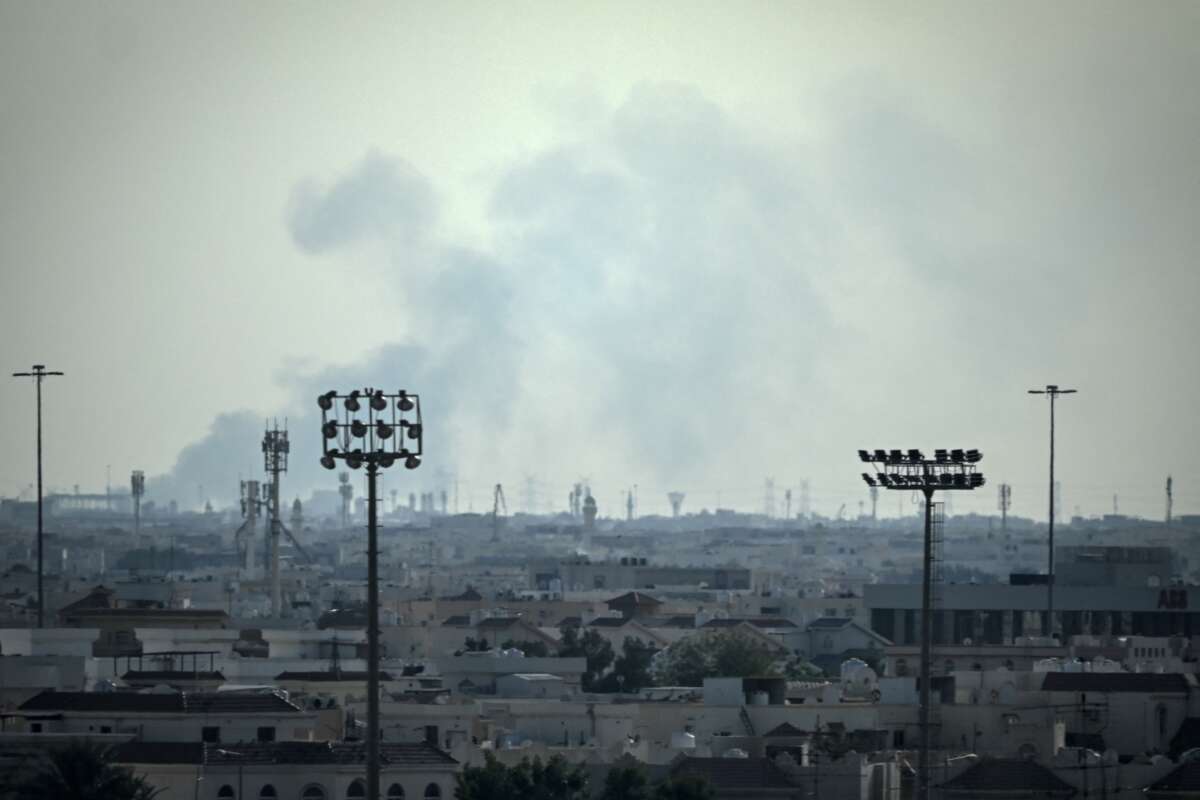
But the U.S. has suffered major losses in the war thus far, the extent of which were reportedly revealed in a New York Times article on Wednesday. According to military officials cited by the outlet, many of the U.S.’s 13 bases near Iran have now been rendered “all but uninhabitable” due to Iran’s retaliatory strikes.
Other reporting has indeed shown extensive damage to military bases in the U.S. Satellite imagery reported by BBC last week showed the U.S.’s Al-Sader and Al-Ruwais bases in the United Arab Emirates and the U.S.’s naval base in Bahrain with huge, black craters where buildings once stood. The Ali Al-Salem base in Kuwait, Al-Udeid in Qatar, and Prince Sultan in Saudi Arabia have also sustained damage visible from a satellite, BBC and the Center for Strategic & International Studies analysis found.
In all, Iranian strikes caused about $800 million in damage to U.S. bases in the first two weeks of the war, the report said.
Officials told the Times that the U.S.’s ability to fight the war has been degraded as a result of the damage. On top of that, the relocation of personnel has raised new, heightened concerns about potential U.S. violations of protecting civilians in combat.
“Yes, we have the ability to set up expedient operation centers, but you’re absolutely going to lose capability,” retired Master Sergeant Wes J. Bryant, who worked as a Special Operations targeting specialist for the Air Force and is now a whistleblower, told the Times. “You can’t just put all that equipment on the top of a hotel, for example. Some of it is unwieldy.”
Indeed, officials have said that many troops are now relocated to “hotels and office spaces” across the region and as far as Europe. U.S. officials’ sharing of this information may serve as discouragement for Iran to continue striking the bases.
Regardless, the positioning of troops in civilian structures raises concerns of the U.S. using civilians as “human shields.” This already became a concern once in the early days of the war, when Iran struck a hotel in Bahrain and reportedly wounded two Pentagon employees. The U.S. and Israel have both previously justified huge numbers of civilian deaths as legitimate collateral in military strikes.
“From outset of this war, U.S. soldiers fled military bases in [Gulf Cooperation Council (GCC) countries] to hide in hotels and offices. They use GCC citizens as human shield,” said Iranian Foreign Minister Abbas Araghchi in a post on social media.
“Hotels in U.S. deny bookings to officers who may endanger customers. GCC hotels should do same,” Araghchi said, attaching an email screenshot from the Department of Homeland Security allegedly showing federal immigration agents being denied a stay at a Minneapolis-area Hilton hotel earlier this year.
Iran’s strikes on its neighbors have spurred debate within Gulf states as to the purpose of allowing the U.S. to set up bases there, only for their countries to suffer the damage.
The reporting shines new light on losses suffered by the U.S. as it projects an image of strength.
The U.S. military has been tight-lipped about its casualties in the war, and experts have said that damage to U.S. bases has been underreported. The military has obfuscated and downplayed U.S. casualties, with officials reporting 13 fatalities thus far but with injuries numbering in the hundreds at least.
Earlier this month, U.S. federal contractors Planet Labs and Vantor said they were delaying the release of satellite imagery over the affected states. The companies said they did so at their own discretion, though a Vantor spokesperson said: “During times of geopolitical conflict, Vantor may implement enhanced access controls to prevent the misuse of sensitive geospatial intelligence and to help protect allied forces and civilians.”
Meanwhile, the administration has plastered videos of grainy strike footage on social media spliced with video game and football clips, seeking to glorify the strikes as acts of domination. Trump has repeatedly declared victory in the war, condemning anything other than U.S. triumph as “fake news.” But, some analysts have said that these tactics don’t project strength, and rather only lay bare the cruelty of U.S. empire.
Press freedom is under attack
As Trump cracks down on political speech, independent media is increasingly necessary.
Truthout produces reporting you won’t see in the mainstream: journalism from the frontlines of global conflict, interviews with grassroots movement leaders, high-quality legal analysis and more.
Our work is possible thanks to reader support. Help Truthout catalyze change and social justice — make a tax-deductible monthly or one-time donation today.