Truthout is an indispensable resource for activists, movement leaders and workers everywhere. Please make this work possible with a quick donation.
As tensions escalate in an internal battle between the centrist and left wings of the Democratic Party, a group of progressives is making a move to begin a new left wing party apparatus.
A decision by the Democratic Congressional Campaign Committee late last month to blacklist vendors that support primary challengers over party incumbents drew a line in the sand against the potential progressive overthrow of the party’s established order.
In response to the new policy, 14 progressive groups Thursday announced the launch of the DCCC Blacklist — a collective of left wing vendors that are bucking the Democratic campaign arm’s directive.
“If we want to fight for a Green New Deal, Medicare for All, free college, getting corporate money out of politics, and an end to mass incarceration and deportation then we need to help build a network of alternative campaign infrastructure to support progressive primary challengers from this DCCC sabotage,” said Waleed Shahid, communications director for the progressive group Justice Democrats, one of the groups behind the new vendor list.
As Common Dreams reported Thursday, reconciliation attempts over the vendor policy stalled out this week. Rep. Cheri Bustos (D-Ill.), the chair of the DCCC, told Politico Wednesday that she had no intention of backing down in her decision.
“We’ve got a policy that the caucus supports, the leadership supports, and it plays the long game,” said Bustos.
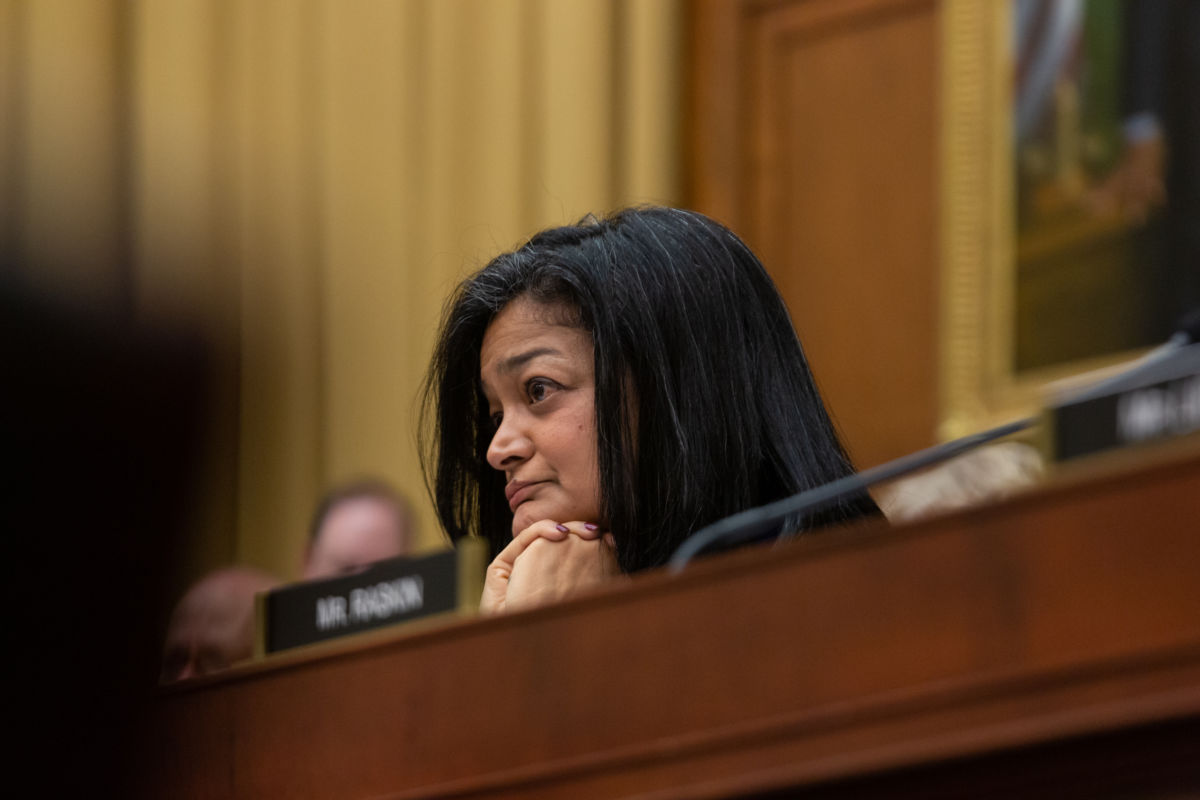
That prompted a response from Rep. Pramila Jayapal (D-Wash.), the co-chair of the Congressional Progressive Caucus.
“It is not playing games for the Democratic Party to be inclusive of all its members perspectives,” said Jayapal.
The divisions over the policy appear to have deepened to the point that there’s not likely a way out for both sides. In a statement about the creation of the new vendor list, Indivisible’s María Urbina said that intentional or not, the policy on vendors would serve to keep the party less diverse.
“We reject the DCCC’s attempt to hoard power, which will only serve to keep that talent pool — and Congress itself — disproportionately white and male,” said Urbina.
Thursday’s announcement of a shadow vendor group would seem to imply that the split in the party is reaching beyond rhetoric and into the realm of material reality — a secondary, progressive party apparatus, if created, will pose a credible threat to the party establishment as it is currently constituted.
“As a loyal Democrat and proud progressive, I believe that we don’t just need more Democrats in Congress — we also need better Democrats in Congress,” said Rebecca Katz, founder of New Deal Strategies. “I won’t hesitate to work with progressive candidates challenging incumbent Democrats who are out of touch with their constituents.” “
“If that means getting blacklisted by the DCCC,” Katz added, “then so be it.”
Sean McElwee, a Democratic activist whose company Data for Progress is a founding member of the project, said in a statement that he relished the opportunity to fight against the entrenched interests of the party in the 2019-2020 cycle.
“This cycle, progressives made our intentions clear: we would work to unseat anti-choice, anti-LGBT bigots like Dan Lipinski and Henry Cuellar,” said McElwee. “The DCCC made a choice: to stand with bigots instead of the progressive future of the party. They will fail.”
Marisa Franco, the founder of Latinx advocacy group Mijente, said in a statement that the new list was part of a movement to reshape the party and, hopefully, the country.
“The Democratic Party is at a crossroads and establishment party politics are not going to successfully lead us into the future,” said Franco. “We need new voices and bold ideas from people who represent the diversity of the country and are willing to lead the new American majority that is built by movements for social justice.”
An urgent fundraising appeal: 10 Days to raise $50,000
Truthout is one of only a few platforms for justice-oriented, grassroots journalism. Today, we face an existential threat.
Due to Google’s launch of AI search, we’ve seen a drastic plunge in our site traffic and, as a result, our revenue. We lost 15 percent of our readership overnight. This was a readership we painstakingly built over decades, and it vanished because Google chose corporate greed over a healthy democracy.
We are fundraising right now to meet our basic operating expenses. If you can support Truthout with a one-time or monthly donation, you will make a significant impact on our work. Anything you can do makes a difference — we appreciate your support.