Support justice-driven, accurate and transparent news — make a quick donation to Truthout today!
After the White House announced Saturday that President Donald Trump will nominate Kathy Kraninger to take over the Consumer Financial Protection Bureau (CFPB), critics blasted her as “unqualified” and warned that if confirmed, she will continue Acting Director Mick Mulvaney’s efforts to defang the agency.
Mulvaney wants a puppet he can control at @CFPB. @KathyKraninger has ZERO relevant experience indicating she’s qualified to be America’s chief consumer advocate. #ProtectConsumers https://t.co/AktUQuAeag
— Allied Progress (@AlliedProgress) June 16, 2018
Bolstering those concerns—and defaulting to Mulvaney’s preferred acronym for the agency—White House Deputy Press Secretary Lindsay Walters said that Kraninger “will bring a fresh perspective and much-needed management experience to the BCFP, which has been plagued by excessive spending, dysfunctional operations, and politicized agendas. As a staunch supporter of free enterprise, she will continue the reforms of the bureau initiated by Acting Director Mick Mulvaney.”
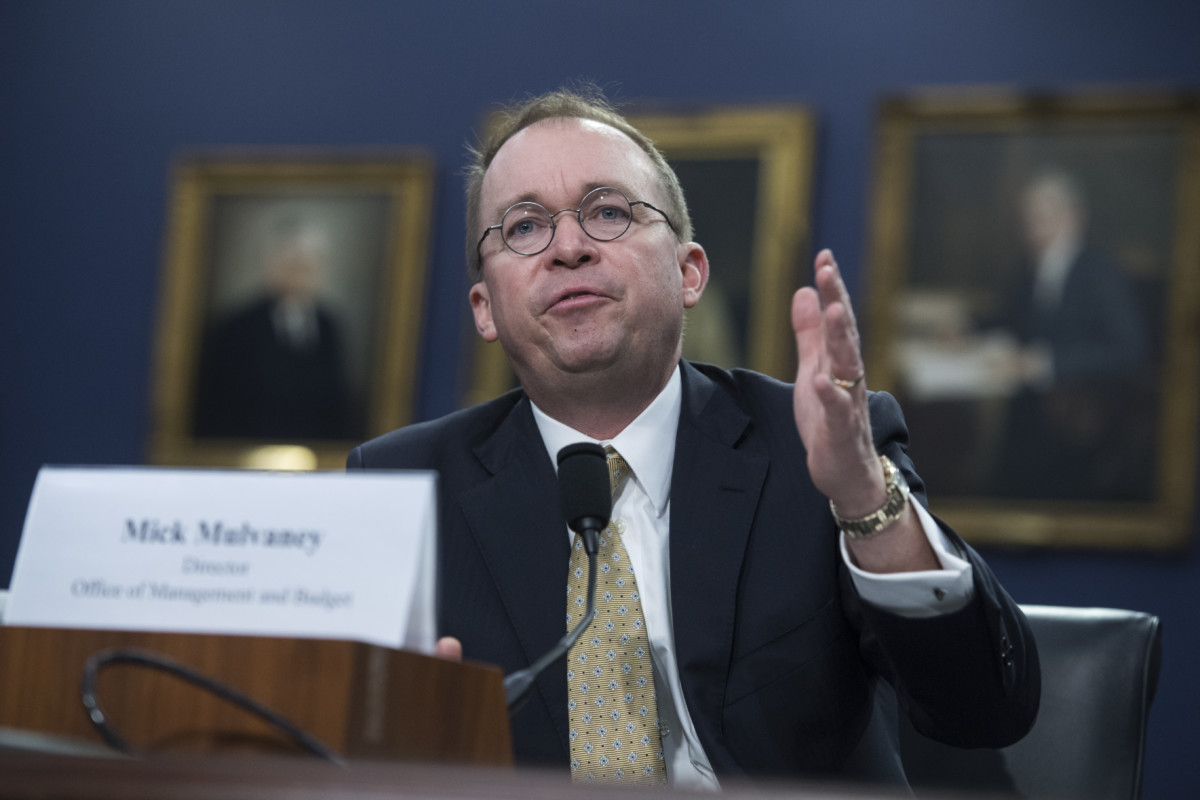
Kraninger is currently associate director of the Office of Management and Budget (OMB)—serving under Mulvaney, who is also the director of that agency. He has headed the CFPB since November, when his appointment by Trump was denounced as “an illegal affront to the American public” and “a gift to Wall Street grifters.” In his short tenure at the CFPB, Mulvaney has made several moves aimed at rolling back rules meant to protect consumers from the financial industry’s abuses.
Some argue that Kraninger’s nomination is simply a strategic decision by the Trump administration to keep Mulvaney in charge of the agency longer.
“This is nothing more than a desperate attempt by Mick Mulvaney to maintain his grip on the CFPB, so he can continue undermining its important consumer protection mission on behalf of the powerful Wall Street special interests and predatory lenders that have bankrolled his career,” declared Karl Frisch, executive director of the consumer watchdog group Allied Progress.
As Jim Puzzanghera explained for the Los Angeles Times:
By sending a nomination—any nomination—to the Senate for the bureau’s director, the White House ensures that Mulvaney can continue serving as the bureau’s acting director.
Under a time limit in the law by which he was appointed in November, Mulvaney would have been required to leave the consumer bureau job on June 22 if the White House hadn’t nominated someone to be the permanent director.
Kraninger’s nomination triggers a provision in the Federal Vacancies Reform Act that allows Mulvaney to serve until the Senate confirms or rejects the pick. That process could take months.
“The Senate should call the White House’s bluff and immediately move to hold confirmation hearings and vote to reject this wholly unqualified candidate,” Frisch concluded. “They need to send Mulvaney and the president a message that consumers deserve a champion not a stalking horse.”
Media that fights fascism
Truthout is funded almost entirely by readers — that’s why we can speak truth to power and cut against the mainstream narrative. But independent journalists at Truthout face mounting political repression under Trump.
We rely on your support to survive McCarthyist censorship. Please make a tax-deductible one-time or monthly donation.