Honest, paywall-free news is rare. Please support our boldly independent journalism with a donation of any size.
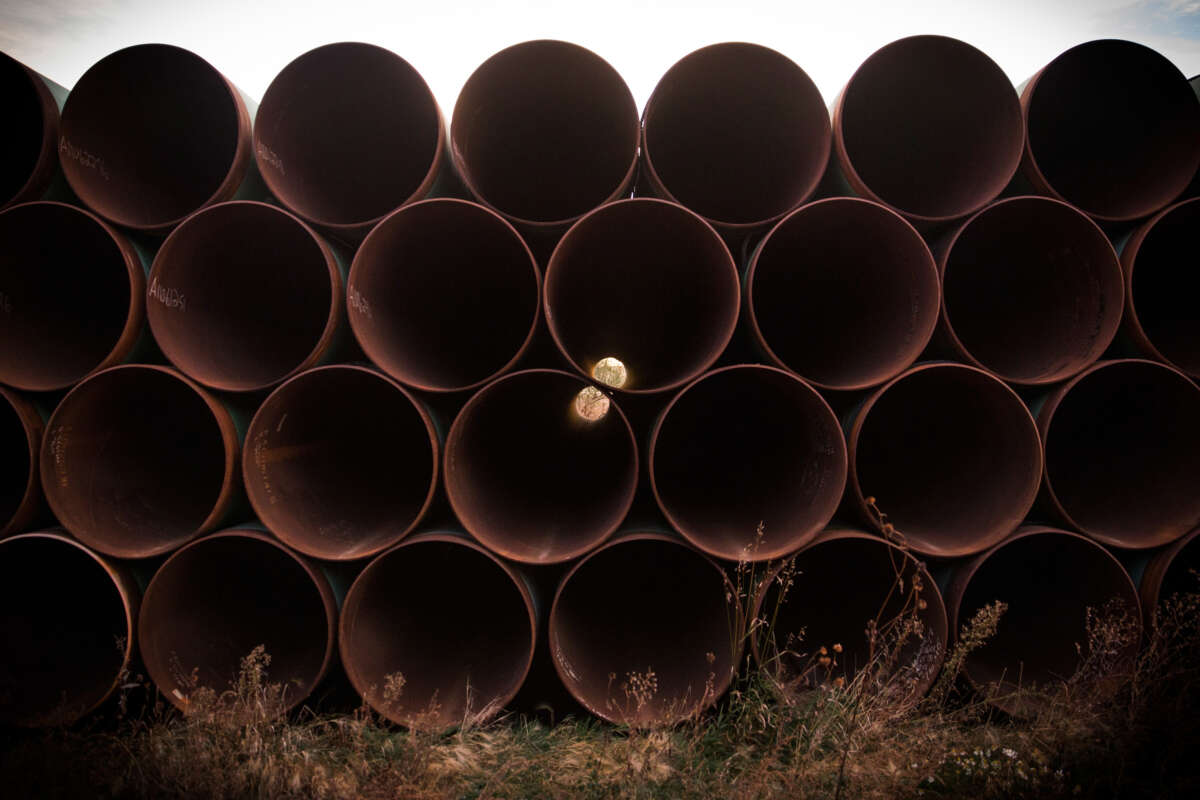
Climate campaigners on Thursday were outraged but unsurprised as TC Energy in Canada — the company behind the Keystone XL pipeline proposal defeated last year — announced the 22nd spill from its original pipeline.
The company said it had shut down the Keystone pipeline, which carries 622,000 barrels per day of crude oil, at about 8:00 pm after oil spilled into a creek near Washington, Kansas, a town of about 1,000 people.
The spill took place about 20 miles south of a junction where the pipeline splits, with one segment carrying crude oil from tar sands in Canada to Illinois and another carrying it to the Gulf Coast.
Previous Keystone spills have sent more than 383,000 gallons of crude oil into rural wetlands in North Dakota and more than 200,000 gallons into a pasture in South Dakota.
It was not yet known, as of this writing, how large the leak was or what damage had been done by the time the company shut down the pipeline.
Jane Kleeb, founder of progressive grassroots group Bold Nebraska, said the spill offers just the latest evidence that “stronger laws” are needed to stop companies like TC Energy from transporting dangerous chemicals and crude oil across the country, often putting tribal areas, waterways, and wildlife habitats at risk.
“As we wait to hear how much tar sands and toxic chemicals like benzene have polluted our water from TC Energy’s Keystone 1 pipeline, it is critical to note our state and counties need better laws on the books for pipelines,” said Kleeb. “Thankfully, landowners and tribal nations came together to stop the larger Keystone XL pipeline from cutting through sensitive areas of the Ogallala Aquifer and the Niobrara River.”
Jamie Henn, director of Fossil Free Media, suggested the leak — like more than 8,000 other hazardous pipeline accidents that have taken place since 1986, resulting in more than 500 deaths — is precisely the kind of disaster campaigners have been warning about for years as they’ve pushed to shut down plans to build the Keystone XL pipeline, the Mountain Valley pipeline, and other projects.
“Pipelines leak,” said Henn. “Especially ones named Keystone.”
We lost 15 percent of our traffic overnight.
We now have three full months of data since Google changed its search to feature AI results. The numbers are worse than we anticipated. Overall readership that comes to Truthout through Google is down 54 percent against last year. The number of new readers who discover Truthout via Google searches is down 49 percent, and returning users from Google are down 51 percent.
We lost 15 percent of our readership overnight. This was a readership we painstakingly built over decades, and it vanished because Google chose corporate greed over a healthy democracy.
We anticipate a loss of roughly $500,000 in online revenue as a result of this massive traffic plunge in the next year alone.
The only way we can keep publishing is with strong reader support. We are asking you to start a monthly donation to Truthout today — anything you can do, whether $5 or $25, makes a difference.