Part of the Series
Struggle and Solidarity: Writing Toward Palestinian Liberation
On a late March morning in 2024 in Khan Younis, southern Gaza, 24-year-old Yasmin Siam felt sharp pain grip her stomach. Labor had begun. Time was slipping away. But there was no way to get her to a hospital.
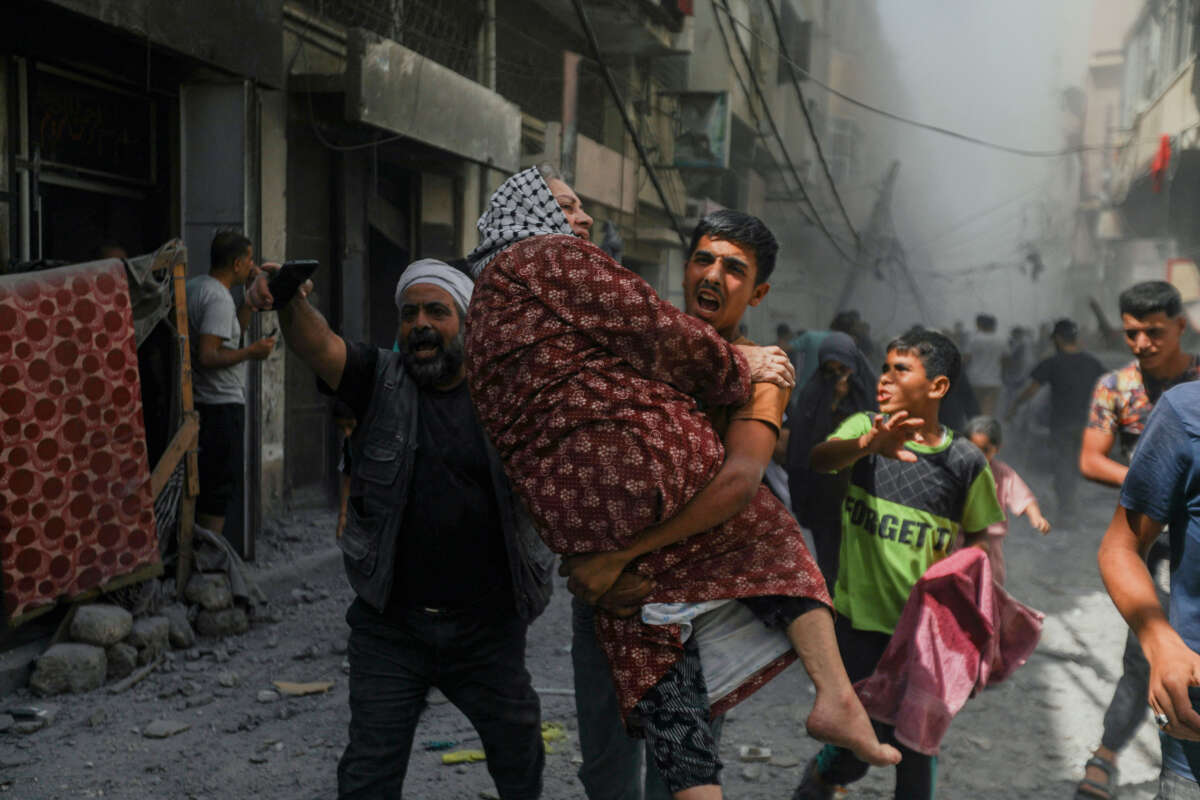
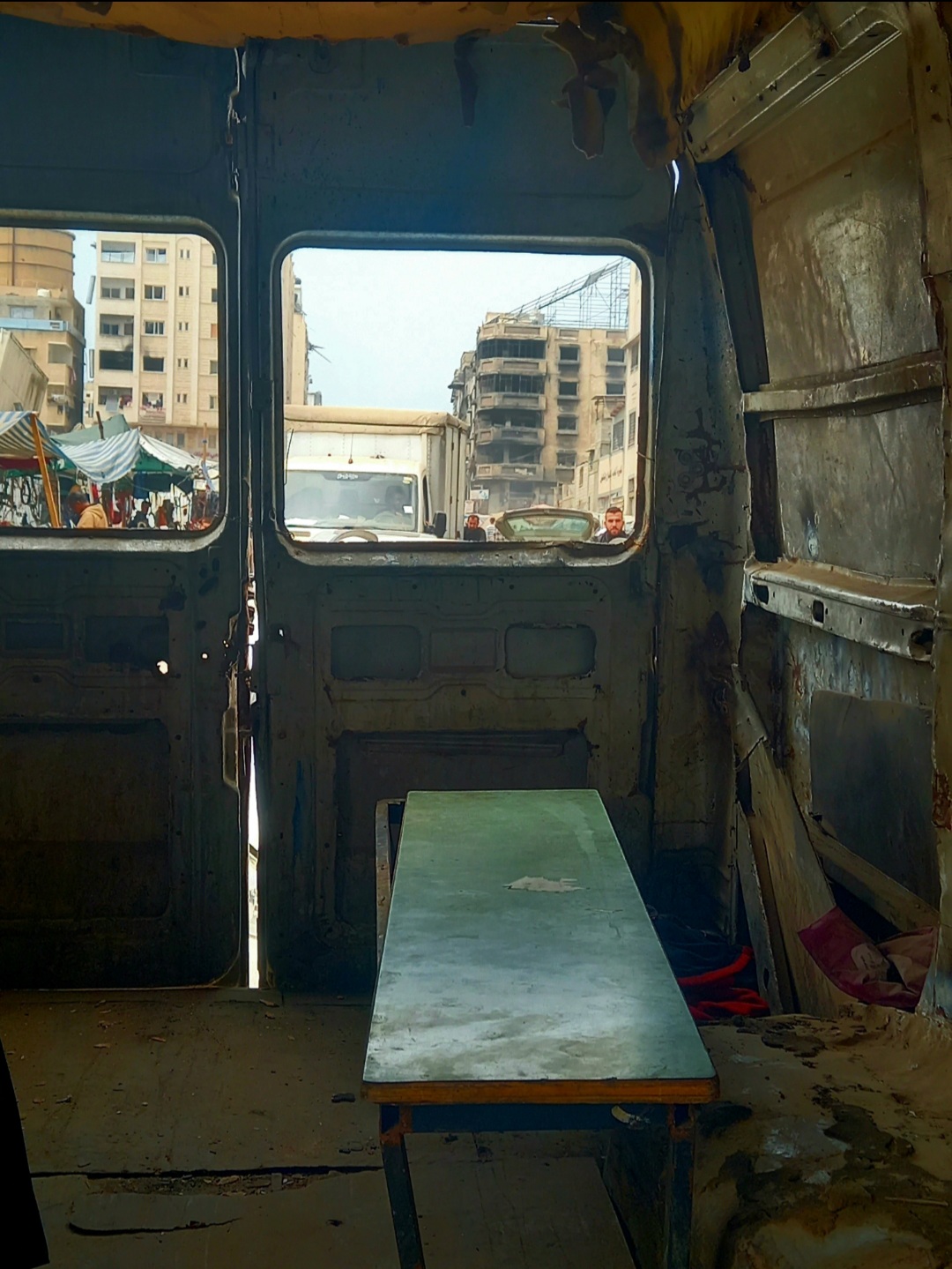
Ambulances had become rare after months of Israeli attacks — too few to answer every cry for help. Airstrikes were ongoing, and Gaza had fallen into total immobility. Cars were gone. Fuel was gone. And ambulances, often targeted, had mostly been destroyed or left in flames.
With no other option, Siam’s family placed her on a donkey cart — the only remaining form of “transportation” in a time where movement itself had died. The journey to Nasser Hospital, which should have taken 20 minutes, took over an hour due to the wreckage, craters, and collapsed roads across Khan Younis.
By the time she arrived, Siam was bleeding dangerously. Her blood pressure was collapsing. Doctors tried everything they could with the little they had. But then came the words that shattered her: “Your baby didn’t make it.”
It was her first child.
The child did not die because of war wounds, but because movement throughout Gaza has been decimated.
Yasmin Siam’s heartbreaking story is just one of many amid the widespread crisis gripping Gaza’s transportation system. During the temporary ceasefire that lasted about 60 days — from late November 2023 until the end of January 2024 — the displaced residents of northern Gaza, who had fled south and remained trapped far from their destroyed homes for over a year, began to return north. During this period, the Israeli occupation designated specific days for walking and other days for permitting vehicles for Palestinians returning north. But Palestinians couldn’t wait; fear of the war restarting consumed them. So, many returned on foot, walking more than 30 kilometers.
Water is scarce in Gaza. We search for it in far-off places, then carry it home through harsh, punishing paths. Even a sip of water has become a journey of pain.
Among them was the family of my uncle Iyad, who had fled to Khan Younis. He told me the story of an elderly man, about 80 years old, who suddenly collapsed while walking — dying on his way back home. He could not bear the long journey and exhaustion; he died before reaching safety. The story was heartbreaking, but I felt that the very attempt to return gave him a small measure of joy after a year of sorrow. For this man, returning home was a dream. Yet, he never made it — his body weaker than his will.
But the most painful story — the one I witnessed with my own eyes and will never forget — happened during the ground siege imposed by Israeli forces in February 2024.
During those terrifying days, we sealed every window shut. No sound. No light. Any sign of life could bring death to everyone in the neighborhood. But at around 7:00 am, I heard a young man crying faintly, “I’m thirsty.” I crept to the window, peeking through a narrow crack. Outside, I saw him — a young man who had been riding his bicycle. A tank had fired on him, and he was struck in the shoulder.
It wasn’t a fatal injury. He could have survived. He was lying directly beneath my home, crying out, asking for water. I heard every word. But I didn’t — couldn’t — move. I knew that stepping outside meant death. Not just for me, but for everyone in the house. I still carry the guilt. I didn’t save him, though I could hear him dying. But in my heart, I also knew: during the siege, no ambulances ever came. No rescue was possible. Even the smallest wound became a death sentence.
He kept bleeding for hours, his voice growing weaker… until it vanished. Three days later, after the Israeli army withdrew, neighbors found his body and buried him in the yard of Al-Qahira School in Al-Rimal. There were no proper burials anymore. The cemeteries were full. There was no transport left to reach them. In Gaza, even the act of burying the dead has become a luxury. Schoolyards and hospital courtyards are now our mass graves.
The suffering caused by the absence of transportation doesn’t stop — it continues in countless forms. When aid is distributed, it’s often near the Netzarim checkpoint, the dividing line between northern and southern Gaza. People from both sides walk more than 15 kilometers just to reach it — on foot. But walking itself requires strength. And who among us still has strength after more than a year and a half of hunger and malnutrition? Imagine someone walking 15 kilometers to reach the aid, then another 15 kilometers back — and often returning with nothing.
Take my father, for example. He has lost over 20 kilograms — not just because of the lack of food, but from the endless walking. When basic supplies become available, he walks and walks to get them and comes back utterly exhausted. And what about the elderly? The ones who carry heavy water containers on their backs because there is no transport to help them? Water is scarce in Gaza. We search for it in far-off places, then carry it home through harsh, punishing paths. Even a sip of water has become a journey of pain.
What we suffer from today is beyond words — even donkey carts are vanishing. The horse-drawn carts disappeared long ago, most of them targeted and destroyed, as if no form of movement should be left to us. The few donkeys that survived are now dying slowly from hunger. Seeing a living animal on Gaza’s streets has become rare. On June 28, 2025, I saw it with my own eyes: A donkey had collapsed on the road, too weak to stand, while its owner struggled helplessly to lift it. He tried everything — pulling, calling, pleading — but nothing worked. The animal was simply too frail, too starved to move.
If even our last means of transport collapses in the street, what hope is left for the humans who still need to run?
If even our last means of transport collapses in the street, what hope is left for the humans who still need to run?
Imagine a father running down a silent street in Gaza, his child bleeding in his arms. “Hold on,” he whispers. “We’ll get to the hospital.” But there are no cars. No ambulances. Not even a cart. Only the sound of his footsteps — and his son’s fading breath. The boy dies — not only from the wound, but from the brutal fact that there was no way to move.
In Gaza, life has died in every form. No homes. No hospitals. No streets. No transport. All that remains are tents — and exhausted bodies slowly dying, silently, in all the ways Gaza teaches us to die.
48 Hours Left: All gifts to Truthout now matched!
From now until the end of the year, all donations to Truthout will be matched dollar for dollar up to $31,000! Thanks to a generous supporter, your one-time gift today will be matched immediately. As well, your monthly donation will be matched for the whole first year, doubling your impact.
We have just 48 hours left to raise $31,000 and receive the full match.
This matching gift comes at a critical time. As Trump attempts to silence dissenting voices and oppositional nonprofits, reader support is our best defense against the right-wing agenda.
Help Truthout confront Trump’s fascism in 2026, and have your donation matched now!