Truthout is a vital news source and a living history of political struggle. If you think our work is valuable, support us with a donation of any size.
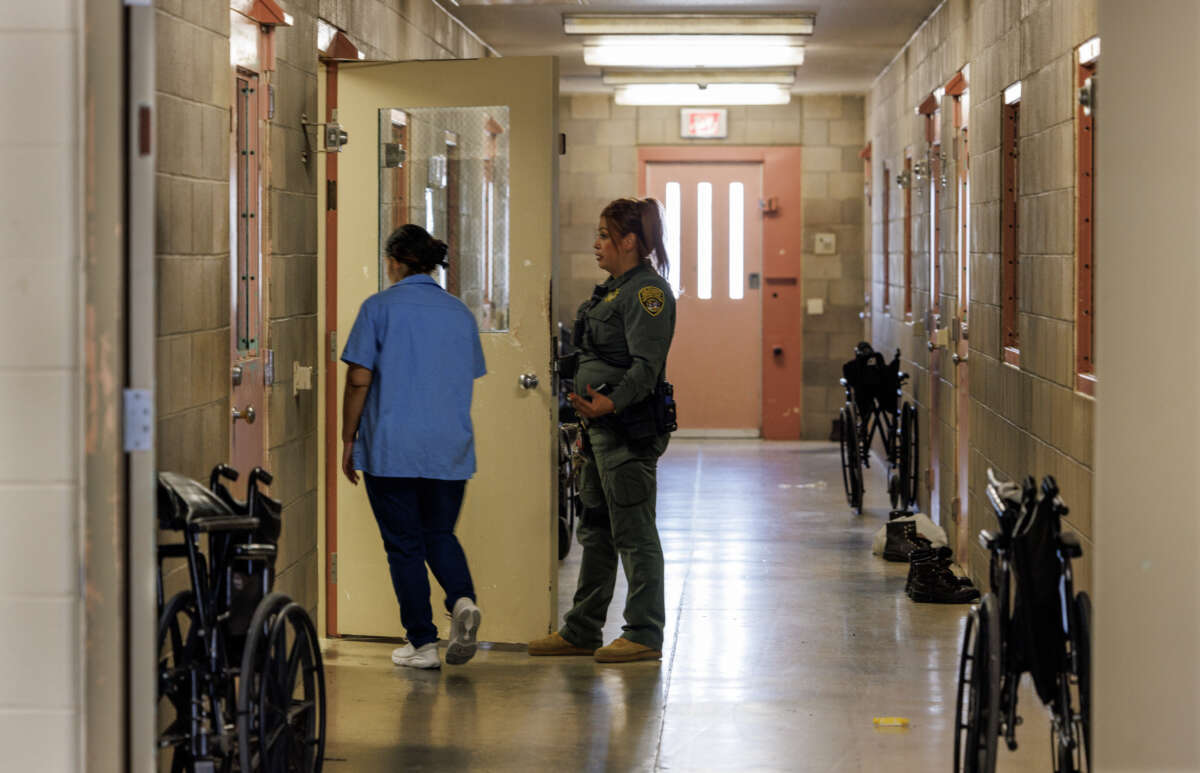
Tien Mo is still awaiting a response to her 2017 clemency application. As previously reported in Truthout, at age 20, she was sentenced to life without parole in her classmate’s death. As the years pass, the 44-year-old’s hopes dwindle. Now, a proposed statute gives her renewed optimism.
Clemency typically takes two forms — a pardon, which removes the consequences of a criminal conviction such as possible deportation; or a commutation, which reduces a prison sentence.
In March, California Gov. Gavin Newsom announced an additional avenue to commutation. The proposed rules task the parole board with reviewing people six years before their first parole date, conducting a commutation and resentencing (C&R) hearing that may include victims’ families and the district attorney, and then issuing recommendations to both the governor regarding clemency and to the courts regarding resentencing. Currently, the board holds the power to recommend incarcerated individuals for clemency and, upon the governor’s request, investigate applicants. But, said Kelly Savage, the Drop LWOP (Life Without Parole) coordinator and a clemency recipient, the board had stopped doing these reviews in 1994.
During his nearly seven years in office, Newsom has granted 160 commutations.
“The proposed regulations provide the framework that will allow the Board to exercise its authority under section 4812, as well as section 1172.1,” Diana Crofts-Pelayo, the governor’s deputy director of communications, wrote in an email to Truthout. The governor will retain the discretion to grant executive clemency outside this process. During his nearly seven years in office, Newsom has granted 160 commutations.
Crofts-Pelayo did not respond about the number of applications still awaiting decision. The regulations need to be approved by the state’s Office of Administrative Law, a process that can take months.
While the rules exclude those sentenced to death and those who have already had parole hearings, it does not exclude those sentenced to life without parole. “This change gives a lot of hope to ones who have been hopeless such as myself,” Mo wrote in a prison e-message to Truthout. “I am no longer that 18-year-old and I’ve worked hard to not be that person any longer.” Mo has never had a disciplinary infraction during her 24 years in state prison, no small feat given the many petty acts that often lead to sanctions.

Her sentence bars her from a parole hearing, but a C&R hearing would allow her to show those changes.
She’s not the only one hopeful about this new avenue.
“This change gives a lot of hope to ones who have been hopeless such as myself.”
Joseph Bell is the coordinating associate with Drop LWOP and a member of the California Clemency Council. He knows the importance of clemency. In 1995, Bell, then 26, was convicted of murder and sentenced to life without parole. Behind bars, he co-founded programs to help others, particularly 19- to 25-year-olds, but thought he would never leave prison. Nearly 20 years into his sentence, a high school friend told him about commutation. What Bell learned was discouraging. “No LWOPS were getting commuted,” he told Truthout. At first, he thought filing would be a waste of time. But in 2015, he changed his mind and, in 2018, then-Gov. Jerry Brown commuted his sentence to 25 years to life, allowing him to apply for parole. Bell was released in May 2020.
Bell is cautiously optimistic about the additional avenue, wondering if the board will have the staffing to adequately identify prospective applicants. In addition, the board has a low release rate: In October 2025, the board granted parole in only 23 percent of its 281 hearings, down from the 35 percent granted in 2023. Still, Bell said, the change brings hope to those who fear dying in prison.
“We Have Been Burned So Many Times”
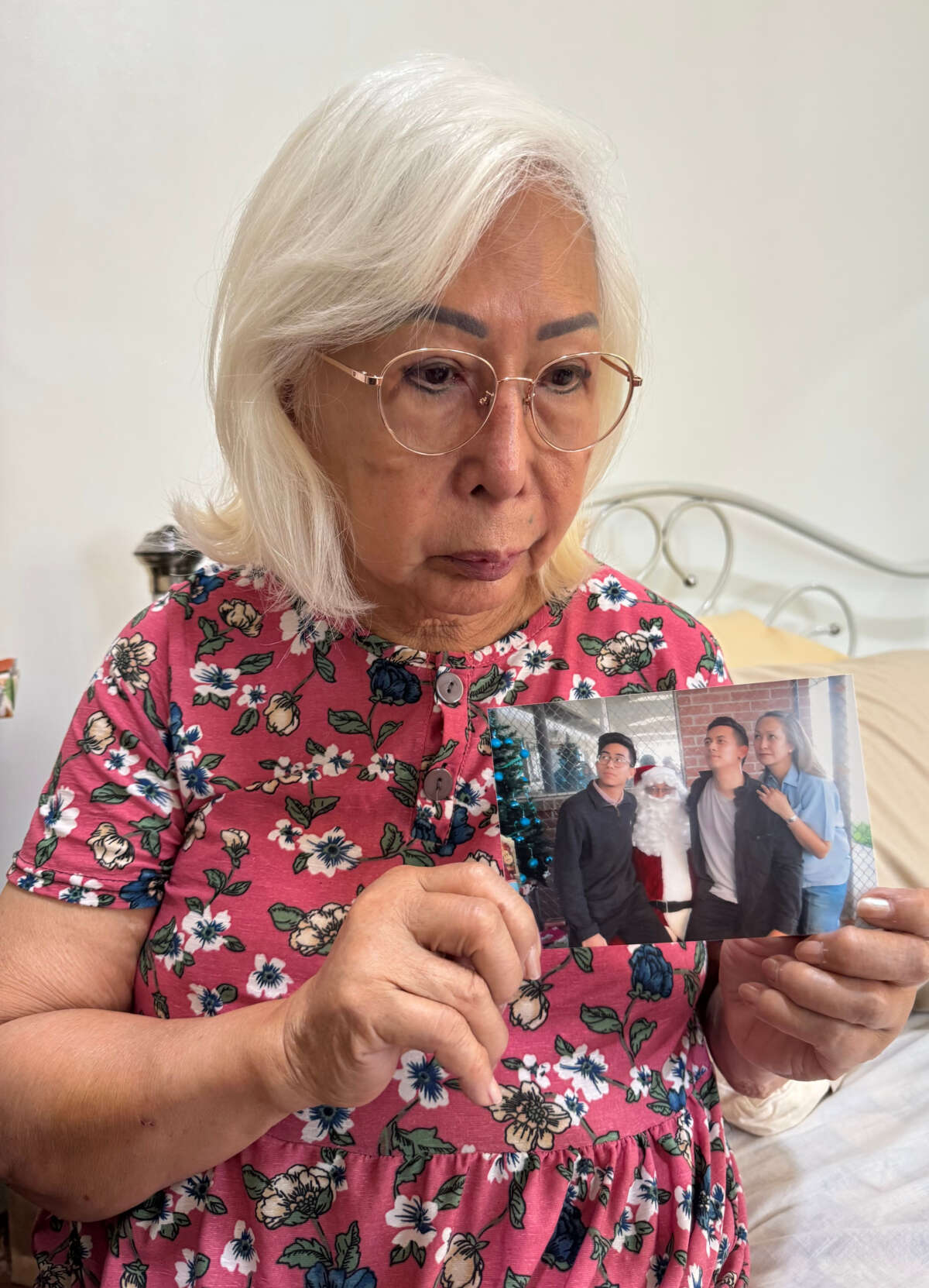
Inside prisons, feelings about the proposal are mixed. “We have been burned so many times with these so-called additional avenues,” Annamaria Gana, imprisoned at the California Institution for Women (CIW), told Truthout.
“There are certain things in my life that contributed to the way I thought during my crime,” she explained. Gana grew up in the Philippines steeped in a culture where family is paramount. But childhood taught her differently. Three days before her seventh birthday, her father died by suicide. No one told the young girl how he died. Years later, she assumed that the silence meant that suicide was shameful. Her mother, struggling with solo parenting, repeatedly told Gana and her siblings about the sacrifices she made for them. Her words made Gana feel like a burden.
Still, Gana married and had two sons. In 2007, the family emigrated to the United States on an investor visa, buying a UPS store and a small house to rent for income. Three years later, Gana was diagnosed with breast cancer. She had a double mastectomy, began chemotherapy, and took steroids to counter the drugs’ effects. She lost her appetite and, despite taking Ambien, her ability to sleep.
Gana had been the head of their business and, without her, the store floundered. Their tenant stopped paying rent and the family needed to hire a lawyer to evict him. The chemotherapy and steroids, coupled with their financial woes, caused depression and suicidal ideation. She feared that she might not survive and worried about her husband, nearly 31 years her senior, and their sons.
“If I die, then everybody else should die with me,” she recalled thinking.
On Mother’s Day 2011, she shot and killed her husband and wounded their 16-year-old son. (Their 9-year-old was unharmed.) She tried to shoot herself but survived. She was sentenced to 40 years to life.
When Gana entered CIW in 2015, the prison had the nation’s highest suicide rate among women’s prisons. Gana joined the Suicide Prevention Outreach Committee, whose members met weekly to come up with plans for awareness, prevention, and spotting red flags. The next year, as part of the committee’s outreach, she shared her story before hundreds of her peers and visiting state senators. She now shares her story regularly in support groups.
In 2018, friends and prison staff encouraged her to apply for clemency. She did and, months later, was interviewed by then-Governor Brown’s staff. “I ended up crying the whole time,” she recalled. “I was not able to articulate what happened.” Brown did not grant her clemency before he left office; her application is still pending.
Since that disastrous interview, she has participated in numerous self-help groups to understand her motivations. She also volunteers at support groups and, like Mo, has not incurred a single disciplinary ticket during her 12 years in prison. Now, she’s asking for the chance to be reviewed, to talk about what happened and the person she’s become.
The 56-year-old understands that her actions seem inexcusable. “A mom is supposed to be a protector,” she reflected. “A mom is supposed to be not causing harm to her children.”
Throughout her incarceration, she worked tirelessly to repair her relationship with her sons. As children, they visited twice a month. Now in their twenties, they visit several times a year. Both have firmly supported her clemency efforts, even attempting to see the governor on her behalf. (They were unsuccessful.)
“Then Christmas Comes and Nobody Gets Called”
Kinzie Noordman knows firsthand how an additional avenue can simply be a repeat vilification.
In 2003, Noordman, then 20, and her high school friend Damien Guerrero brought their friend, 18-year-old Kelly Bullwinkle, to the woods where Guerrero had dug a shallow grave the day before. Guerrero shot Bullwinkle, injuring her. Noordman then fired the fatal shot. They attempted to hide her body in the shallow grave.
“What I did was horrible,” Noordman told Truthout by phone. “There were no mitigating factors.”
She confirmed that she and Bullwinkle had both been romantically involved with Guerrero. But jealousy wasn’t her motivation, she explained. Shortly before that night, she and Bullwinkle had argued about Guerrero — not about their love triangle, but about their peers’ perceptions of Noordman. “She told me that everyone was laughing at me because they knew I was in love with Damien. I wanted to prove her wrong,” Noordman said.
“We were goths,” she continued. “We always talked about death and dying. It was totally normal for us to discuss murder or violence.” It didn’t help that Noordman was deep into methamphetamine and cocaine use, further clouding her judgment as a teenager. When Guerrero once again brought up wanting to kill someone, Noordman suggested Bullwinkle. “He didn’t say no,” she recalled.
Guerrero was sentenced to 15 years to life. Noordman was sentenced to 25 years to life with a 20-year firearm enhancement, bringing her sentence to 45-to-life.
When she first entered prison, Noordman still blamed her co-defendant. Then, she participated in the prison’s first Victim Offender Education Group, an 18- to-24-month program based on restorative justice principles. Incarcerated participants met with outside survivors of violence, sharing their experiences and eating lunch together. Hearing about the ripple effects of similar harms profoundly changed her view. “I didn’t want to keep messing up and hurting other people,” she said. She enrolled in other programs, including Bridges to Life, another restorative justice program. When she was transferred to CIW, she started the program there and now facilitates it every Sunday.
“Every time there’s a holiday, we’re like, ‘Is he gonna do it?’ … Then Christmas comes and nobody gets called.”
She also had a chance to practice restorative justice in her own case. A friend of Bullwinkle’s learned that Noordman had participated in a victim awareness walk-a-thon in Bullwinkle’s honor. The woman reached out, leading to a mediated conversation about how Noordman’s actions had affected both of their lives. “She was getting ready to go to college. She couldn’t really move forward. That [murder] derailed her plans,” Noordman recalled. “She really needed to tell me that.”

Shortly after entering prison in 2005, Noordman received a write-up for having hooch (homemade alcohol) in a common area. Since then, she has remained disciplinary-free. In 2023, her near-spotless prison record caused officials to recommend a resentencing hearing to remove the 20-year gun enhancement. The judge acknowledged her positive contributions, but decided that her original crime outweighed those improvements and denied resentencing.
Noordman applied for clemency in 2018 and, like Gana, was interviewed months later by the governor’s staff. Since then, she has heard nothing.
“Every time there’s a holiday, we’re like, ‘Is he gonna do it?’” she said. “Then Christmas comes and nobody gets called.”
The governor’s office did not say whether he plans to grant commutations before the year ends.
Media that fights fascism
Truthout is funded almost entirely by readers — that’s why we can speak truth to power and cut against the mainstream narrative. But independent journalists at Truthout face mounting political repression under Trump.
We rely on your support to survive McCarthyist censorship. Please make a tax-deductible one-time or monthly donation.