Honest, paywall-free news is rare. Please support our boldly independent journalism with a donation of any size.
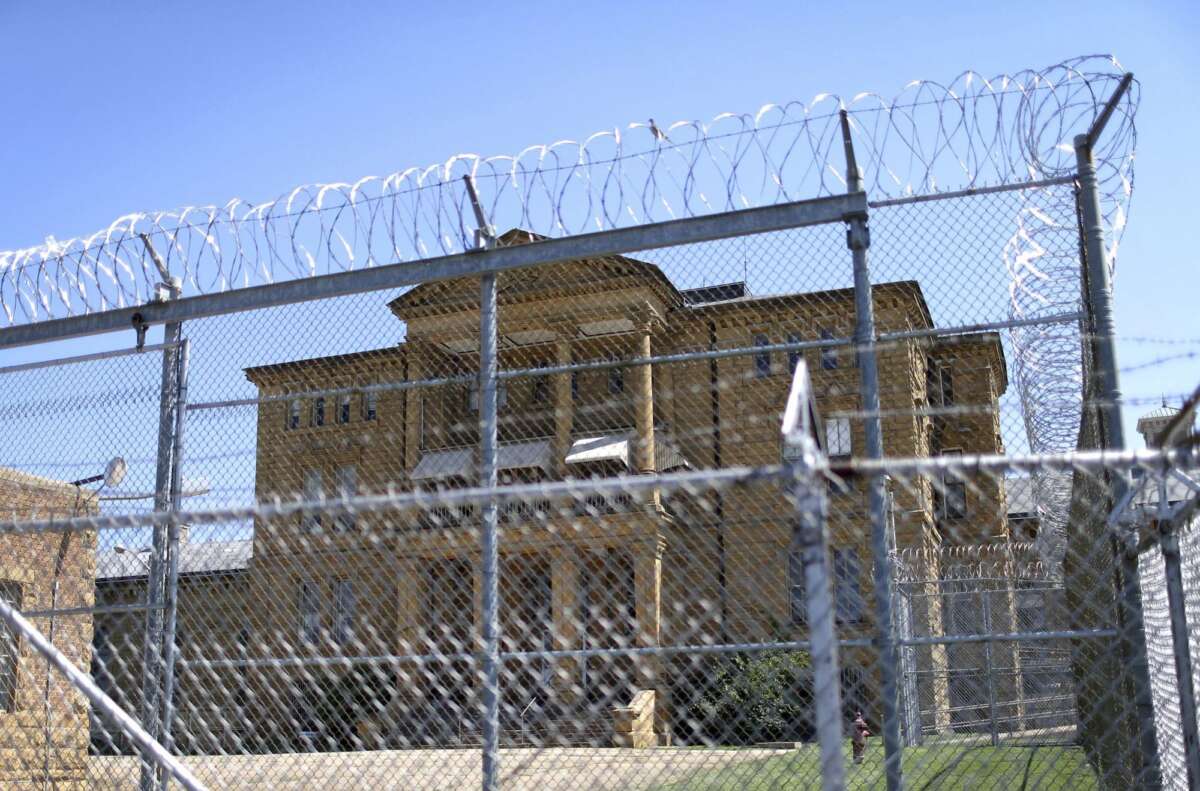
It came in a red envelope, postmarked December 27, 2010. It was addressed to me at Menard Correctional Center, cell 546 in the south uppers. The return address stunned me when I read it. It came from Sacramento Street in Vallejo, California, 94590. The sender’s name was Gramma, Aimee Bell. I examined the handwriting for a long while, trying to remember if I’d ever seen it before. It did not spark a memory. I noticed she’d made a mistake on the last “a” in gramma and the “6” in her apartment number. They were both thicker and darker, where she’d retraced them to connect her misprints. Her lettering was a bit shaky, but almost perfect for a woman of 77 years of age.
I carefully removed the staple put in by mailroom staff after they sliced it open to inspect its contents for dangerous contraband. I pulled the envelope open, then quickly put my nose to it and inhaled deeply. I was hoping there would be remnants of a scent that would transport me back to my preteen years and the time I spent watching her expertly weave her long black locks into this strange donut she told me was called a bun.
I smiled when I caught the slightest scent of perfume. I took another long, deep inhale, this time hoping to commit it to my olfactory memory. I’d been incarcerated for the past 20 years of her life and hadn’t seen her for 23 years — the last time being at the burial of my father.
I removed the card from its envelope, and on the front was a colorful cartoon of the three wise men. Two of them had their gifts for baby Jesus, and the third had an oversized, green Frankenstein monster. The other two looked at the third, and one of them said, “You idiot!… I said go and get Frankincense!” I laughed and opened the card to find the words, “Happy Holidays.”
I was happily surprised to find a handwritten message that read:
Hi Mike
Be blessed
Be strong
And know that you are loved.
I thought you would find
This card funny.
I re-read the message several times, not wanting it to be over. Focusing that day, as I’ve done hundreds of times since, on one line: “And know that you are loved.”
There was one more thing in that card that would become one of my most prized possessions — a picture. In that picture my grandmother was sitting in a chair, with her head slightly tilted to the right. She had a small grin on her lips, and she peeked directly at me from behind her round, gold, thin, wire-rimmed glasses. Her right hand was raised, as if she was using her thumb to gesture to my Aunt Steph. She was leaning in close, making sure she fit into the frame.
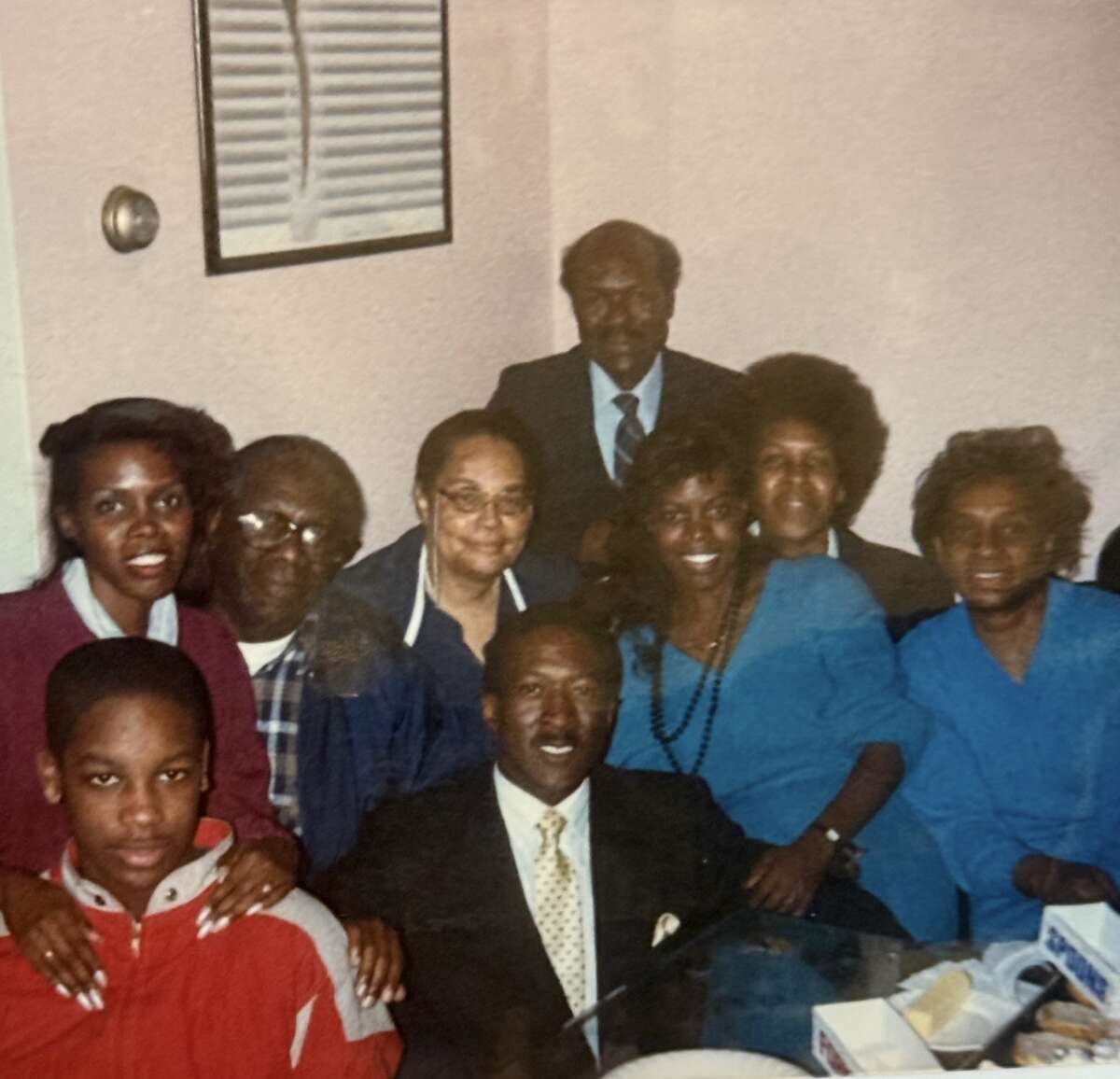
Tears began to well up as I studied every inch of her face. I recognized the features of my father, my aunts, brother, nieces, and nephews. I saw myself. There wasn’t a wrinkle to be found anywhere on her face of almost 80 years. She was beautiful. Our skin tones matched, our eyes matched, and so did our lips. The ones my mother refers to as “them Aimee Bell lips.” On both of their heads was that famous Bell mane. Thick, wavy and past their shoulders. My aunt had her arm around my gramma’s shoulders, and she smiled at me through the camera also. I missed them both.
I smelled the envelope one last time, then hurriedly returned the card and picture and wrapped it in plastic. I hoped this would preserve whatever parts of her there were, for as long as I could. That was 15 years ago, and to this day I still find comfort and motivation inside that red envelope. It still means the world to me. There was one last handwritten line before she signed it “Love Gramma Bell.”
It read:
I look forward to seeing you soon.
I’ll never forget that moment, the feeling I had when I received this letter. But, sadly, scenes like this will never happen again.
Once mail is scanned by a machine and given a serial number, it is now a document. It is a file that no longer has my gramma’s scent.
According to a memorandum from the Illinois Department of Corrections, which was sent to all individuals in custody in September 2025, the department will be making changes to incoming mail processes. The memorandum informed us that, “Beginning immediately, the Illinois Department of Corrections (IDOC) will start to implement changes to incoming mail processed in response to the increasing threat of drugs and/or chemical-laced paper entering facilities through the mail, which have resulted in a rise of suspectedoverdoses among individuals in custody and staff exposures.” It goes on to state that, “Mailroom staff will scan in color … letters, greeting cards, and photographs.”
This means the death of all personal mail in IDOC. Once mail is scanned by a machine and given a serial number, it is now a document. It is a file that no longer has my gramma’s scent. It is no longer the paper from her personal notebook or the card she took her time to search for, purchase, and send to me because she “thought I’d find it funny.” It’s no longer the picture of her and my Aunt Steph. It is now two epithets of my loved ones who’ve had their identities stolen by anonymous mailroom staff, who will unceremoniously dispose of their original images in six months.
One of the bullet points in IDOC’s memo reads:
Scanned documents will be available on your tablets for six months from the date they were scanned. Original mail documents will be retained for at least six months.
These ineffective attempts to prevent drugs or chemical-laced paper from entering facilities via mail are not new. There’s a decades-long history. This will only be the latest failed attempt I’ve seen in my 35 years of incarceration, all over this state. The outcomes have only managed to criminalize a different segment of our support systems.
When I and many of the men around me were at our hope’s end, letters and pictures were the knots at the end of the rope that we clung to.
First, they banned all mail that had lipstick on it. This criminalized our girlfriends and wives. Next, it was any mail that had crayon, marker, glitter, ribbons, or stickers. This move basically outlawed every item children use to create drawings and cards for their incarcerated parents. I wonder how this affected our sisters and mothers in Logan Correctional Center. Then, any mail that had stickers or decals on it was returned, with staff even going as far as to remove stamps from each piece of incoming mail.
When all of these “new incoming processes” failed to prevent the introduction of drugs or laced paper into facilities, they targeted our visitors. We were no longer allowed to share food with our families, and we were no longer allowed to hold their hands. Even more and worse for those of us who were parents, we weren’t allowed to hold our own infants.
I don’t have the statistics regarding just exactly how many individuals in custody have overdosed, or how many staff have been exposed. To be sure, even one overdose or exposure is too many; but they do not claim that there have been actual overdoses and/or exposures. They are instituting devastating policies based on “suspected” happenings. They are chasing ghosts they have yet to catch during my entire 35 years. They have only resulted in the demonization of our friends and loved ones. Letters help to deepen our familial and societal connections.
This is about being human and feeling the intimate connection that comes with the texture, color, and scent of an envelope, containing a card and the words of a gramma to her firstborn grandchild.
When I and many of the men around me were at our hope’s end, letters and pictures were the knots at the end of the rope that we clung to. When we were put in the hole and supermax prison for years on end, it was the pictures and letters from our loved ones that bolstered our mental strength and wellbeing. For me personally, when I wasn’t sure I’d be able to exist another hour, it was my pictures and a birthday card my mother sent me for my 20th birthday that gave me the reasons to keep going.
This is bigger than just pictures and mail. This is bigger than the miniscule minority of individuals who have abused our privileges for nefarious reasons. This is bigger than the unproven and suspected allegations leveled at an entire population of individuals. This is about being human and feeling the intimate connection that comes with the texture, color, and scent of an envelope, containing a card and the words of a gramma to her firstborn grandchild. It’s about the umpteenth time I put my nose to that envelope, then read the words “you are loved.”
I called one of my best friends, Nelson Morris, to tell him about our loss of physical mail. Before I could finish, he launched into his own story on the importance of mail.
In these pictures and letters, we find purpose, we find peace, and we find the power to persevere.
Nelson Morris has given his permission for me to share our conversation here. He reminded me of the time his mother died suddenly from a heart attack. He went on to tell me something he said he’s never shared with anyone. He told me that a week after she passed, he received a letter from his mother in the mail. She was telling him she was okay and how much she loved him. He kept that letter for the last 10 years of his incarceration.
He said, “Bro, I didn’t even leave it in the cell. I kept it on me in my phone book for 10 years. When I brought it home with me, it hardly had any ink on it.”
That’s the importance of our pictures and mail. Now they’re being reduced to PDF images and documents we can request by filling out an “Individual In Custody Request Form (DOC 028) Individual in Custody Staff Request Form.” In a final parting shot, we are slapped in the face with the following statement: “IDOC understands the importance of mail as a means of connection with loved ones…”
I respectfully and unequivocally say, No, you do not!
Nelson had a life sentence plus 35 years, and that letter from an angel changed his life and gave him purpose; after nearly 30 years of incarceration he was released, never to recidivate. Like Nelson, I have my own angel letter. In fact, I have many from loved ones who are no longer with us. So do the many men and women incarcerated in IDOC. In these pictures and letters, we find purpose, we find peace, and we find the power to persevere.
I hope IDOC will reconsider this change. I fear the effects on those in custody and our families will outweigh the effectiveness of this policy change. I also fear that if and when this policy fails, they will target our contact visits. When will this end?
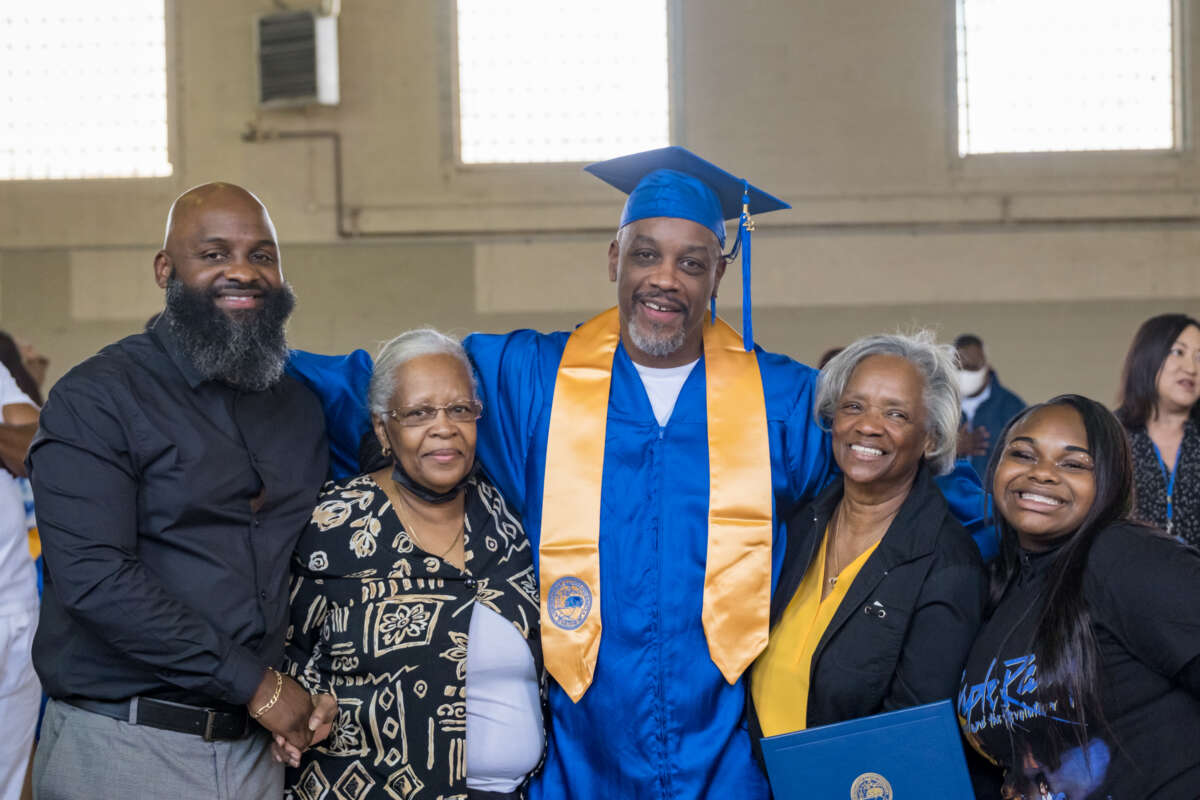
My gramma’s aspiration and dream of seeing me soon never came to fruition. Only five years later, due to the horrible mind-stealing disease of dementia, she would no longer remember me. Fourteen years later, on April 24, 2024, at the age of 92, she became an ancestor, and will never have the opportunity to see me again.
Now I’m going to smell my red envelope from Gramma Bell.
A terrifying moment. We appeal for your support.
In the last weeks, we have witnessed an authoritarian assault on communities in Minnesota and across the nation.
The need for truthful, grassroots reporting is urgent at this cataclysmic historical moment. Yet, Trump-aligned billionaires and other allies have taken over many legacy media outlets — the culmination of a decades-long campaign to place control of the narrative into the hands of the political right.
We refuse to let Trump’s blatant propaganda machine go unchecked. Untethered to corporate ownership or advertisers, Truthout remains fearless in our reporting and our determination to use journalism as a tool for justice.
But we need your help just to fund our basic expenses. Over 80 percent of Truthout’s funding comes from small individual donations from our community of readers, and over a third of our total budget is supported by recurring monthly donors.
Truthout has launched a fundraiser, and we have a goal to add 200 new monthly donors in the next 24 hours. Whether you can make a small monthly donation or a larger one-time gift, Truthout only works with your support.