Did you know that Truthout is a nonprofit and independently funded by readers like you? If you value what we do, please support our work with a donation.
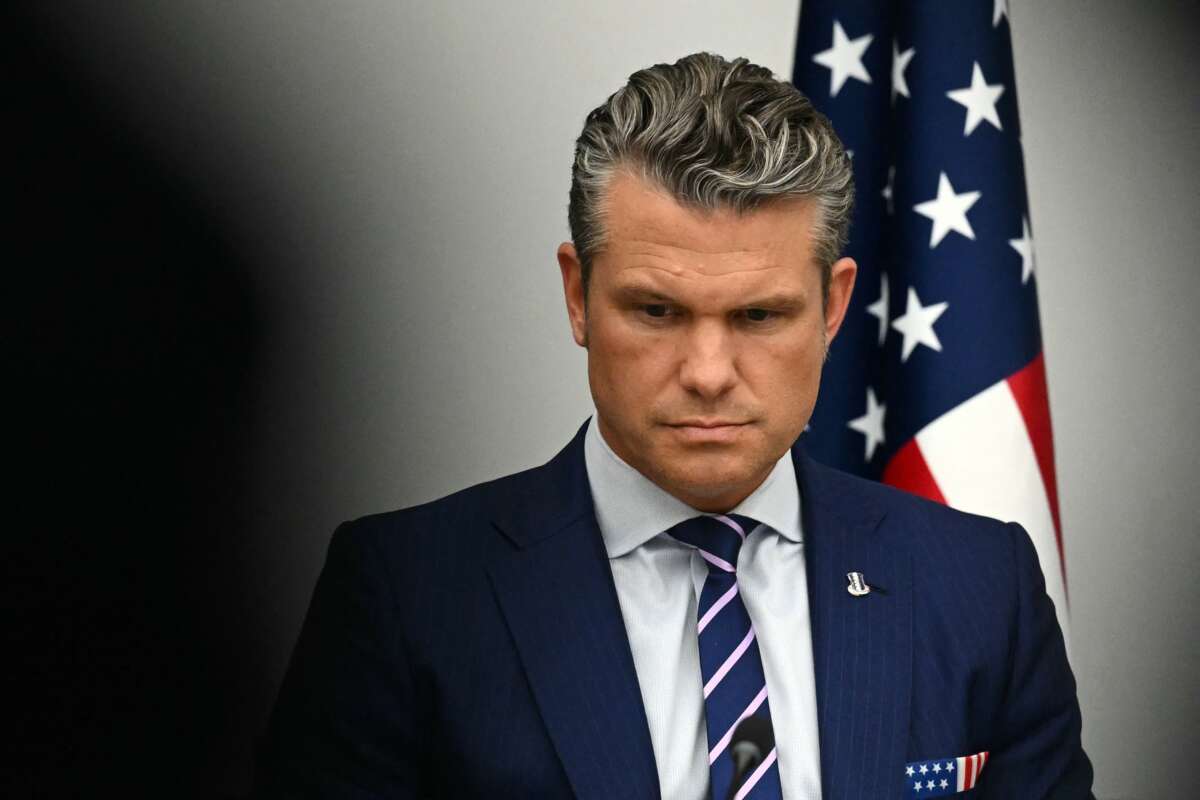
Secretary of Defense Pete Hegseth has reportedly restricted Pentagon officials’ interactions with Congress or other legislators in a seeming attempt to further limit information on the U.S.’s military operations after he dumped the department’s press corps last week.
On October 15, Hegseth and deputy Steve Feinberg sent a memo to Pentagon officials announcing a new policy mandating that any communications they have with Congress or state elected officials must first be approved by the Defense Department’s legislative affairs office. That office is currently led by Donald Trump appointee Dane Hughes.
Information such as mandated congressional reports, requests for information by lawmakers, drafting and technical assistance, and legislative correspondence must be approved by the office, the memo says. Previously, individual offices within the Pentagon managed their own communications with lawmakers.
Hegseth and Feinberg also ordered the legislative affairs office to compile a report of the Pentagon’s interactions with Congress to address “issues, inefficiencies or misalignments” within 90 days. It instructs the office to present proposals to “enhance compliance.”
The memo was issued on the same day that the vast majority of journalists covering the Pentagon walked out last week, after Hegseth implemented new, restrictive rules that put a major gag on the information journalists are allowed to access.
This has left the Pentagon without a dedicated set of journalists from major news outlets. Critics say the rules are disturbing, and a step toward government censorship.
The memo, first reported by Breaking Defense and confirmed with officials by The Associated Press, says that the move is necessary for the Department of Defense to “achieve our legislative goals.”
“This requires coordination and alignment of Department messaging when engaging with Congress to ensure consistency and support for the Department’s priorities to re-establish deterrence, rebuild our military, and revive the warrior ethos,” the memo says.
“Unauthorized engagements with Congress by [Department of Defense] personnel acting in their official capacity, no matter how well-intentioned, may undermine Department-wide priorities critical to achieving our legislative objectives,” Hegseth and Feinberg go on.
Top Pentagon Spokesperson Sean Parnell said in a statement that the move is a “pragmatic step” that is meant to “facilitate increased transparency.”
“This review is for processes internal to the Department and does not change how or from whom Congress receives information,” he said.
However, the move has already been criticized by those who say that it will make it harder for Congress to access necessary information.
“Congress decides who Congress will talk to, and the continued efforts of the secretary to wall off the department is not consistent with past tradition, and I frankly don’t think it’ll fly with the members or leaders of the committee,” House Armed Services Committee member Rep. George Whitesides (D-California) told Breaking Defense.
Notably, Hegseth’s continued efforts to limit information coming out of the Pentagon come as the U.S. wages unilateral strikes in the Caribbean and, reportedly, covert operations within Venezuela without having provided any evidence to justify their actions to Congress. The Trump administration’s operation has been marked with secrecy, with the administration refusing to provide any information on the dozens of people it’s killed in strikes that experts say are patently illegal.
25 Years of Truthout: An important fundraising appeal
This September, Truthout is celebrating 25 years of publication. For over two decades, we have been a trusted source for fiercely independent journalism thanks to readers like you.
As we look to the next 25 years, we have launched a special fundraising campaign. Looking to a sustainable future for our publication, we have a fundraising goal of $52,000 in the next 72 hours.
We are asking for your support at this juncture because we face greater threats than ever before in our organizational history. Trump and his MAGA allies are determined to control the information ecosystem, and movement-based organizations are subject to dangerous censorship and scrutiny.
If you can support Truthout with a one-time or monthly donation, you will make a significant impact on our work and our legacy. Anything you can do makes a difference!