Truthout is a vital news source and a living history of political struggle. If you think our work is valuable, support us with a donation of any size.
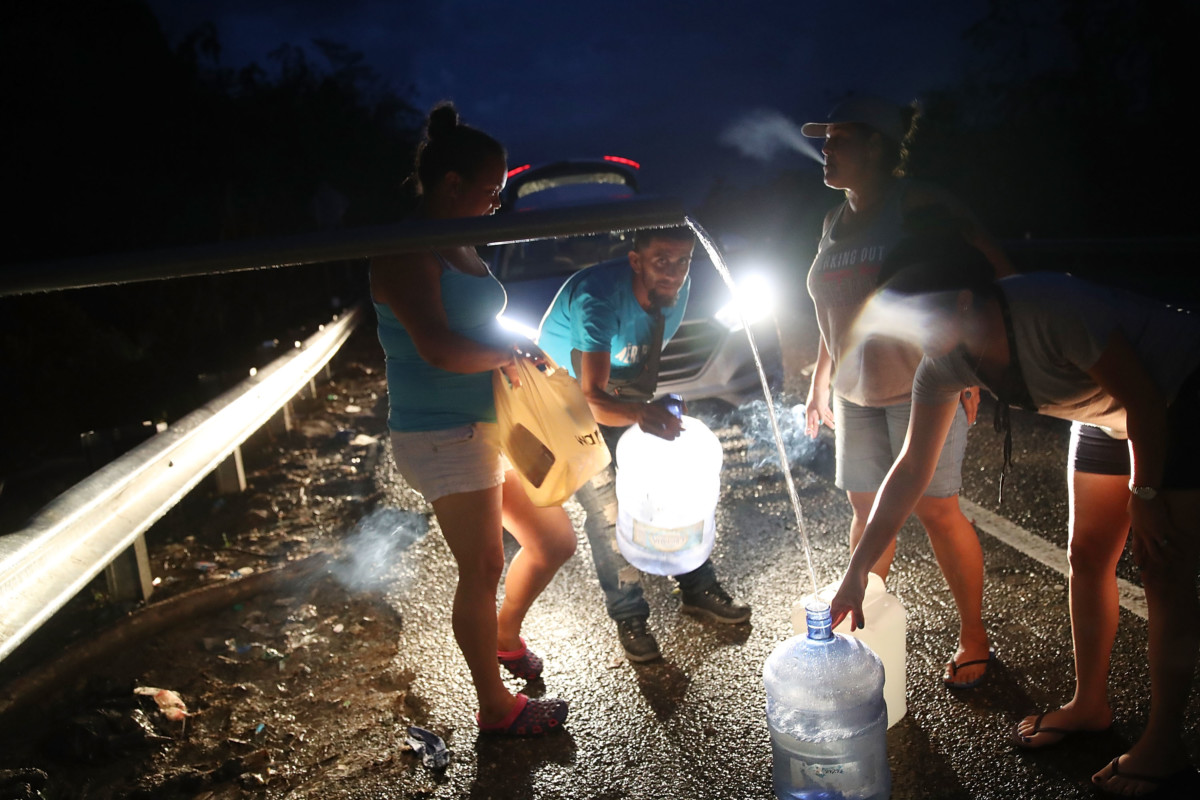
Previous attempts by Wall Street financiers and government officials to privatize Puerto Rico’s water system have produced “disastrous results,” but private equity vultures are exploiting the death and destruction caused by Hurricane Maria to plow ahead with yet another privatization effort — one that environmentalists warn could further imperil the island’s public water infrastructure.
“While the water system urgently needs repairs and upgrades following the destructive Hurricane Maria, privatization is not the answer,” declared Food & Water Watch executive director Wenonah Hauter on Tuesday after Puerto Rico’s Public-Private Partnerships Authority officially kicked off the process (pdf) of partially privatizing the Puerto Rico Aqueducts and Sewers Authority (PRASA), a government-owned entity responsible for water quality and management.
“Responsible, public control of the system is the best way to ensure that every person on the island has access to safe and affordable water and that PRASA operates in the service of the people, not in the service of profits,” Hauter added. “With the privatization of Puerto Rico’s water authority, we expect Wall Street profiteers and corporate water operators will seek to extract wealth without addressing the long-standing issues with the commonwealth’s water system.”
Citing the Puerto Rican government’s newly unveiled bid to begin the privatization process, Food & Water Watch notes that island officials are looking to “crack down on ‘illegal’ access to water, a troubling sign that the bid is focused on profits, not remedying the systemic issues plaguing the water system that is hampering accessibility to safe, clean drinking water for all Puerto Ricans.”
While access to clean water on the island appears to be improving slowly in the aftermath of Hurricane Maria, many Puerto Ricans are still being forced to boil their water, and the island’s infrastructure still faces systemic problems that existed prior to last year’s Category 4 hurricane.
According to a report (pdf) released by the Natural Resources Defense Council last year, “99.5 percent of Puerto Rico’s population was served by community water systems in violation of the Safe Drinking Water Act” in 2015.
Privatization, Hauter argued on Wednesday, would exacerbate these systemic issues while leading to “excessively high water bills for households and businesses already struggling to rebuild in the wake of the climate disaster.”
“PRASA can’t afford another privatization failure now,” Hauter concluded. “It should instead focus on basic services and ensure that every Puerto Rican has access to safe public water.”
25 Years of Truthout: An important fundraising appeal
This September, Truthout is celebrating 25 years of publication. For over two decades, we have been a trusted source for fiercely independent journalism thanks to readers like you.
As we look to the next 25 years, we have launched a special fundraising campaign. Looking to a sustainable future for our publication, we have a fundraising goal of $71,000 in the next 5 days.
We are asking for your support at this juncture because we face greater threats than ever before in our organizational history. Trump and his MAGA allies are determined to control the information ecosystem, and movement-based organizations are subject to dangerous censorship and scrutiny.
If you can support Truthout with a one-time or monthly donation, you will make a significant impact on our work and our legacy. Anything you can do makes a difference!