Truthout is an indispensable resource for activists, movement leaders and workers everywhere. Please make this work possible with a quick donation.
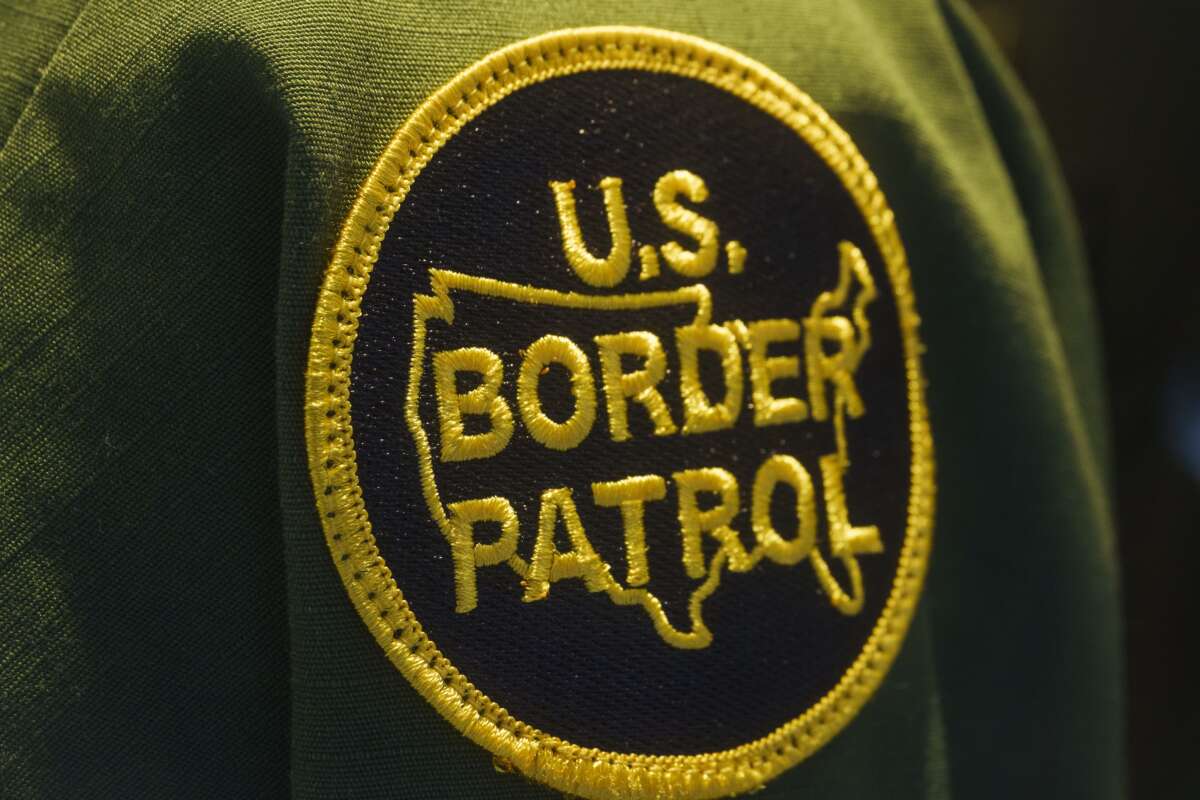
Surveillance footage taken at a Tim Hortons donut shop in Buffalo, New York contradicts the US Department of Homeland Security’s claim that Border Patrol agents dropped Nurul Shah Alam, a 56-year-old nearly blind Rohingya refugee, at a “warm, safe location” after he was released from jail last week, days before he was found dead.
The video obtained by the Buffalo-based outlet Investigative Postlate Wednesday showed a white van pulling up to the shop at about 8:18 pm Eastern, more than an hour after the store — except its drive-thru window — had closed for the night.
A man identified by the Investigative Post as Shah Alam is seen walking by the drive-thru window and then approaching the locked door before walking across the parking lot.
Breaking: IPost has obtained footage showing a Border Patrol van dropping off Nurul Shah Alam at a closed Tim Hortons last Thursday.
— Investigative Post (@ipostnews) February 27, 2026
Shah Alam, nearly-blind & unable to enter the shop, then wandered the city for days. He was found dead Tuesday.https://t.co/fCtRtaxaU9 pic.twitter.com/VkEqgiAUVe
The Border Patrol agents who dropped off Shah Alam — who spoke no English and was blind in one eye with partial, blurry vision in the other — appeared to make no attempt to ensure the Tim Hortons was actually a “safe, warm location” that he could access. The van pulled out of the parking lot less than a minute after Shah Alam was seen exiting it.
When the news broke Wednesday that Shah Alam’s body had been found on a Buffalo street days after he was dropped off following his release — and after subfreezing temperatures hit the Western New York City over the weekend — a spokesperson for Border Patrol said the agents had “offered him a courtesy ride, which he chose to accept to a coffee shop” that was “determined to be a warm, safe location near his last known address.”
They also claimed that Shah Alam, who used a walking stick to get around before his arrest last year, “showed no signs of distress, mobility issues, or disabilities requiring special assistance.”
The agents never notified Shah Alam’s wife and children or his lawyers that he had been dropped off.
“So when [the Department of Homeland Security] says they ‘offered him a courtesy ride to a warm, safe location’… they mean they abandoned him in the parking lot of a closed Tim Hortons in the middle of a winter evening in Buffalo,” said Jeremy Konyndyk, president of Refugees International. “They lie about EVERYTHING.”
Shah Alam had been detained at the Erie County Holding Center since February 2025, when he got lost on the way home from a store where he’d purchased a curtain rod to use as a walking stick. He ended up in the backyard of a woman who called the police, who later reported Shah Alam was swinging the rod “in a menacing manner” — a claim his lawyer denies.
The Investigative Post also obtained police body camera footage of the arrest, which shows Shah Alam saying, “OK” and dropping one end of the curtain rod when an officer told him to put the stick on the ground. The footage also showed the officers Tasering Shah Alam and tackling him to the ground.
After the incident, Shah Alam was charged with assault, trespassing, and possession of a weapon — his walking stick — and held at Erie County Holding Center until last Thursday, after he took a plea deal. He agreed to plead guilty to trespassing and possession of a weapon and was able to avoid immigration detention even though Border Patrol had issued a detainer on him after the arrest, saying he was eligible for deportation.
Buffalo Mayor Sean Ryan told the Investigative Post Thursday that upon finding the Tim Hortons closed last week, Border Patrol should have taken Shah Alam back to the Erie County Holding Center, where sheriff’s deputies who knew his family from their frequent visits to the jail could have called them.
“The lawyer was not informed, and the family is just saying, ‘You had our contact information, you had our address,’” a family friend named Khaleda Shah, told the outlet. “Why not drop him at the address that’s on file for him? Why not bring you back to the holding center, rather than Tim Hortons?”
When New York Times columnist Nicholas Kristof posted on X about Shah Alam’s death on Thursday, DHS responded with its claim that the agents had brought him to a safe location.
“Video shows that it was night and the coffee shop was closed, so he never entered it,” Kristof replied, “Instead, mostly blind and in need of a cane, unable to speak English, he tried to walk home through the freezing night — because your agents never called his family or lawyer but seem to have left him to die. Do you see how your credibility is undermined when you repeatedly make claims that are later contradicted by video evidence? Why should we trust statements from an agency with such a record of deceit?”
DHS had not publicly responded at press time.
Refugees International was among those calling for a full investigation into Border Patrol’s “abandonment” of Shah Alam.
Daniel P. Sullivan, the group’s director Africa, Asia, and the Middle East, noted that the US determined in 2022 that the Myanmar military had committed genocide against the Rohingya people, and Shah Alam was resettled in the US in 2024 after surviving the violence and persecution.
“The death of Shah Alam comes in the midst of ongoing violent immigration enforcement operations by [Customs and Border Protection and Immigration and Customs Enforcement] agents that have led to widespread abuse and neglect of legally resettled refugees as well as deaths of immigrants and American citizens alike,” said Sullivan.
“Refugees International, once again, strongly condemns the Trump administration’s hateful and dehumanizing targeting of those who seek refuge,” he said. “We express solidarity with Mr. Shah Alam’s family, the broader Rohingya community, and all of our neighbors who face increased uncertainty and risks of harm due to the Trump administration’s current policies.”
He also said that one member of the Rohingya community had told the organization that Shah Alam’s “safe haven became a tragedy for him.”
A terrifying moment. We appeal for your support.
In the last weeks, we have witnessed an authoritarian assault on communities in Minnesota and across the nation.
The need for truthful, grassroots reporting is urgent at this cataclysmic historical moment. Yet, Trump-aligned billionaires and other allies have taken over many legacy media outlets — the culmination of a decades-long campaign to place control of the narrative into the hands of the political right.
We refuse to let Trump’s blatant propaganda machine go unchecked. Untethered to corporate ownership or advertisers, Truthout remains fearless in our reporting and our determination to use journalism as a tool for justice.
But we need your help just to fund our basic expenses. Over 80 percent of Truthout’s funding comes from small individual donations from our community of readers, and over a third of our total budget is supported by recurring monthly donors.
Truthout’s fundraiser ended last night, and we fell just short of our goal. But your support still matters immensely. Whether you can make a small monthly donation or a larger one-time gift, Truthout only works with your help.