Support justice-driven, accurate and transparent news — make a quick donation to Truthout today!
The number of influenza cases in the United States is higher this year than last year, sparking concern that this flu season may be worse than usual due to lower rates of vaccination against the virus.
Seventeen jurisdictions across the U.S. report “high” or “very high” levels of influenza. The situation is hitting some areas harder than others, with areas in Georgia and Kansas seeing so many cases of childhood influenza that some schools have had to close.
Due to the holiday break, a federal report on flu counts in the country was not published last week. The most recent report from the Centers for Disease Control and Prevention (CDC), published on December 19, shows that there have been 4.6 million cases of influenza counted this season thus far, with 49,000 hospitalizations and 1,900 deaths — including two infant deaths counted in the last report alone.
The same report from one year ago saw a similar number of pediatric deaths but much lower numbers in the other metrics — just 1.9 million cases of the flu had been counted up to this point in the previous flu season, with only 23,000 hospitalizations and 970 deaths.
It’s possible that the reason this year’s flu season is off to such a bad start is that vaccination rates for the flu are lower — 13 million fewer vaccine doses have been administered this year than in 2024. Although the ideal time to get vaccinated is before the flu season hits in early fall, it’s still not too late to get vaccinated, as the peak for the season is just starting and will likely last through February, and the flu season overall will last well into the spring.
“Getting the vaccine is something that people, particularly those who are in high-risk groups, can do. It’s not going to eliminate their chance of getting infected, but it does mitigate their risk,” said Jesse Bloom, a viral evolution scientist at Fred Hutchinson Cancer Center, speaking to CBS News about the matter.
Why did flu cases increase this year? Notably, the CDC suspended its “wild to mild” flu vaccine campaign shortly after Trump took office in early 2025. The campaign, launched in 2023 and well received by the public, centered on a series of images of wild animals alongside their domesticated counterparts — demonstrating that the vaccine does not always prevent the flu, but can make infections go from “wild” to “mild,” lessening the chance of hospitalization or severe complications.
Instead, the CDC is spearheading a new campaign to “raise awareness and empower Americans with the tools they need to stay healthy during the respiratory virus season,” a Department of Health and Human Services (HHS) spokesperson said earlier this year. That spokesperson did not mention the role of vaccines in the new campaign.
The end of the “wild to mild” campaign comes as HHS has taken multiple anti-vaccination measures this year.
For example, the CDC recently called for ending hepatitis B shots for newborns, with the Trump administration wrongly claiming that the vaccine is unnecessary until age 12. Researchers have found that even a short delay in vaccination will likely lead to higher rates of hepatitis infection in infants, as well as severe long-term health complications and increased spending on health care.
The CDC also recently updated its webpage refuting the errant claim that there are links between vaccines and autism. Whereas the site previously noted that studies have demonstrated “no link between receiving vaccines and developing autism spectrum disorder (ASD),” new language on the page states that, “The claim ‘vaccines do not cause autism’ is not an evidence-based claim because studies have not ruled out the possibility that infant vaccines cause autism.”
The updates flout a plethora of studies — and experts have pointed out that the new language also ignores how the scientific method works in general.
“You can’t do a scientific study to show that something does not cause something else,” said Alison Singer, president and co-founder of the Autism Science Foundation, responding to the changes on the site. “All we can do in the scientific community is point to the preponderance of the evidence, the number of studies, the fact that the studies are so conclusive.”
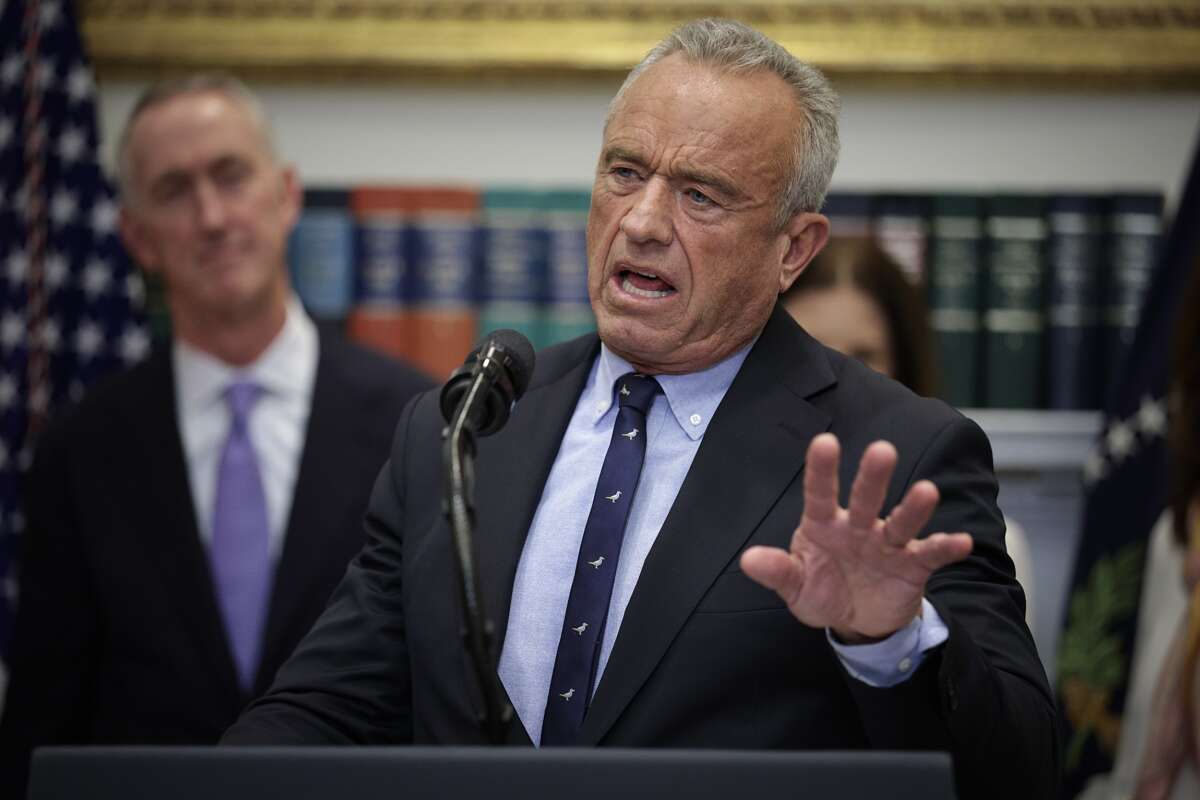
The anti-vaccine language updates and policies are consistent with HHS Secretary Robert F. Kennedy Jr.’s long-held views on vaccines. In response to his disinformation on vaccines, a bipartisan group of six former U.S. surgeons general penned an open letter condemning Kennedy for endangering public health.
Kennedy’s inability to “restore trust” in HHS, as well as his “de-emphasis” of vaccines during the worst measles outbreak seen in decades, is deeply unsettling, the letter-writers said in October.
“Rather than combating the rapid spread of health misinformation with facts and clarity, Kennedy is amplifying it,” the former surgeons general added. “The consequences aren’t abstract. They are measured in lives lost, disease outbreaks and an erosion of public trust that will take years to rebuild.”
Important Message: Please Read
For 25 years, Truthout has survived by publishing impactful investigative journalism and analysis; distributing full editions 365 days a year; and building a community of readers who support us with small, hard-earned donations.
Eighty percent of our $3 million yearly budget comes from small donors alone. Of those, 8,000 readers support us with monthly donations. Back in 2018, when Facebook decided to suppress the circulation of posts made by organizations, thereby cutting readers off from seeing many articles shared by the news organizations they had intentionally decided to follow, Truthout’s total traffic declined by 40 percent, as nearly all of our traffic from that platform disappeared.
Now, Google has recently rolled out its AI search bar, providing AI summaries instead of directing readers to our site. Google Search is our single largest source of traffic; it’s the route by which nearly one third of our readers find us. Much like in 2018, a shocking 40 percent of our Google traffic has disappeared overnight.
It will not be easy for Truthout to shoulder this blow. Nor will it be easy for our peers and collaborators — news sites that depend on traffic and aren’t bankrolled by large corporations.
If you can support Truthout with a donation today, you can help us resist the AI onslaught. Please give today.