Support justice-driven, accurate and transparent news — make a quick donation to Truthout today!
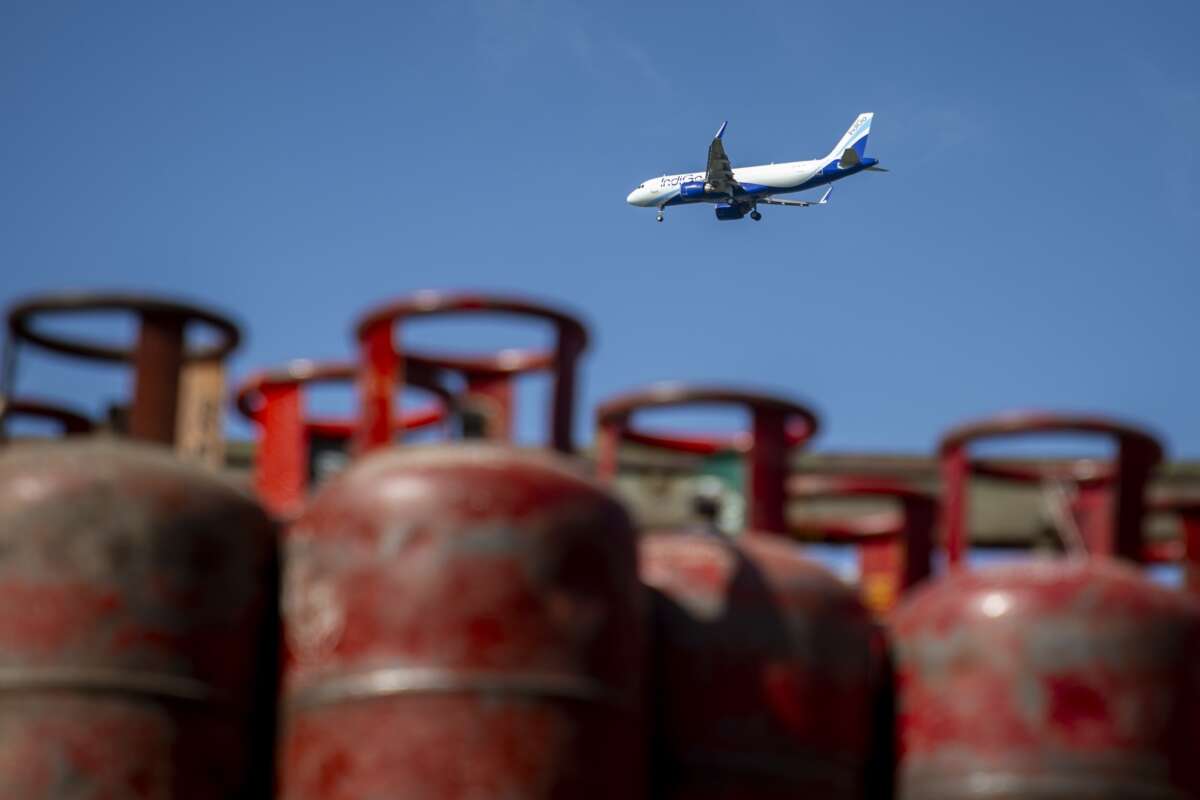
The head of the International Energy Agency (IEA) has warned that Europe has roughly six weeks’ worth of jet fuel remaining before airlines will be forced to begin conducting cancellations, adding more damage to the global economy if the Iran war continues.
“In Europe, we have maybe six weeks or so (of) jet fuel left,” said Fatih Birol, executive director of the IEA, in an interview with Associated Press published Thursday. “If we are not able to open the Strait of Hormuz … I can tell you soon we will hear the news that some of the flights from city A to city B might be canceled as a result of lack of jet fuel.”
The Strait of Hormuz was supposed to be open for transit during the two-week ceasefire deal that began last week. However, Iran redoubled efforts to close the strait after Israel unleashed a deluge of bombs on Lebanon just hours after the ceasefire deal started, reportedly in violation of the agreement. This week, the U.S. implemented its own naval blockade on the region; Joint Chiefs of Staff Chair Dan Caine said on Thursday that the blockade is not on the strait, as President Donald Trump claimed, but on Iranian ports.
Other energy experts have similarly warned that a systemic jet fuel crisis is coming to Europe in the next few weeks, with one economist telling CNBC that there may be “severe cuts” to flights once that happens.
Prior to the conflict, roughly 20 percent of the world’s oil and gas flowed through the strait, which also served as a crucial crossing for fertilizers. Iran has proposed allowing some ships through alternative agreements, or charging a fee, and has allowed a small number of ships to transit the strait amid the war. But the U.S.’s additional blockade is now stopping all traffic, forcing six Iran-linked ships to turn around earlier this week.
The potential economic impact if the current blockades continue could be dire. On Tuesday, the International Monetary Fund warned that further escalations put the world at risk of a global recession.
Despite these disruptions, many U.S. allies, including key European countries, have declined to intervene in the war.
Birol emphasized that poorer countries would be affected first in the case that the U.S. and Iran aren’t able to agree to a deal to open the strait.
“Many government leaders tell me that if Hormuz is not open until (the) end of May, many countries — starting from the weaker economies — are going to face huge challenges, and this will go from the high inflation numbers to coming close to slow growth or even to recession in some cases,” he told AP.
Many countries have already been direly affected. India is facing a massive and destabilizing gas shortage, causing food prices to soar and businesses to shut down as the public faces outages. Other Asian countries are also facing shortages, with India, China, Japan, and South Korea being major recipients of oil that passes through the strait.
Even if the strait were reopened imminently, U.S.-Israeli and Iranian strikes on energy facilities have caused damage that will take years to restore. “Over 80 key assets in the region have been damaged. And out of these 80, more than one third are severely or very severely damaged,” Birol said.
Iran officials have said that their estimates indicate that the country has suffered $270 billion in losses since the start of the war, and have demanded compensation.
Press freedom is under attack
As Trump cracks down on political speech, independent media is increasingly necessary.
Truthout produces reporting you won’t see in the mainstream: journalism from the frontlines of global conflict, interviews with grassroots movement leaders, high-quality legal analysis and more.
Our work is possible thanks to reader support. Help Truthout catalyze change and social justice — make a tax-deductible monthly or one-time donation today.