
Coal burning is most likely to blame for Mercury levels in yellowfin tuna rising 3.8 percent per year since 1998.
With mercury concentrations in the upper layers of the oceans having tripled since the industrial revolution, it’s not surprising that certain kinds of fish are not recommended for pregnant women (and might not be so great for those of us who aren’t pregnant either). A new study gives further details on the scale of the problem and seems to disprove those who claimed that mercury concentrations in open-ocean fish weren’t going up.
A team from the University of Michigan compiled and re-analyzed 3 previous studies on yellowfin tuna caught near Hawaii. They found that the concentration of mercury in that species increased at least 3.8% per year from 1998 to 2008. That’s quite the increase! Remember the power of compound interest…
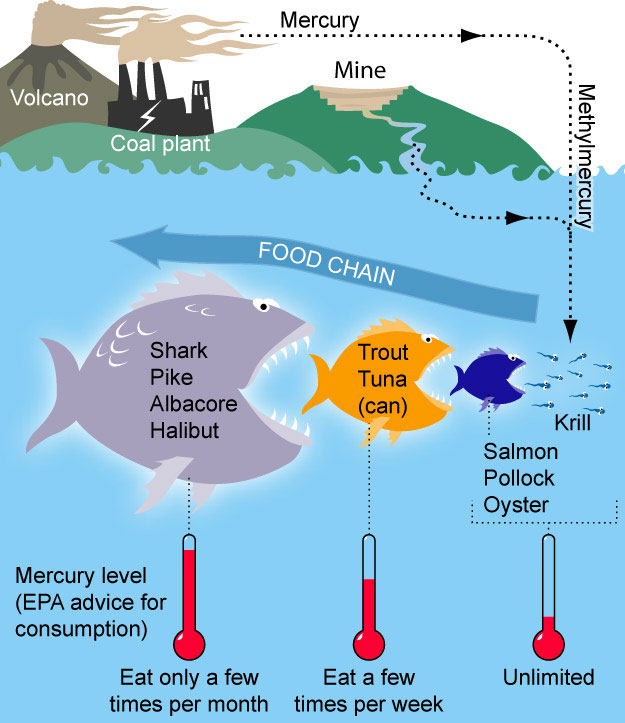

Where is all that mercury coming from? The main sources are via atmospheric deposition from human activities, like burning coal (China does a lot of that, but it’s certainly not the only one, and a lot of the coal that they burn is used to power factories that make stuff for other countries, so they there’s plenty of blame to throw around).
Mercury levels are increasing globally in ocean water, and our study is the first to show a consequent increase in mercury in an open-water fish,” said Drevnick, an assistant research scientist at the U-M School of Natural Resources and Environment and at the U-M Biological Station. “More stringent policies are needed to reduce releases of mercury into the atmosphere. If current deposition rates are maintained, North Pacific waters will double in mercury by 2050.”
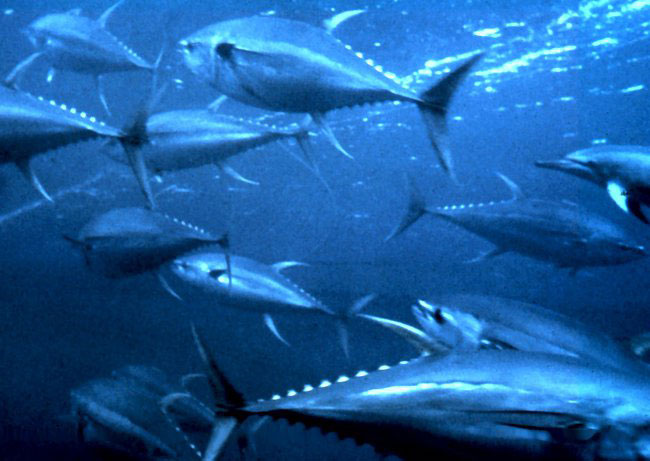 (Wikimedia/Public Domain)

Yellowfin tuna, often marketed as ahi, is widely used in raw fish dishes—especially sashimi—or for grilling. The Natural Resources Defense Council’s guide to mercury in sushi lists yellowfin tuna as a “high mercury” species.
You can find FDA recommendations on how to avoid ingesting too much mercury from fish here. Below is a table that shows some of the best and worst kinds of fish, with three species of tuna highlighted:
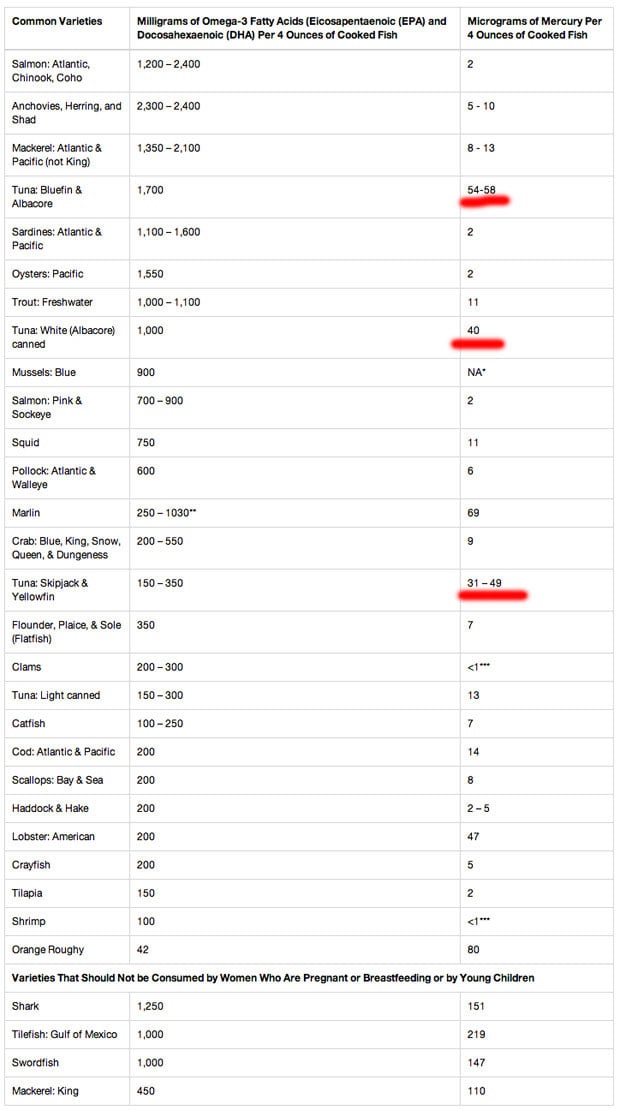 (FDA/Public Domain)
Trump is silencing political dissent. We appeal for your support.
Progressive nonprofits are the latest target caught in Trump’s crosshairs. With the aim of eliminating political opposition, Trump and his sycophants are working to curb government funding, constrain private foundations, and even cut tax-exempt status from organizations he dislikes.
We’re concerned, because Truthout is not immune to such bad-faith attacks.
We can only resist Trump’s attacks by cultivating a strong base of support. The right-wing mediasphere is funded comfortably by billionaire owners and venture capitalist philanthropists. At Truthout, we have you.
Our fundraising campaign is over, but we fell a bit short and still need your help. Please take a meaningful action in the fight against authoritarianism: make a one-time or monthly donation to Truthout. If you have the means, please dig deep.