Honest, paywall-free news is rare. Please support our boldly independent journalism with a donation of any size.
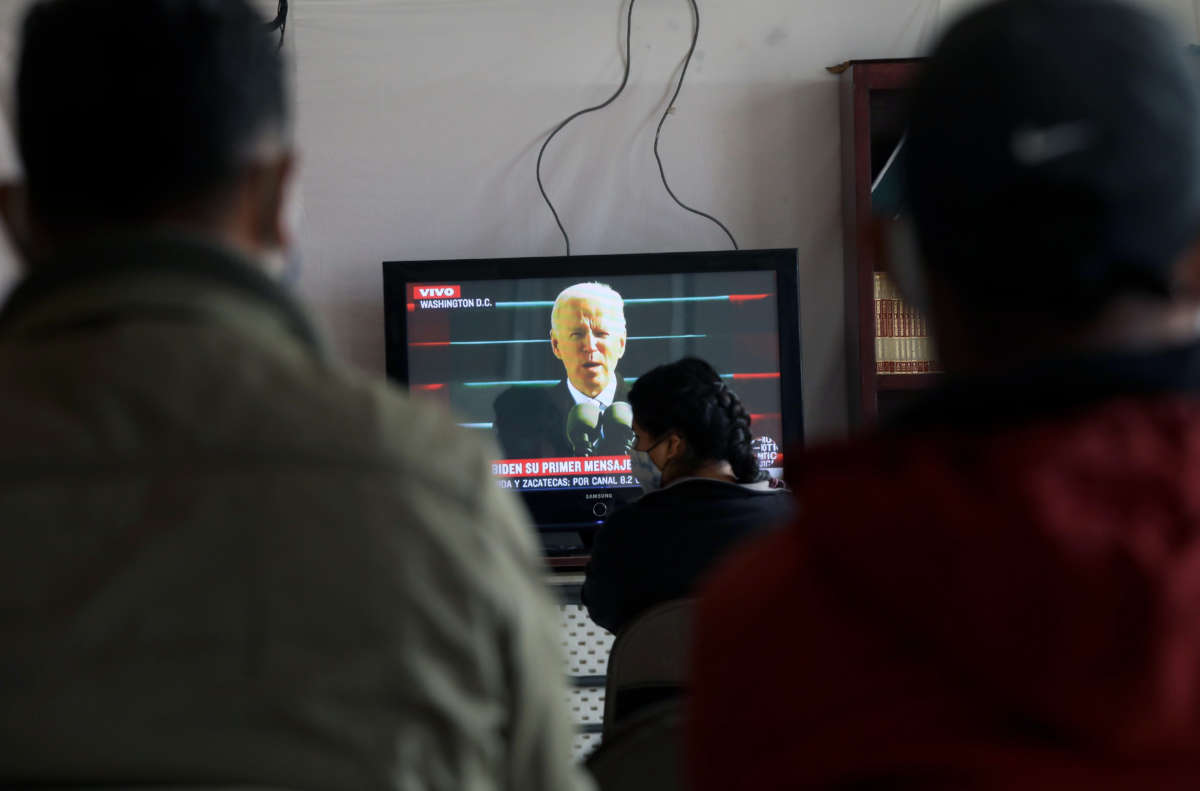
The Biden administration announced this week that federal agencies will use “more inclusive” language when it comes to discussing issues relating to immigration.
A memo from Acting Director of U.S. Citizenship and Immigration Services (USCIS) Tracy Renaud told officials that changes in terminology should be used “in the agency’s outreach efforts, internal documents and in overall communication with stakeholders, partners and the general public.”
Several words that were used by past administrations have been replaced due to their stigmatizing and demeaning connotations. “Alien” or “illegal alien,” for instance, will be replaced by “noncitizen” or “undocumented noncitizen” (or “individual”) going forward. Instead of assimilation, the administration will use words like “integration” or “civic integration.”
More inclusive terms were adopted so that USCIS “aligns our language practices with the administration’s guidance on the federal government’s use of immigration terminology,” the memo added.
Previously, the Trump administration had referred to undocumented immigrants as “illegal aliens,” and described border crossings by migrants as an “invasion” in its official documents. Former Trump official Robert Law, who worked in USCIS, decried the changes.
“By statute, ‘alien’ literally means a person not a U.S. citizen or national. That is not offensive, and neither is ‘assimilation,'” he claimed.
But immigrant rights organizations lauded the decision.
“The entire experience of going through the U.S. immigration system can be dehumanizing,” Juan Rivera, spokesperson for the immigrant rights organization CARECEN SF, said to The San Francisco Chronicle. “I think that the dehumanization of migrants was the fuel for the Trump administration’s further attacks.”
“I really hope that this administration has the courage to embrace all immigrants as humans and to treat migrants with dignity,” Rivera added.
“Language matters. No human is an ‘illegal alien,'” the immigrants rights group Families Belong Together tweeted.
The White House also announced this week that it would be proposing new immigration legislation addressing the issue of granting citizenship rights to those currently living in the U.S.
The proposal would provide a pathway to grant citizenship to millions of immigrants within an eight-year time frame. It would also provide an expedited process for “Dreamers,” undocumented immigrants who were brought to the U.S. as children.
In addition to rolling back several Trump-era immigration policies since taking office, the Biden administration has considered building a “virtual wall” to replace Trump’s emphasis on a physical barrier at the U.S.-Mexico border. A virtual wall would use surveillance technologies — including the cameras, x-ray machines, and other methods — to detect, deter and detain migrants.
Immigration activists have spoken out against this policy.
“I think there’s a lot of concerns and red flags about the way border security is framed and also the kind of very chummy relationships between the tech industry and the administration overall,” Mijente senior campaign organizer Jacinta González told Truthout‘s Candice Bernd.
Others have noted that Biden must make more changes to immigration policy, as the administration continues to deport thousands of individuals who are currently living in the U.S.
“Biden committed to stop deportations. 26,248 immigrants have been deported under his watch,” Cristina Jiménez, an organizer for youth-led immigration rights group United We Dream, tweeted this week.
A terrifying moment. We appeal for your support.
In the last weeks, we have witnessed an authoritarian assault on communities in Minnesota and across the nation.
The need for truthful, grassroots reporting is urgent at this cataclysmic historical moment. Yet, Trump-aligned billionaires and other allies have taken over many legacy media outlets — the culmination of a decades-long campaign to place control of the narrative into the hands of the political right.
We refuse to let Trump’s blatant propaganda machine go unchecked. Untethered to corporate ownership or advertisers, Truthout remains fearless in our reporting and our determination to use journalism as a tool for justice.
But we need your help just to fund our basic expenses. Over 80 percent of Truthout’s funding comes from small individual donations from our community of readers, and over a third of our total budget is supported by recurring monthly donors.
Truthout’s fundraiser ended last night, and we fell just short of our goal. But your support still matters immensely. Whether you can make a small monthly donation or a larger one-time gift, Truthout only works with your help.