Truthout is an indispensable resource for activists, movement leaders and workers everywhere. Please make this work possible with a quick donation.
As the Trump administration expands immigration police surges across the country, what has stood out has been the acts of resistance. Communities and organizations have put together rapid response hotlines, protested outside hotels sheltering federal agents, and carried whistles to warn their neighbors when immigration police are nearby. That resistance has kept me alive and has been so necessary.
But living in Little Village, a neighborhood in Chicago that was targeted by “Operation Midway Blitz” in the fall, I’ve also seen and experienced the psychological toll of these operations, both on the communities targeted and those of us organizing to defend them.
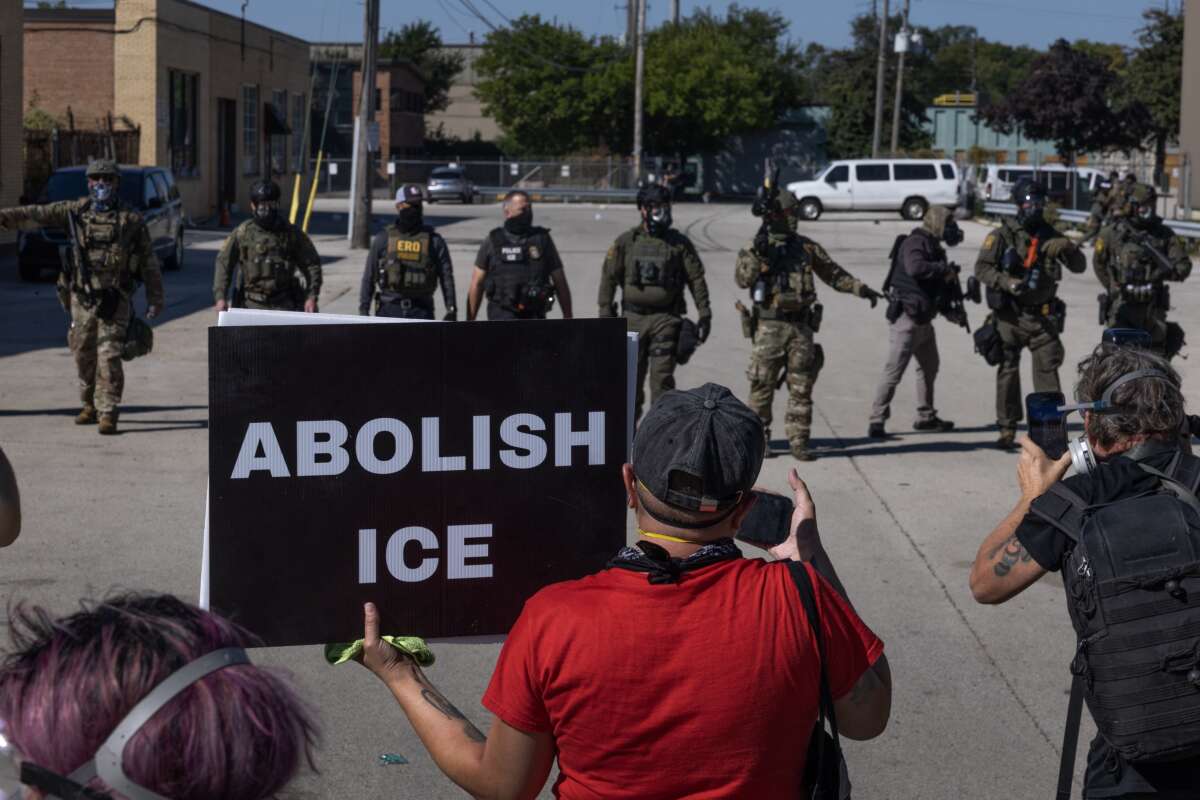
Border Patrol Chief Gregory Bovino’s surge of immigration police into Chicago has made national headlines for its cruelty and aggression. But what is important to understand about Border Patrol entering a neighborhood is the uncertainty. You never know when agents will show up or when they will decide to turn their presence into a public show of force. On some days, the neighborhood felt almost normal. On others, everything would shut down without warning.
First would come the whistles. People organized, warning the community that immigration agents were nearby. Within minutes, streets that were usually crowded would empty. Sidewalks where street vendors normally worked would be completely bare. Businesses closed early. People disappeared indoors. I remember sitting at my desk and suddenly hearing the Border Patrol helicopters circling overhead. I didn’t need to see it to wonder which one of my neighbors they had taken. My stomach still drops at the sound of any helicopter blades.
So, many people decided to stay home. Parents stopped going to work. Children missed school. Entire communities went missing. They survived by asking friends or neighbors to pick up medicine, buy groceries, or take children to school when they felt it was too risky to leave their homes. Organizations of all kinds have stepped up to deliver food and supplies directly to people’s homes. Individuals volunteered to give rides, buy groceries, collect donations, walk dogs.
During the recent immigration surge in New Orleans, I heard from friends who isolated themselves weeks before agents ever arrived. They had seen the violence in Chicago and began to take safety measures as soon as the news broke of “Operation Swamp Sweep,” the immigration police raid targeting Louisiana.
The Trump administration’s assault on us is not solely about increasing deportations. It is about manufacturing fear.
The Trump administration’s assault on us is not solely about increasing deportations. It is about manufacturing fear: the fear that keeps parents inside, students out of school, workers in panic, and entire neighborhoods from living with dignity. And make no mistake: this fear is intentional. It is meant to make us feel so unwanted that we make ourselves disappear.
These psychological operations are layered and intentional. Helicopters circle above Chicago as Border Patrol turns enforcement into spectacle. During these operations, teachers are abducted, children are tear-gassed, homes are invaded. People are threatened with criminalization for resisting or even filming Immigration and Customs Enforcement and Border Patrol. All of this is reinforced by Department of Homeland Security ads on Univision and Telemundo, the largest Spanish-language broadcasters, threatening to “hunt” immigrants, urging undocumented people to self-deport, and spreading fear inside homes already targeted by Donald Trump’s policies.
As an organizer I cut my teeth doing civil disobedience and rapid response against deportations more than 20 years ago. I am not usually the first person to call for organizing mutual aid or mental health support. But what I’ve seen and experienced during these months of immigration surges has left me worried. Of course we have to organize and build rapid response networks, and make sure that people know to stay inside and not open the door. But we must also build the infrastructure that allows people to make those choices without losing access to food, income, care, or community.
I don’t know what the next phase of this administration will look like. I don’t know where the next surge will land, what new tactic will be tested, or whose neighborhood will be turned into the next spectacle of violence. What I do know is that this is not random, and that it will continue to happen. And because of that, the answer cannot be isolation. It has to be each other. We have to keep organizing, building networks that meet material needs and protect people’s dignity, creating systems of care that make survival possible even when staying home becomes the safest choice.
The damage being done to our communities is intentional, but so is our response. We will continue to organize because that is how we refuse to disappear.
Fundraiser Deadline: Missed
Truthout is one of only a few platforms for justice-oriented, grassroots journalism. Today, as political censorship from the right intensifies, we have no choice but to ask for your help.
We missed our fundraising deadline, but there’s still time to help us meet our basic operating expenses before the end of the month. If you can support Truthout with a one-time or monthly donation, you will make a significant impact on our work. Anything you can do makes a difference — we appreciate your support.