Support justice-driven, accurate and transparent news — make a quick donation to Truthout today!
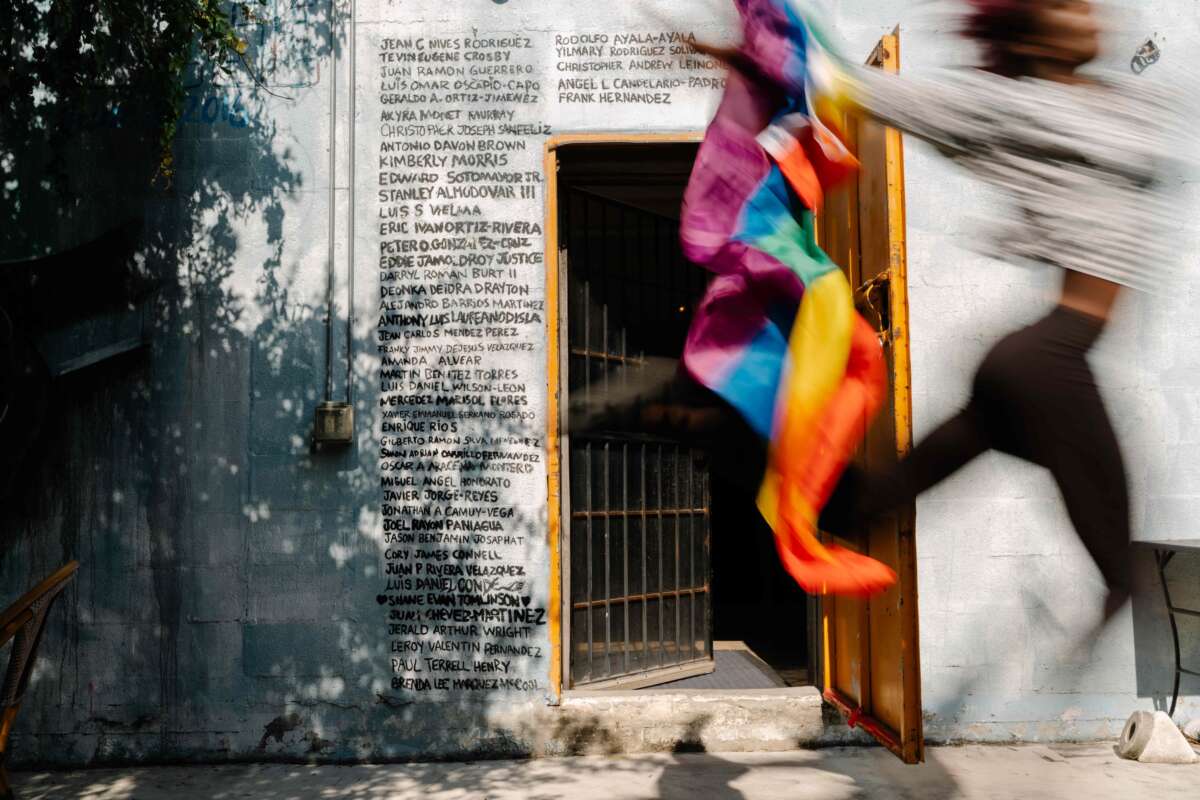
On June 12, 2016, a man opened fire at Pulse nightclub in Orlando, Florida, killing 49 queer people and injuring at least 58 others. An entire decade later, protections for LGBTQIA+ people in Florida and across the country continue to be stripped away under a government that insists on inflicting harm. Queer nightlife spaces, like Pulse, are designed to be deeper than DJ sets and drink specials; they are where we find our fire.
Last year, the Florida Department of Transportation painted over rainbow sidewalks outside Pulse, which served as a memorial to the great loss of life. This year, Gov. Ron DeSantis signed a law allowing him to remove any elected official who supports a Pride event and replace that person with a pick of his own. DeSantis’s hate campaign has served as a model for other states seeking to erase queer stories and diminish queer suffering. In 2022, DeSantis signed the “Parental Rights in Education” bill in Florida, more commonly referred to as “Don’t Say Gay.” The legislation censored teachers from using any mention of sexual orientation or gender identity in their curriculum, or even just displaying a Pride flag. Almost immediately after its passage, over a dozen states proposed similar censorship bills. Several of those states have pushed these hate-fueled campaigns across the finish line, including Alabama, North Carolina, and Indiana.
The Pulse nightclub shooting was the deadliest incident of violence against the LGBTQIA+ community in U.S. history, and the second-deadliest shooting by a single gunman ever. This tragedy should have ignited systemic change to curb the last decade of gun violence and anti-LGBTQIA+ hate crimes. Instead, Florida’s bright red government has done everything it can to censor our suffering and deter our ability to take up space. Officials know the power of organizing, and they are scared of it.
Florida has done everything it can to censor our suffering and deter our ability to take up space. Officials know the power of organizing, and they are scared of it.
June 12, 2016, is a night that I think about often when I enter a space crowded with other queer people: Pride events, mixers, clubs, and protests. It is impossible not to imagine the potential danger of just existing in public around other members of the community. If it can happen at Pulse, what’s stopping it from happening here? But these precious spaces are how liberation has always been born.
In June 1969, Marsha P. Johnson, Sylvia Rivera, Stormé DeLarverie, Miss Major Griffin-Gracy, and so many other queer people resisted a police raid at the Stonewall Inn in Manhattan. Six entire days of riots followed, setting a standard of resistance that gave life to what we now celebrate every June: Pride. Liberation was born at a bar, a place for queer organizing.
On New Year’s Eve 1966, undercover cops beat and cuffed 14 people at the Black Cat, a gay bar in Los Angeles. Police arrested same-sex couples and forced them to register as sex offenders. In the weeks following, hundreds of protesters gathered to push back against police brutality. That year, Richard Mitch and Bill Rau launched a news outlet to cover the protests, now known as The Advocate, one of the largest LGBTQIA+ media brands in the country. Liberation was born at a bar, a place for queer stories.
The reason that Republicans in Florida want to paint over rainbows and silence organizers is that they know the power of these spaces — the significance of nightlife to queer people, and how intrinsically connected it is to liberation.
A recent Gallup poll indicates that belief in the morality of LGBTQIA+ people’s existence continues to drop, most significantly among Republicans. In 2026, just 35 percent of Republicans believe same-sex relationships are moral, and only 5 percent believe transitioning one’s gender is moral. These are the voters who don’t see us as human. Those who see Pulse as just a nightclub and see Pride celebrations as just a crowd.
LGBTQIA+ bars are a place to dance and drink, but they are also a home for building our futures. We must treat them like the precious and vulnerable places they are.
Ten years after Pulse, we know who stands on the other side of this fight: a movement that conceals hate behind a veil of thoughts, prayers, and “morals.” The last decade has taught us that we have to build our own spaces, protect our own spaces, and use our own spaces to organize. We can’t depend on the “fair-weather” allies who join us at happy hour but vote against us at the polls. The resilience of queer people is breathtaking, especially the resilience of trans women who gave life to the resistance at Stonewall. That resilience is even stronger when we are shoulder to shoulder, in safe places we build with our own hands.
Every gay bar, every LGBTQIA+-owned establishment, and every queer history memorial deserves our support, our protection, and our celebration this June and beyond. Pulse was more than just a night of terror; the venue never opened its doors again after June 12, 2016. Hate and violence forced those doors closed. Yes, LGBTQIA+ bars are a place to dance and drink, but they are also a home for building our futures. We must treat them like the precious and vulnerable places they are.
Fundraiser Deadline: Missed
Truthout is one of only a few platforms for justice-oriented, grassroots journalism. Today, as political censorship from the right intensifies, we have no choice but to ask for your help.
We missed our fundraising deadline, but there’s still time to help us meet our basic operating expenses before the end of the month. If you can support Truthout with a one-time or monthly donation, you will make a significant impact on our work. Anything you can do makes a difference — we appreciate your support.