Support justice-driven, accurate and transparent news — make a quick donation to Truthout today!
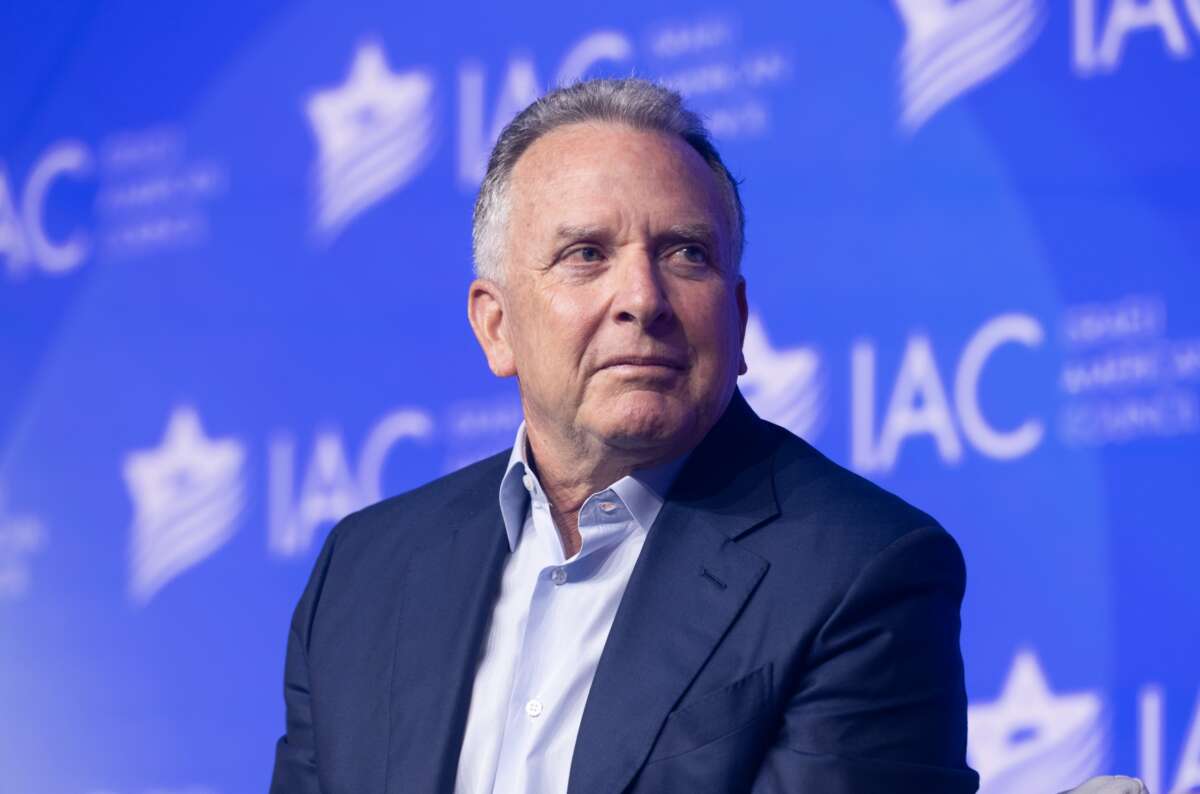
One of the U.S.’s demands during negotiations with Iran in recent weeks was for the “elimination of [Iran’s] navy,” according to top negotiator Special Envoy Steve Witkoff, who has complained that Iran wouldn’t agree to a “deal” to prevent the U.S. from striking.
In a Fox News interview posted by the White House’s rapid response X account, Witkoff suggested that he and senior adviser Jared Kushner made this and other demands in indirect talks with Iran in Geneva in recent weeks. Witkoff ironically denigrated the Iranian negotiators, saying that they “thought they could strong-arm us.”
“President Trump sent me and Jared [to negotiations] to really determine on his behalf whether they were serious about doing a deal that addressed his objectives,” Witkoff said. Those included “elimination of their navy, so we can have freedom of the seas and not be threatened with the shutdown of the Gulf [sic] of Hormuz,” he said.
This is an extremist demand that essentially argues that Iran should eliminate a major part of their military and give up a huge point of leverage in their control over the Strait of Hormuz — on top of other reported demands, like calls for Iran to give up uranium enrichment despite their pledges to never have a nuclear weapon.
Indeed, Iran’s naval capabilities are proving key for the country now as it grinds traffic through the crucial strait to a halt, putting a huge damper on the oil trade. Iran has attacked several ships that have tried to pass through the strait. The Trump administration has called for the total destruction of Iran’s navy as a goal of the U.S. and Israel’s war.
Witkoff said that they also demanded “elimination of [Iran’s] advocacy and support for proxies,” which is akin to asking the U.S. to isolate itself from its allies and military support for other countries.
“We went in there and tried to make a fair deal with them, and it was — it was very, very clear that it was going to be impossible,” said Witkoff.
However, both Iran and Oman’s foreign ministers have said that negotiations were actually advancing quite well last week before the U.S. and Israel’s unprovoked strikes on Saturday.
“A peace deal is within our reach … if we just allow diplomacy the space it needs to get there,” said Badr bin Hamad Al Busaidi, Oman’s foreign minister who served as a mediator for the negotiations, in an interview with CBS just a day before the strikes.
Iran’s foreign minister, Abbas Araghchi, expressed confusion over the strikes on Saturday, saying that “everybody was happy” after the latest round of negotiations on Thursday. “I don’t know why the U.S. administration insists to start a negotiation and then, in the middle of them, attack the other party,” he said.
Witkoff’s argument is perhaps reminiscent of the Biden administration blaming Hamas for failed ceasefire deals amid the Gaza genocide even though administration officials knew that Israeli officials were presenting maximalist demands designed to kill the negotiations.
In his interview, Witkoff also claimed that Iran had enough enriched uranium to make 11 nuclear bombs ahead of Saturday’s attacks. This is a blatant lie. On Monday, the head of the UN’s International Atomic Energy Agency (IAEA) Rafael Grossi said that there is no proof of “elements of a systematic and structured programme to manufacture nuclear weapons.” Last March, the U.S. intelligence community assessed that Iran was not building a nuclear weapon, and has not pursued such development for over 20 years.
Media that fights fascism
Truthout is funded almost entirely by readers — that’s why we can speak truth to power and cut against the mainstream narrative. But independent journalists at Truthout face mounting political repression under Trump.
We rely on your support to survive McCarthyist censorship. Please make a tax-deductible one-time or monthly donation.