Part of the Series
The Road to Abolition
Did you know that Truthout is a nonprofit and independently funded by readers like you? If you value what we do, please support our work with a donation.
During my incarceration in the U.S., since I had little else to do, I focused on reading, on becoming an expert on the prison-industrial complex in which I lived. People sent me books and articles on this topic, but when I tried to share them with the other men in the prison, they ran up against a wall of accessibility. I vowed that when I got out, I would write materials that would be about them and for them. I tried, but it was not until 2021 that I fully understood what needed to be done.
That year, artist and writer Vic Liu approached me with a proposal. They wanted to convert the book I had written, Understanding Mass Incarceration, into a graphic volume, using drawings and photos to make the reality of incarceration and the resistance to prison accessible to a broader audience. I had written popular education materials when I was a labor educator in South Africa. I thought they were accessible but Liu had a different idea. They said text was “elitist.” As an author of six books, most of which relied on text, I recoiled at that thought. But when I reflected on the materials I had produced during my time in South Africa — booklets that featured photos, some graphics and lots of headings and subheadings — I re-considered my work. The booklets I produced definitely hit home to a readership of South African workers for whom English was typically a third, if not fourth or fifth language. But they had their limitations.
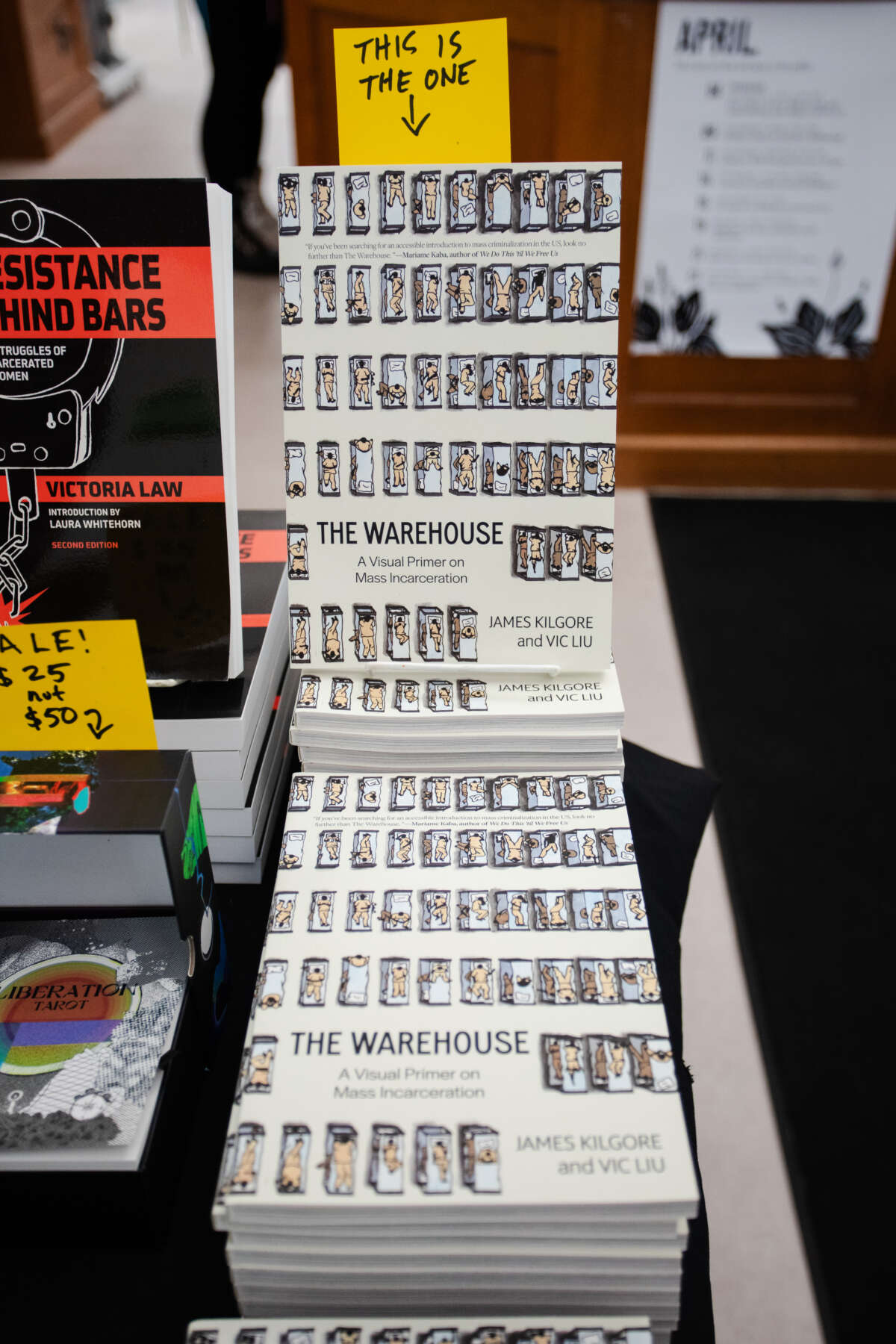
Liu brought a visual imagination to the topic and jointly we produced a book called The Warehouse: A Visual Primer on Mass Incarceration, which is unlike any other publication on prisons. Liu not only illustrated the book, they imagined the book, they turned it into a visual exhibit instead of a text. And her visuals were not only the product of her imagination but of the hours of discussions and dialogue we had about the book and about our shared perspectives on abolition.
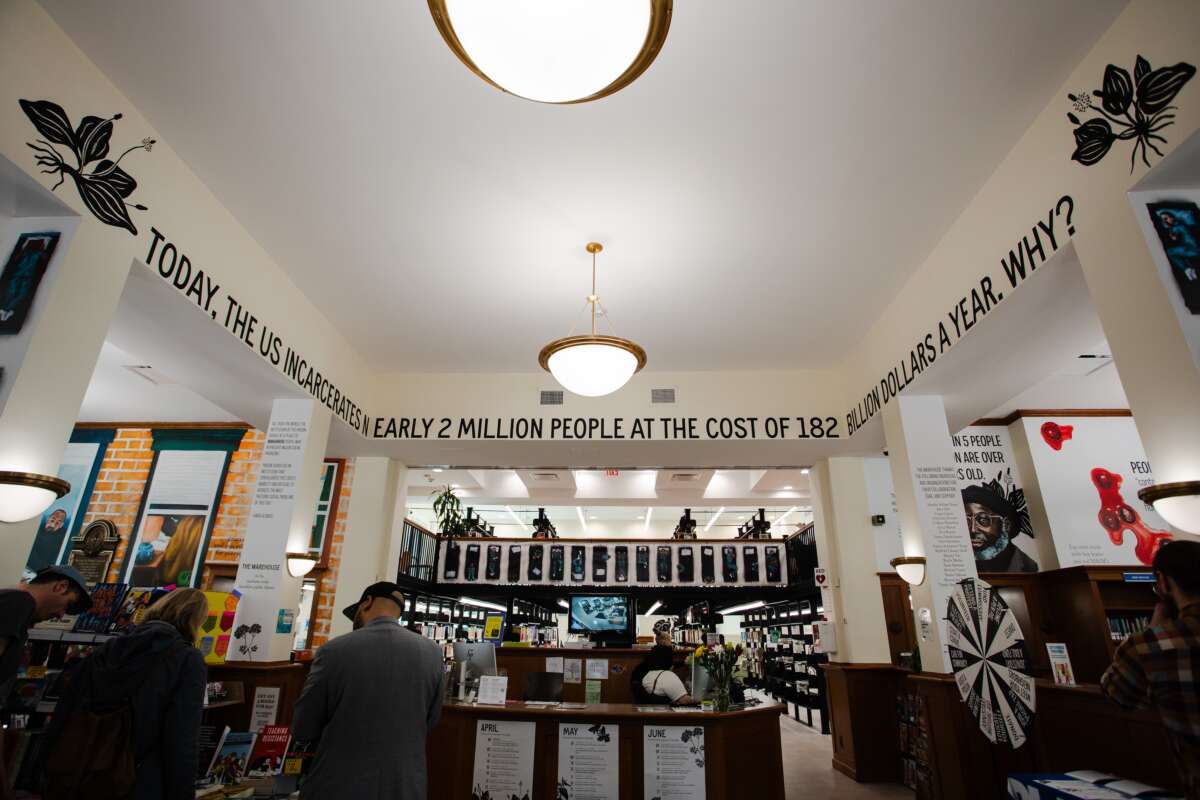
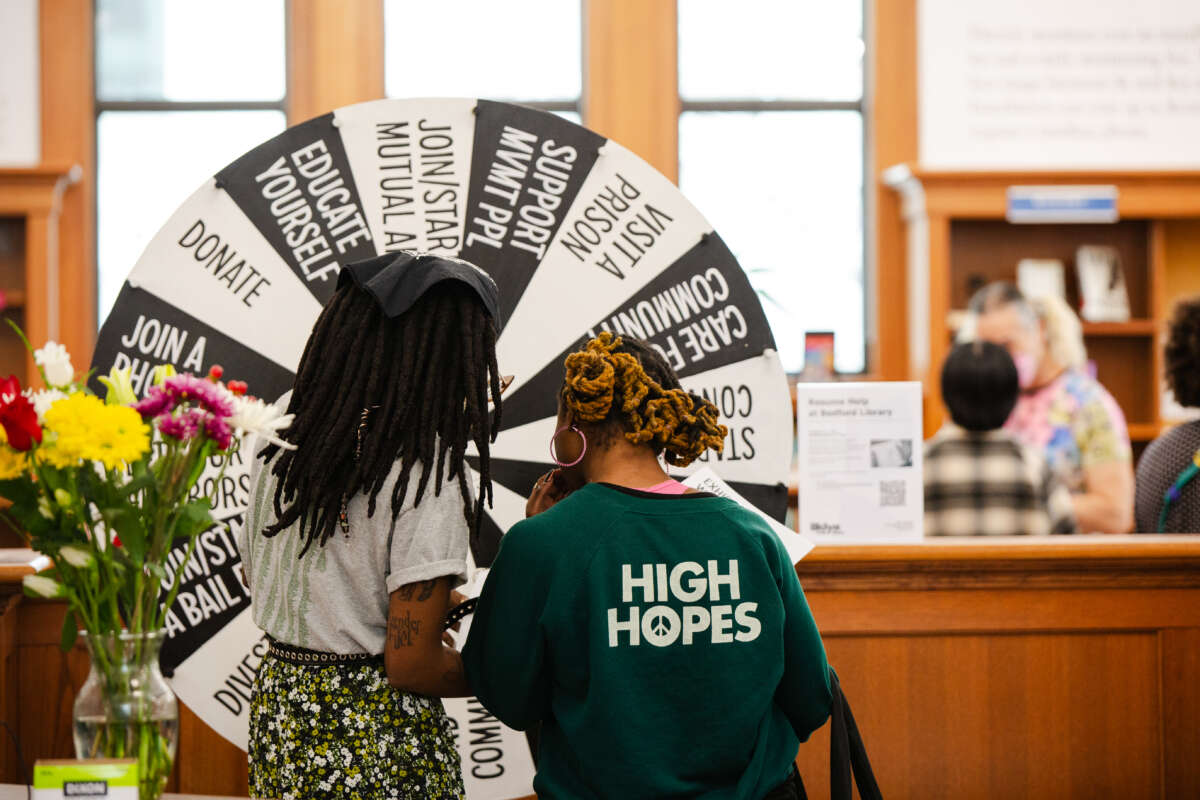
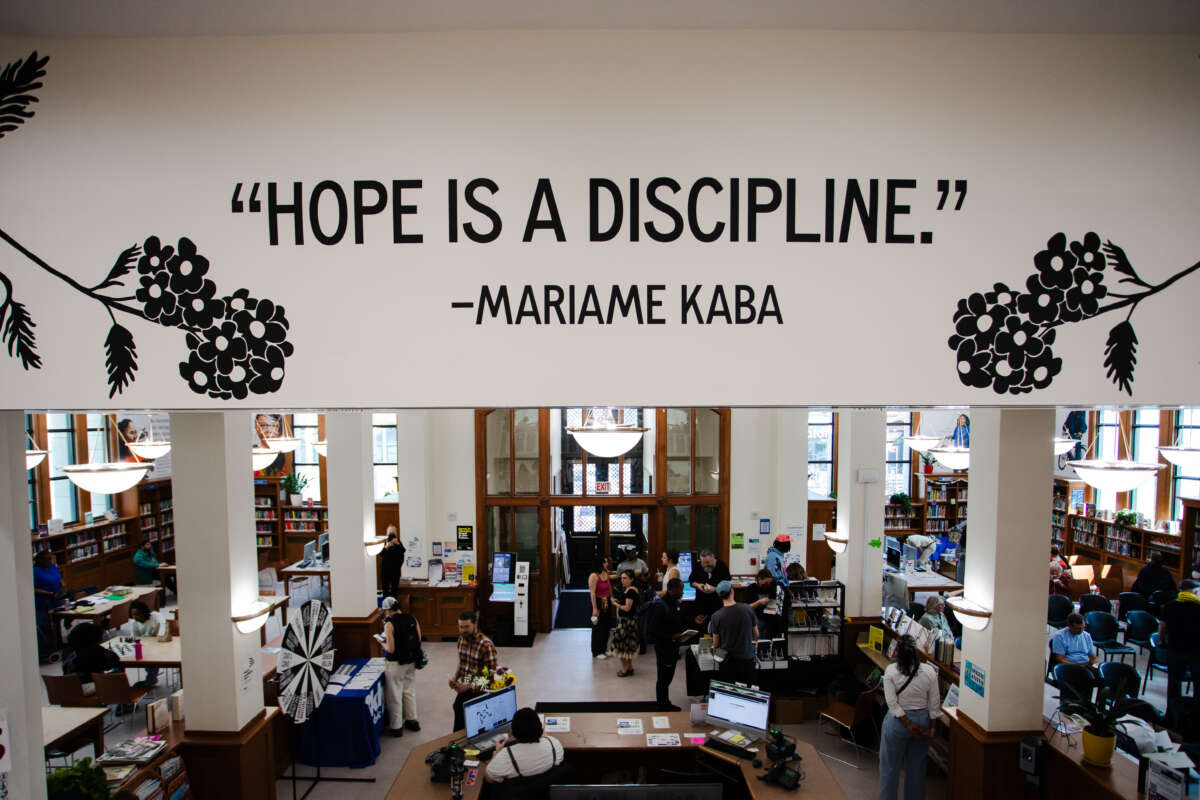
I wasn’t the only one who appreciated their talent. From April 4 to June 27 of this year, two dozen new paintings by Liu about prisons, incarceration, and abolition are featured in an exhibition in collaboration with Mariame Kaba at Brooklyn Public Library’s Bedford Branch. Below, we discuss our approaches and creative processes for developing materials informed by abolition, lived experience, and creativity.
James Kilgore: So you approached me about doing a visual version of my book, Understanding Mass Incarceration. Where did that idea come from and what was your vision as to how this would turn out?
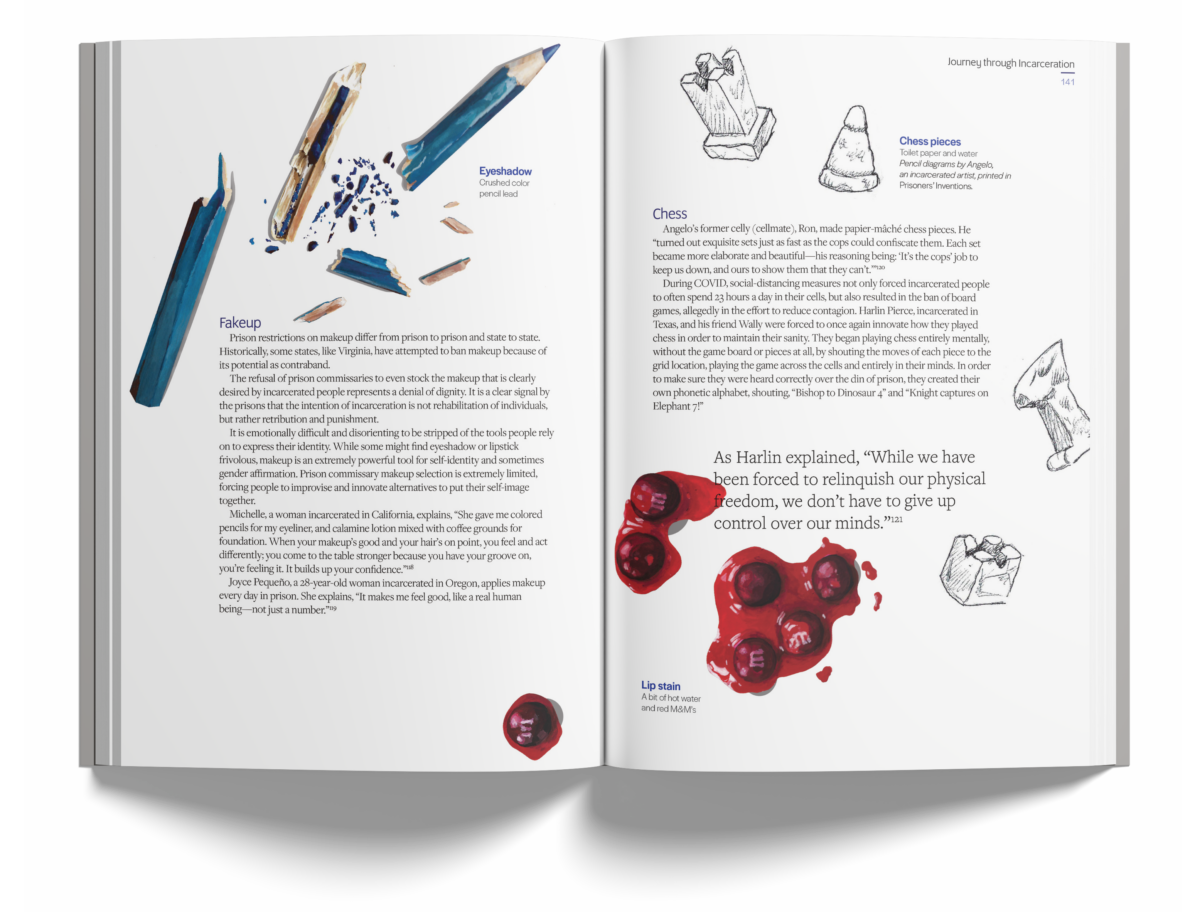
Vic Liu: One of the reasons that the system of mass incarceration endures is the immense barrier, both physical and mental, between the inside and the outside. There is very little information or awareness that flows between prison and the outside, and very few photographs of the realities of prison life that make it outside. Visual art and design are uniquely poised to break down this barrier, to bring people inside prison life and inside the reality of the impact and presence of carcerality in our world.
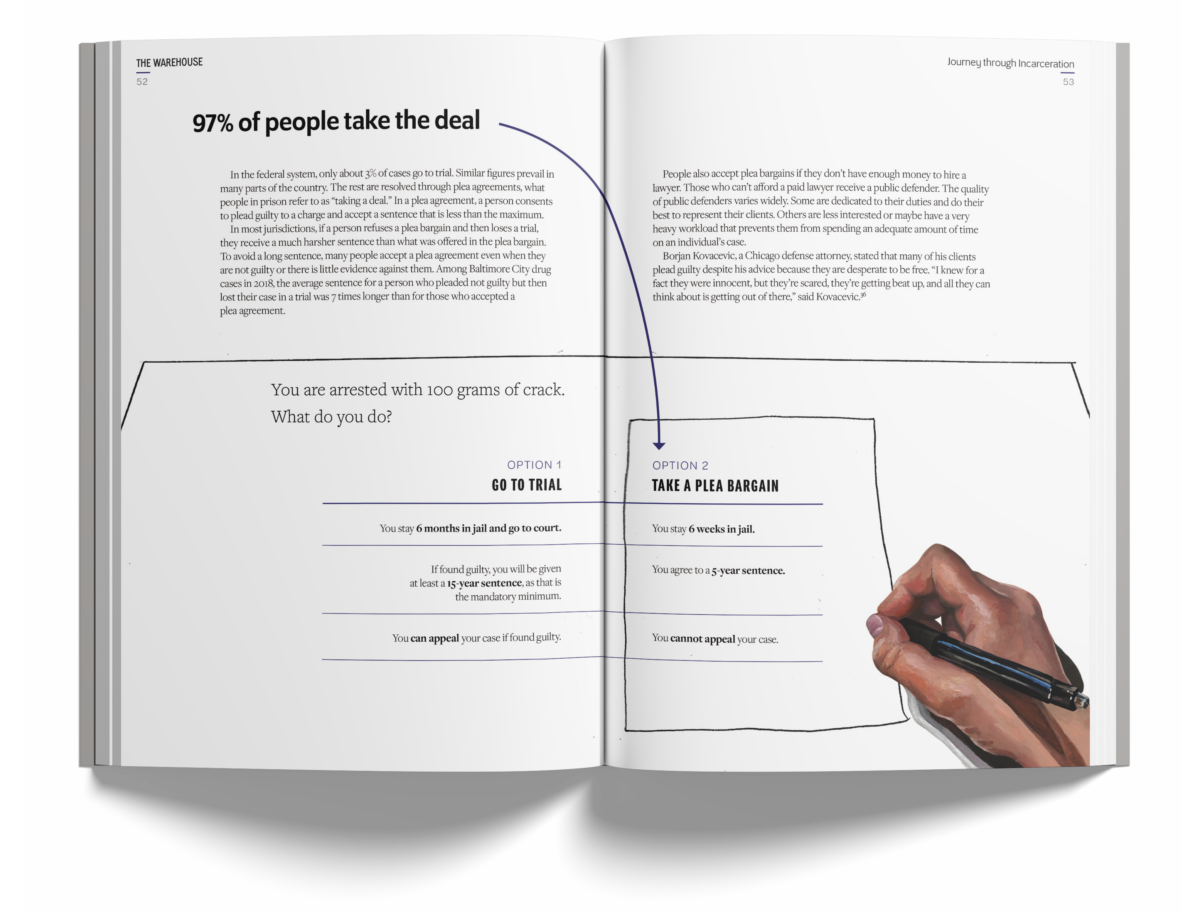
I have always loved text, and yes, I still believe it to be elitist. The average reading level of the U.S. is between sixth and seventh grade; about 70 percent of people in prison fall beneath the fourth-grade reading level, and so many Americans have English as their second language. This is not an issue of intelligence, it is an issue of access. Perhaps it is because I grew up with my mother who found reading English laborious and difficult, and avoided it in her free time; perhaps it is because my grandmother didn’t learn how to read and write until she was an adult; perhaps it is because I’m deeply aware of how tired we all are after a long day of surviving our world, and I know that not very many of us have the energy to read about mass incarceration. To couch essential information about the world we live in inside dense blocks of English is a failure to provide access.
“Visual art and design … bring people inside prison life and inside the reality of the impact and presence of carcerality in our world.”
What did you think of the proposal at first?
Kilgore: I was surprised, but the more I thought about it, the better it seemed, though I didn’t know anything about you or your work. But somehow, we were able to weave our ideas and experiences together. On the surface, we don’t have much in common. We are separated by many years: You are from a Chinese immigrant family, while I am white, middle-class, grew up in the U.S., but have been an activist for many years. I wasn’t sure what your political background was or how much you would understand about prisons. I knew you had never been locked up, so that was a concern for me. I assume you must have had some concerns about me as well.
But I guess as we spent hours on the phone and on Zoom discussing this book, we found commonalities.
Liu: I remember from our very first call suspecting that beneath your professional, crusty exterior, there was a very vibrant sense of humor that I would enjoy working with. Specifically, when you told me I had no chance in hell getting a certain prestigious grant to work on this project. Since then, I’ve had the enormous joy of getting to push your buttons and banter with you, throughout our work and also in person, when we pull out our dog and pony show for events. I feel so lucky to have gotten to understand your deep kindness and solidarity that goes hand in hand with your revolutionary spirit.
Mariame Kaba has said that abolition moves at the pace of trust. I’m curious to know what made you trust me enough to embark on this project?
Kilgore: It was the way you spoke about drawings and the patience you had to ensure that your creation reflected the reality of prison and the people inside. Most artists don’t give that much attention, that much respect to people who are locked in cages. This was evidenced by the time you took to do hand drawings for so many of the graphics. In an age of Photoshop, you showed how the human mind could still produce something that technology could not. Also, you insisted that we outsource some of the drawings to incarcerated people and pay them, even though it was a lot of work to include them. And, of course, we both shared a commitment to abolition, though we came to it in different ways. Let’s talk about that. How did you come to abolition?
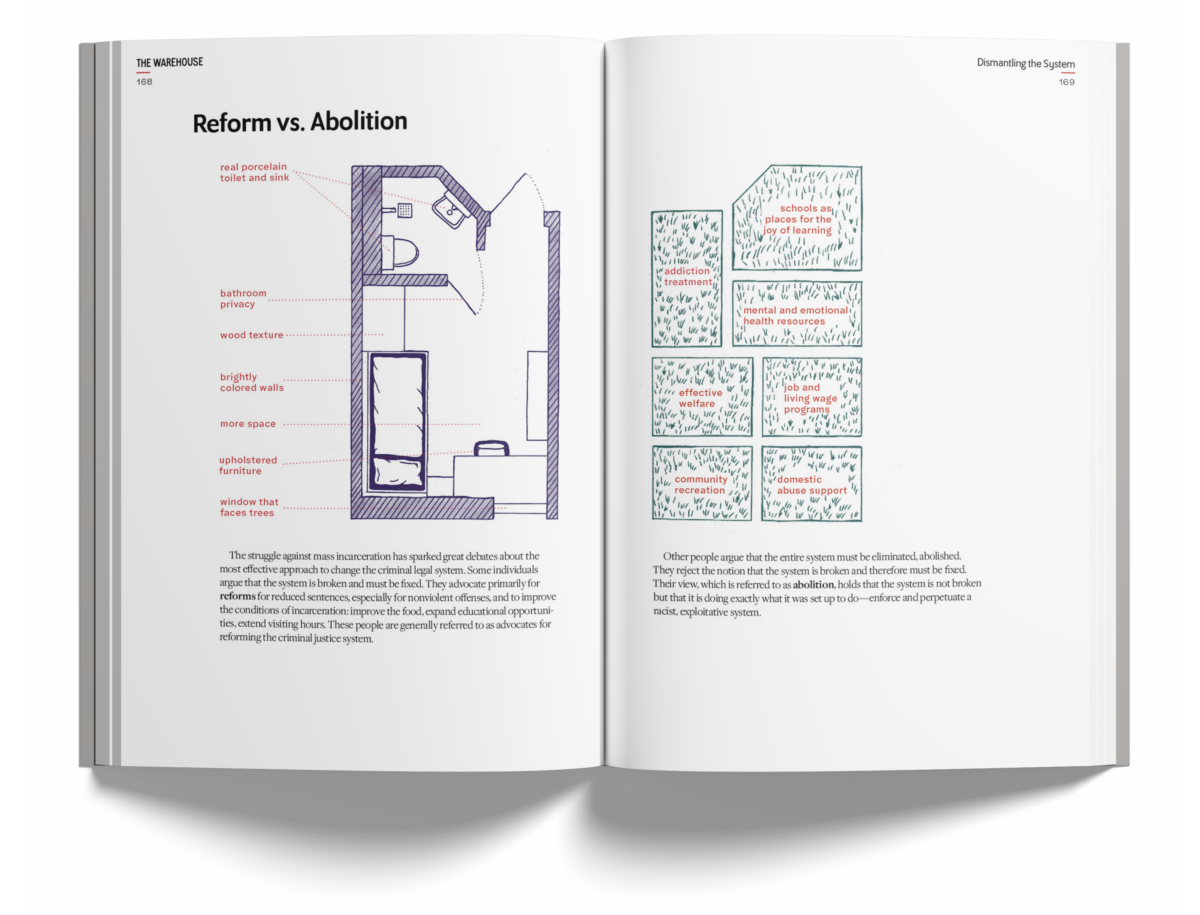
Liu: I became an abolitionist by learning about prison. I started off with understanding that the world is an unjust place, understanding that prison is unethical and cruel. It doesn’t take that much research to realize the lie at the heart of incarceration: that there are unforgivably bad people who cannot be a part of society. And from there, it takes very little learning or unlearning to understand exactly how ineffective the whole system is at its claimed goals of “rehabilitation” or “corrections.” It does not take very much to see that it is a cruel, stupid system built on and for prolonging racism, classism, and dehumanization. You just have to be brave enough to look.
“Perhaps the key difference between being an abolitionist and being complicit is whether or not you believe things can change.”
Abolition at the end of the day is not an extremist position. It is as easy or hard to become an abolitionist as it is to believe that people inherently deserve love and care, as it is to believe that the world is a terribly unfair place.
Perhaps the key difference between being an abolitionist and being complicit is whether or not you believe things can change.
Kilgore: I came to abolition through a very different route. I had various ideological stopping points along the way. I was a student activist in the 1970s, then got enamored with guerrilla warfare. That landed me a set of federal charges for explosives and resulted in a 27-year hiatus as a fugitive. I gave up on guerilla politics and became an anti-apartheid activist, first in Minnesota, then I moved to Zimbabwe and South Africa where I lived and worked for 20 years. There I learned about movement-building and working-class politics. I was a Marxist and a socialist with a touch of anarchism thrown in. When I got arrested in 2002 and came back to the U.S., it was a different world. I had been in South Africa during the heat of the struggle — Nelson Mandela was released, apartheid was overthrown. Working-class politics and socialism were on the menu.
But when I came back to the U.S., all that was dead. Few people talked about socialism or the working class. I spent six and a half years in prison and that made me recognize that prisons were a social evil. It took me a while to convert that into the ideology of abolition, but ultimately abolition for me was nothing but another name for revolution. When I was in prison, people kept sending me books and articles about mass incarceration but they were all written in a language that most of my fellow incarcerated people could not understand. I was determined that when I got out, I would write popular materials on this issue. I tried doing that but I don’t think I succeeded as much as I would like to have — until you came with your ideas and vision.
That cover you drew was just amazing. The patience, the attention to detail, the precision was astounding. I mean I might spend hours and hours writing and re-writing a page or a paragraph, but somehow, it’s not the same rich process as creating something like that cover. Now with the exhibit at the Bedford Library, you have taken this process to a new level.
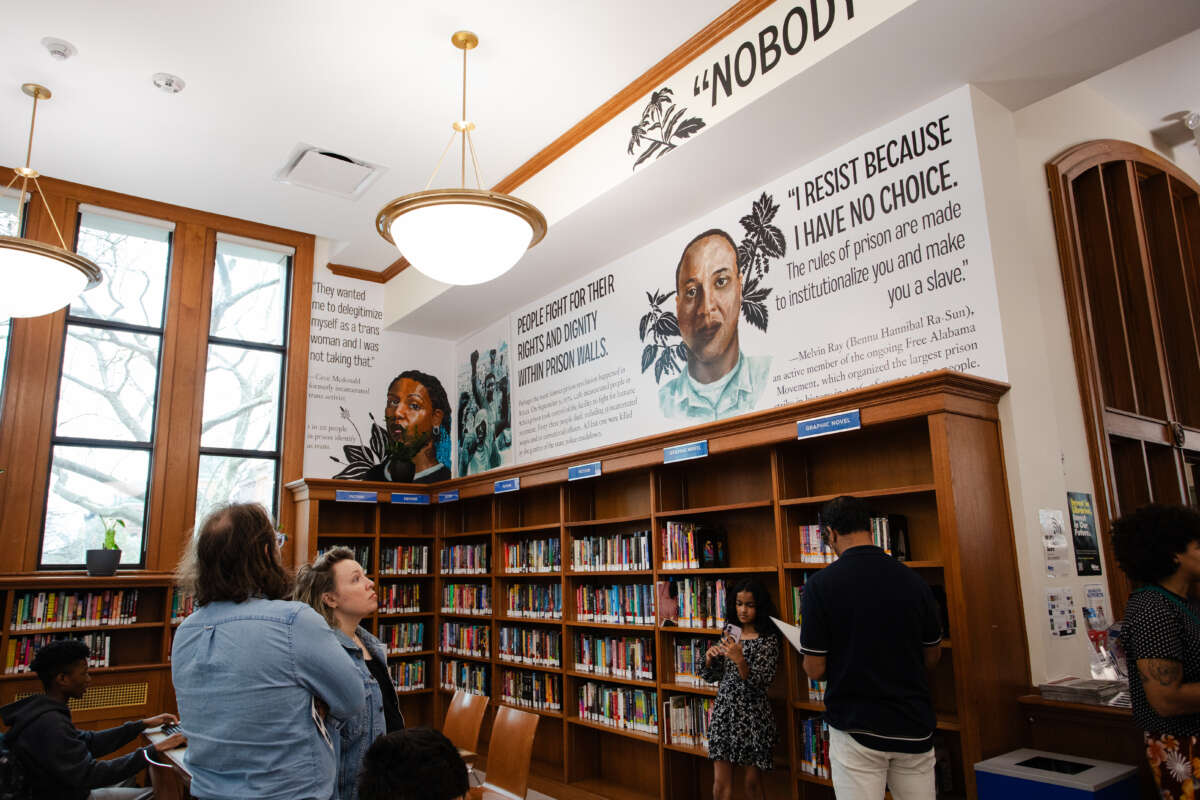
Can you talk about how this exhibit emerged and what you hope its impact will be?
Liu: This project happened largely because of you and Mariame Kaba’s willingness to take a chance on me. Six years ago, you answered my cold email that resulted in our book. And then, in 2024, you told Mariame about my Philly installation, and she took a chance on me even though she’d never met me. The sheer amount of solidarity and trust that you both have exercised in trusting in me is astounding. It is revolutionary.
I’ve encountered the sentiment perhaps best expressed by Fannie Lou Hamer’s quote, “None of us are free until all of us are free,” in many forms, across many issues. There’s the Wobblies’ version, “Injury to one is injury to all,” or the slogan “Palestine will free us all.” I’ve understood the sentiment intellectually, but perhaps only in the last few years have I understood it in my bones. We are not free in a world where our well-being and perceived humanity is dependent on our complicity. We cannot possibly be free until everyone’s personhood is understood to be an inarguable, inherent truth.
I hope that this exhibition reminds people of our shared humanity. I hope that this exhibition reminds people of the immense potential of our care for each other and that it breathes new life into our imagination of what is possible.
Media that fights fascism
Truthout is funded almost entirely by readers — that’s why we can speak truth to power and cut against the mainstream narrative. But independent journalists at Truthout face mounting political repression under Trump.
We rely on your support to survive McCarthyist censorship. Please make a tax-deductible one-time or monthly donation.