Truthout is a vital news source and a living history of political struggle. If you think our work is valuable, support us with a donation of any size.
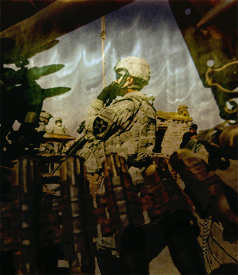
KABUL, Afghanistan—US forces opened a major offensive in southern Afghanistan early Saturday, sending thousands of US Marines and Afghan and British soldiers against a Taliban stronghold in Helmand province.
A wave of helicopters was flying Marines into the center of Marjah, the focus of what’s probably the biggest assault since the US invaded Afghanistan in 2001, reporters on the scene said.
The operation will be a critical test of the Obama administration’s new strategy, which is based on a “surge” of military and civilian personnel deployed to take and hold population centers, while driving the insurgents to the countryside.
Marjah is the last area in central Helmand still under Taliban control. NATO intelligence estimated that as many as 2,000 militants were dug in and have mined the approaches to town. Buildings are likely to be bobby-trapped, and the Taliban are expected to take up firing positions among civilians in their homes.
Despite a last-minute exodus, most of the 80,000 people in Marjah and the surrounding villages are still in their homes, raising the risk of civilian casualties that would undermine the administration’s strategy in Afghanistan. Radio broadcasts and leaflets dropped over the area warned residents to remain indoors and not to shelter the Taliban.
Around 15,000 coalition and Afghan troops are taking part in the offensive, called Operation Mushtarak (“together,” in the Dari language). US Marines are targeting Marjah, and British forces the nearby villages of Nad Ali district. Afghan troops will play a prominent role, both to avoid the appearance of an invasion by foreigners and to show the world that Afghan security forces are capable of mounting such operations. A successful buildup of the Afghan military is essential to the eventual withdrawal of international troops.
Marjah is not only an insurgent base but also the hub of Helmand’s narcotics trade. The province, part of the belt of violence in the south of Afghanistan, produces more than half the world’s opium.
By taking the unusual step of publicizing the offensive, US and Afghan strategists apparently hoped that the Taliban would leave, saving the population the danger of being caught up in the fighting or the risk that the town is destroyed.
The new military doctrine for Afghanistan calls for protecting the population and winning popular support, rather than seeking to kill the maximum number of insurgents. It’s unclear whether the Taliban will stand and fight or flee, seeing the odds against them.
The operation also will be a key test whether the new civilian strategy for Afghanistan can deliver law and order and government services, and convince the population that the state is there to stay. A police force for Marjah, perhaps 1,000 strong, is to be recruited.
The Marjah assault is the first major military offensive since President Barack Obama ordered 30,000 additional US troops to Afghanistan. The extra forces should provide enough manpower to hold ground. In the past, gains had been lost once the combat operation was over and the soldiers redeployed.
Although US commanders recognize that they can’t defeat the enemy completely on the battlefield, they hope that massive military pressure on the Taliban in the field will convince their leaders to come to the negotiating table. Securing Helmand is expected to be followed by similar operations in other provinces in the south, especially Kandahar, the spiritual home of the Taliban movement.
Shah is a McClatchy special correspondent.
An urgent fundraising appeal: 8 Days to raise $46,000
Truthout is one of only a few platforms for justice-oriented, grassroots journalism. Today, we face an existential threat.
Due to Google’s launch of AI search, we’ve seen a drastic plunge in our site traffic and, as a result, our revenue. We lost 15 percent of our readership overnight. This was a readership we painstakingly built over decades, and it vanished because Google chose corporate greed over a healthy democracy.
We are fundraising right now to meet our basic operating expenses. If you can support Truthout with a one-time or monthly donation, you will make a significant impact on our work. Anything you can do makes a difference — we appreciate your support.