Did you know that Truthout is a nonprofit and independently funded by readers like you? If you value what we do, please support our work with a donation.
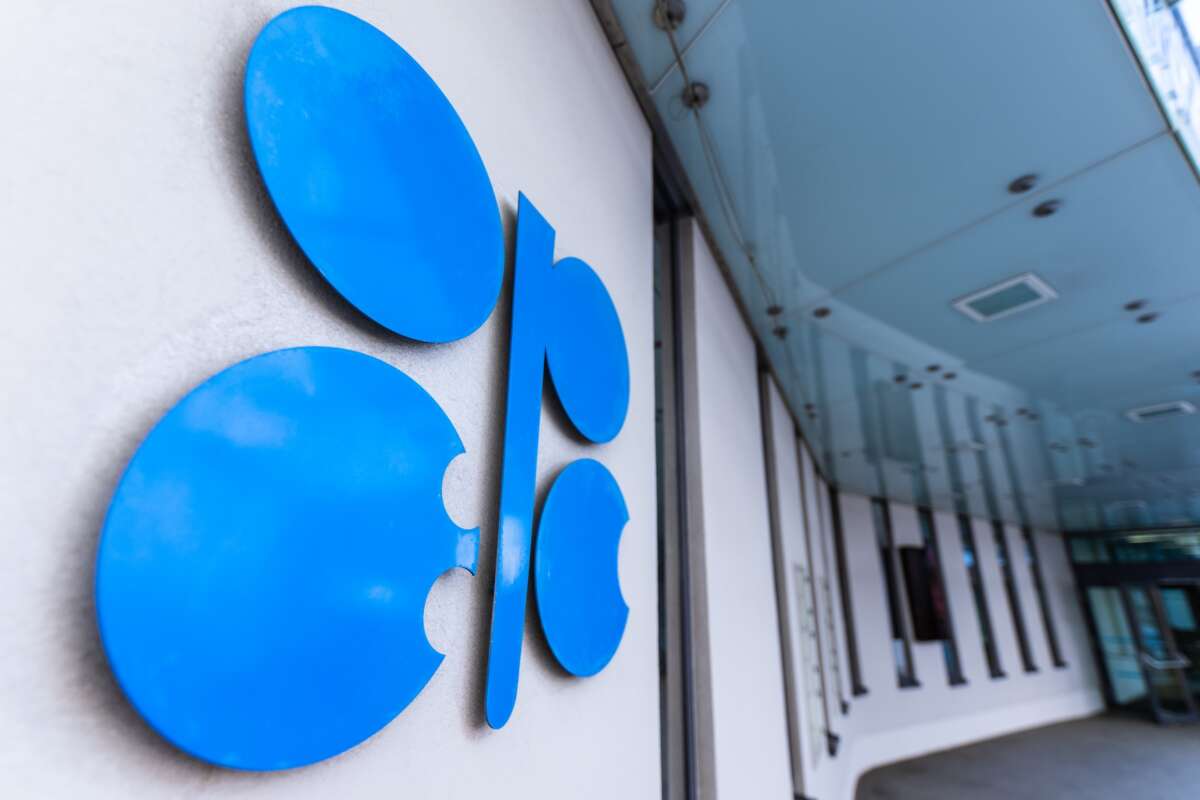
The United Arab Emirates announced on Tuesday that it is leaving the Organization of the Petroleum Exporting Countries, known as OPEC, and OPEC+, in a major blow to the cartel amid an energy crisis caused by the U.S. and Israel’s war with Iran.
The country’s departure will take effect on May 1, it announced in a statement issued through its state news media. It will allow the country to produce more oil and weaken OPEC, the cartel that has for decades dominated the global oil market, as the country responsible for about 12 percent of OPEC’s daily production.
The move also signals a further break in the UAE’s relations with Saudi Arabia, the de facto leader of OPEC, as well as re-alignment between the UAE and the U.S. as it’s cozied up with the Trump administration.
“While near-term volatility, including disruptions in the Arabian Gulf and the Strait of Hormuz, continues to affect supply dynamics, underlying trends point to sustained growth in global energy demand over the medium to long term,” the UAE said in a statement. “A stable global energy system depends on flexible, reliable, and affordable supply.”
“The U.A.E.’s decision to exit from OPEC reflects a policy-driven evolution aligned with long-term market fundamentals,” said the UAE’s energy minister, Suhail al-Mazrouei.
The UAE and Saudi Arabia, years-long allies, have undergone a rift in recent months, with the countries differing on policy in the Middle East, especially with regards to Yemen. The U.S. and Israel’s war on Iran has amplified those differences, especially as they have differed on their approaches to Iranian retaliatory strikes on U.S. infrastructure in their respective territories. Leaving OPEC is seen as a boon to the Trump administration, since it will allow the Emirates to increase production to offset the oil supply shocks created by the U.S.-Israeli war on Iran.
“The UAE withdrawal marks a significant shift for OPEC. Alongside Saudi Arabia, it is one of the few members with meaningful spare capacity — the mechanism through which the group exerts market influence,” said Jorge Leon, an analyst for energy research company Rystad, per Reuters.
“While near-term effects may be muted given ongoing disruptions in the Strait of Hormuz, the longer-term implication is a structurally weaker OPEC,” Leon went on. “Outside the group, the UAE would have both the incentive and the ability to increase production, raising broader questions about the sustainability of Saudi Arabia’s role as the market’s central stabiliser — and pointing to a potentially more volatile oil market as OPEC’s capacity to smooth supply imbalances diminishes.”
The move also comes as the UAE is cozying up to Trump. Last year, an Emirati-backed firm acquired nearly half of Trump’s cryptocurrency company, giving his family $187 million and $31 million to the family of Trump’s Middle East envoy, Steve Witkoff, in the deal. This raised major concerns of corruption and conflicts of interest.
This deal was evidently part of a quid pro quo in which the White House then gave UAE access to hundreds of thousands of advanced computer chips, which could help give the country an edge amid the AI boom.
This relationship has continued to bloom during the war on Iran. The Trump administration announced last week that it is considering offering financial support to the UAE in acknowledgement of the economic fallout of the war for the oil-rich country, after the UAE opened talks asking for aid from the U.S. Such assistance could include a currency swap, which could give the country a lifeline as it’s blocked from moving products through the Strait of Hormuz.
“It’s been a good ally of ours, and you know, these are unusual times,” Trump told CNBC last Tuesday. In his first term, Trump criticized OPEC for “ripping off the rest of the world” by inflating oil prices.
Press freedom is under attack
As Trump cracks down on political speech, independent media is increasingly necessary.
Truthout produces reporting you won’t see in the mainstream: journalism from the frontlines of global conflict, interviews with grassroots movement leaders, high-quality legal analysis and more.
Our work is possible thanks to reader support. Help Truthout catalyze change and social justice — make a tax-deductible monthly or one-time donation today.