Truthout is an indispensable resource for activists, movement leaders and workers everywhere. Please make this work possible with a quick donation.
A Trump administration proposal to rescind a bedrock conservation rule that protects 45 million acres of pristine national forests and the nation’s least-developed public lands from logging, road construction, development, and pollution is facing widespread opposition. Despite federal regulators providing an unusually brief time window for public comment, hundreds of thousands of comments were filed, with one analysis showing a near-unanimous desire to keep the rule in place.
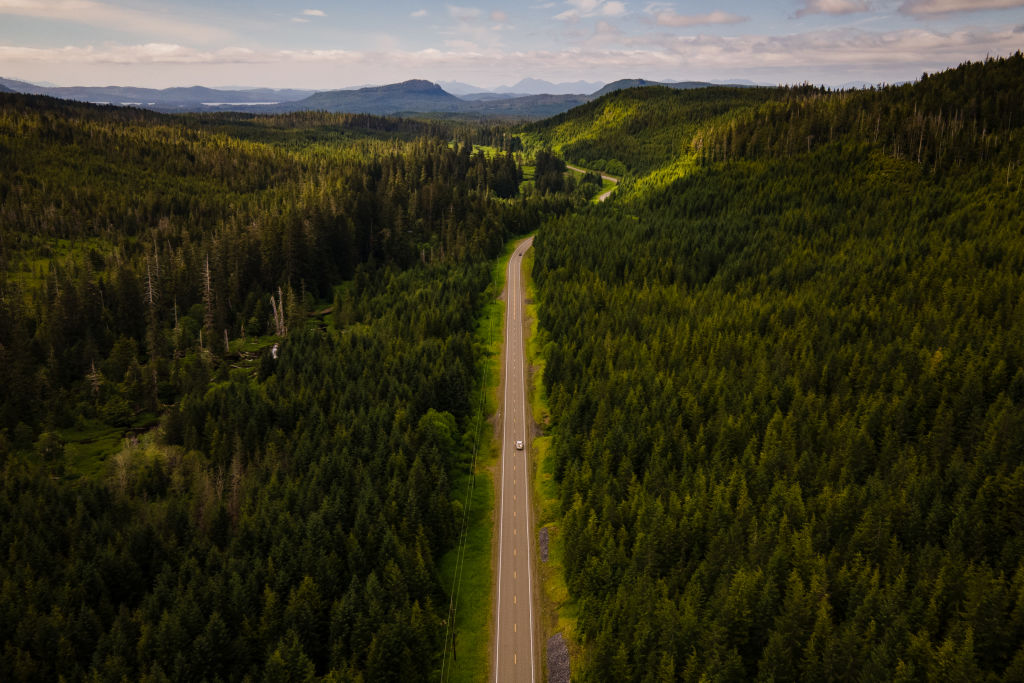
The Roadless Area Conservation Rule, also known as the Roadless Rule, prohibits road construction and timber harvests in many of the remaining wilderness areas that standard cars and trucks cannot reach, effectively preventing mining, hydrocarbon extraction, and logging in those areas and limiting the human footprint in pristine ecosystems. Conservation groups say the rule is critical for preserving sources of clean drinking water, wildlife migration corridors, and access to large areas of unfragmented backcountry cherished by outdoors enthusiasts.
“Roadless Areas are not just scenic backcountry — they are biodiversity strongholds and fire-adapted ecosystems that rely on natural, mixed-severity fire to thrive,” said Jennifer Mamola, advocacy and policy director at the John Muir Project, a forest science think tank, in an email.
The potential repeal of the Roadless Rule would add to a long list of environmental protections slashed under President Donald Trump. In March, Trump ordered the Forest Service and other agencies to bypass the Endangered Species Act and promote an “immediate expansion” of timber production on federal lands as part of a broader push to empower favored industries. The Trump administration argues the Roadless Rule is a needless regulation that frustrates local land managers, stifles “jobs and economic growth” in rural communities, and limits access for wildfire prevention efforts such as fuel management — which Trump has called “cleaning the floors” — a claim Mamola said contradicts studies linking roadbuilding to an increase in human-caused fires.
“Weakening protections puts both wildlife and the integrity of these landscapes at risk, while doing nothing to make our communities safer,” Mamola said.
Big timber and paper companies that would profit from greater access to old-growth forests in Alaska and the Western U.S. tend to support more Republican than Democratic candidates and spend millions of dollars a year lobbying Congress, according to OpenSecrets. Trump was the industry’s top recipient of campaign cash in 2024, followed by Democratic presidential nominee Kamala Harris and Rep. Bruce Westerman (R-Arkansas).
The rule was enacted in 2001 after the Forest Service collaborated with multiple federal agencies to hold hundreds of public hearings as well as consultations with Native American tribes across the Western United States over a two-year period. At the time, 1.6 million public comments poured in, with more than 90 percent supporting the protections for wilderness, according to the Center for Western Priorities.
This history of public input stands in stark contrast to the process today under Trump to repeal the rule. On August 27, Secretary of Agriculture Brooke Rollins announced a 21-day window for the public to comment on the administration’s proposal for rescinding the Roadless Rule. Public comment periods are typically at least 30 days and can run up to 90 or 120 days for complex federal regulations with broad impact.
Despite the truncated public comment period, the proposal to rescind the rule received 625,737 comments by September 19, which includes some 400,000 petitions opposing the proposal that were delivered in bulk by conservation groups in the final hours of the comment period. An analysis of 183,000 comments filed before the bulk petitions arrived from the Center for Western Priorities found that more than 99 percent opposed the rescission of the rule. Less than 1 percent of comments supported rescinding the rule, including a comment from the Republican Party of New Mexico, which argues the rule frustrates local land managers.
Rep. Jared Huffman is the ranking member on the House Natural Resources Committee and a Democrat from a densely forested district in northern California, where the Six Rivers National Forest alone supplies $428 million worth of clean drinking water to homes each year. In a letter to Rollins on September 19, Huffman said the Roadless Rule also protects clean water sources and recreational access to the Mendocino National Forest and the Shasta-Trinity National Forest in his district, and urged the secretary to extend the public comment period by 45 days and by 120 days for tribal consultation.
“Repealing the Rule would be a profound mistake, locking in a future of increasingly severe wildfires, fiscal irresponsibility, and water scarcity. I urge you to abandon this reckless course and uphold the Roadless Rule’s protections,” Huffman said in a statement.
The U.S. Department of Agriculture’s press office did not respond to Truthout’s requests for comment by the time this story was published.
Supporters of rescinding the Roadless Rule argue it creates barriers to active forest management and efforts to prevent wildfires that are intensifying with climate change, such as clearing potential fuel for fire. However, like Mamola, Huffman says this is misleading. The Roadless Rule does allow for fuel management and timber harvests under certain circumstances, according to Huffman, and dozens of conservation groups agree that punching more holes into the backcountry with roads would lead to more human-caused fires, as research has shown.
“Peer-reviewed science shows that logging in backcountry landscapes does not protect communities and often increases fire risk, especially near roads, where 95 percent of human-caused fires occur,” Mamola said. “By contrast, investments in home hardening and defensible space deliver a three to four times return in disaster recovery, according to FEMA’s 2018 report.”
Last month, 155 public lands groups, including the John Muir Project, sent a letter to Congress calling for stronger protections for designated roadless areas, specifically highlighting loopholes that allow logging and road-building under the guise of wildfire mitigation.
“Now, as the push to repeal the Roadless Rule gains momentum, closing these loopholes and protecting these wildlands is more urgent than ever,” Mamola said.
Instead of rescinding the Roadless Rule, the groups urge Congress to protect the entire 58.2 million-acre roadless area as initially surveyed and regulated under the Clinton administration, and to add new protections such as prohibitions on commercial cattle grazing and motorized vehicles. The Trump administration says its proposal to rescind the rule would impact 45 million acres of the nearly 60 million currently without roads.
Conservationists say roadless areas are also buffer zones that protect national parks and wildlife sanctuaries visited by hikers and tourists from expanding wildfires. There’s one reason why many backcountry areas remain roadless: they are difficult to reach, and the Forest Service already faces a $4.85 billion backlog of road maintenance across the existing 370,000 miles of forest roads, according to Huffman. Meanwhile, the Trump administration is making sweeping staffing and budget cuts and shuttering nine regional Forest Service offices nationwide.
Despite the widespread backlash amongst the public, one of the Trump administration’s most needed allies in Congress has long pushed to axe the rule. Republican Sen. Lisa Murkowski has long supported a repeal of the Roadless Rule to further development of wild areas in her home state of Alaska. Murkowski reiterated that support of rescinding the Roadless Rule shortly after Rollins announced the proposal in June.
According to Wes Siler, an outdoor recreation journalist writing on Substack, the Roadless Rule presents a major barrier to opening the remote Tongass National Forest in Alaska to both domestic and international logging companies. The Tongass is a vast temperate rainforest with ecosystems unlike any found elsewhere in the world. Still, Siler expects the national forest could be saved by a combination of sheer incompetence and Trump’s sweeping cuts to federal agencies. Siler reports that Rollins has a paltry $50 million budget to build new Forest Service roads.
“Building roads into the Tongass was estimated to cost on average $500,000-a-mile back in 2020, when the first Trump administration tried these shenanigans for the first time,” Siler wrote on August 29. “Updated for Trumpflation, that’s now $620,699. In a best case scenario, that budget only buys 80 miles of new road.”
Whether the administration will agree to extend another comment period on the Roadless Rule and commit to closer consultation with local communities and tribal governments remains to be seen. Federal law requires an environmental impact analysis of the proposal that is expected to be finalized next year and face a litany of legal challenges that could further delay any changes to the rule.
An important fundraising appeal: 24 Hours to raise $19,000
Thank you for reading Truthout today. We have a brief message before you go.
Unfortunately, donations are down for Truthout at a time when media faces immense pressure. Yet, grassroots media is vital in the fight against Trump’s authoritarian reign. Our mandate to tell the truth, share strategies for resistance, and speak against fascism grows more urgent each day. We must appeal for your support.
If you can support Truthout with a one-time or monthly donation, you will make a significant impact on our work. Please donate during our fundraiser.