Support justice-driven, accurate and transparent news — make a quick donation to Truthout today!
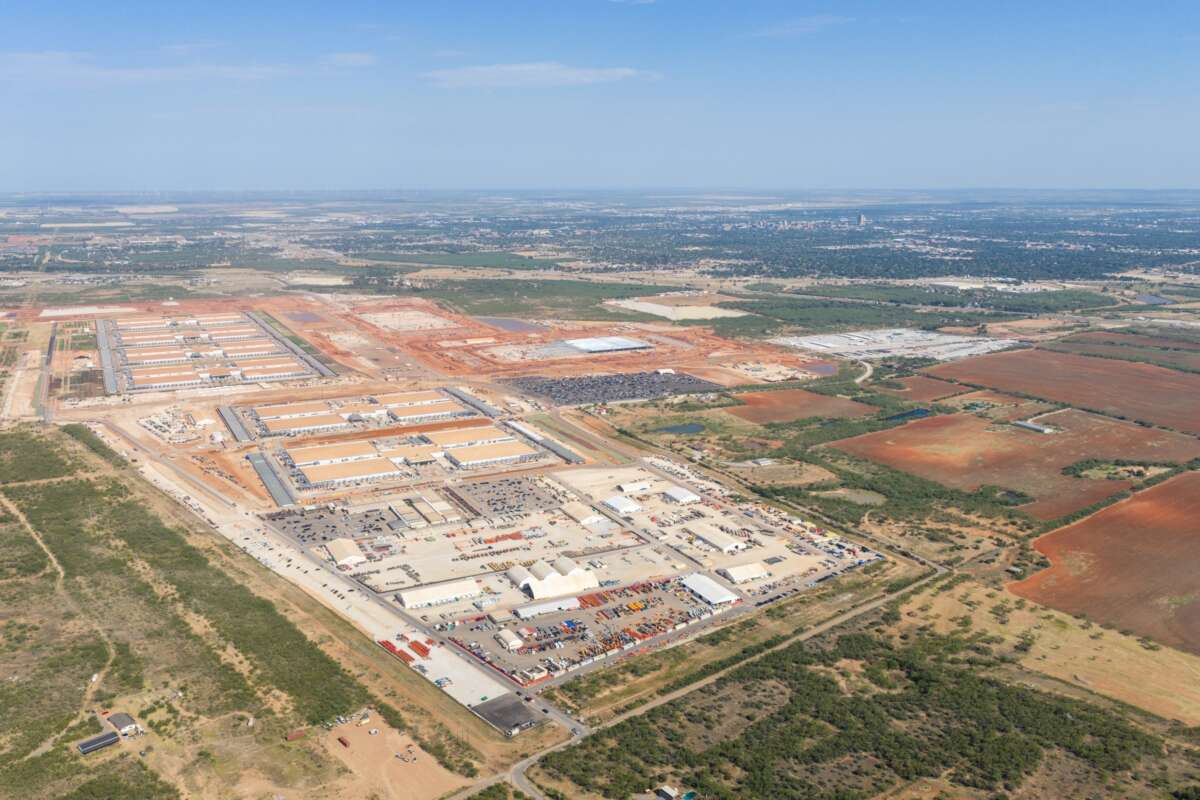
The Trump administration is reportedly considering a dozen data center projects to be built on public lands, a plan that would grant tech firms massive swaths of protected lands as they expand AI projects already sharply criticized for outsized use of public resources.
The proposals under consideration are spread across six states — Arizona, Idaho, Nevada, Oregon, Utah and Wyoming — and would encompass at least 17,600 acres of public lands, according to records reported on Friday by The Washington Sun.
The projects aren’t posted publicly on the Bureau of Land Management’s (BLM) website, as they are evidently in the early stages and not yet subject to the public comment process. The publication also reports that local officials and advocates in at least five of the states were unaware of the proposed projects.
This represents the Trump administration’s latest attempts to roll back protections for and destroy federal lands for his personal projects, while also granting permission to private companies to develop on lands that are supposed to be preserved for the public good.
The Trump administration has directed BLM to prioritize the development of data centers on public lands, directing the agency to identify public lands for that purpose. At the same time, the Trump administration has also taken steps to slash environmental regulations, namely the National Environmental Protection Act (NEPA), that allow the public to protest certain projects and that help restrain the overdevelopment of public lands.
There are currently zero data centers built on public lands. Earlier this year, BLM approved a plan to build an AI hyperscale data center in Nevada on an area originally set aside for a solar panel project. The agency reportedly sidestepped the environmental review and public comment process in fast tracking the approval for the project.
Like in many other data center proposals, locals have been opposed to the Boulder City project. Earlier this month, a Department of Interior judge ordered a stay on the project, pending challenges filed by the city and environmental groups.
The largest proposal, the Washington Sun reports, is a 10,200 acre project near Green River, Utah, by a nuclear power startup called Valar Atomics.
“If there are places where communities think it is appropriate to build data centers, focus on those,” said Aaron Weiss, head of the conservation group Center for Western Priorities. “The Trump administration needs to stop cutting the public out of public land management. The solution is more public notice and more opportunities for stakeholders to shape projects on the front end.”
Data centers are overwhelmingly unpopular among the public, with polls showing that Americans are particularly concerned about environmental factors, harms to local residents, and energy costs.
Tech companies in recent years have rushed to build out their capacity for their AI projects, even as they say that such tools could cause societal harm and wipe out millions of jobs. Data centers aren’t all used for AI operations, but the explosion in proposed data center projects has coincided with the precipitous rise of AI adoption across the economy in recent years.
The environmental impacts of data centers are overwhelming. Data centers pollute the air and water, contributing to PFAS contamination and using enormous amounts of fresh water for operations. Last week, an AI data center in Secaucus, New Jersey spilled 5,000 gallons of fuel into the Hackensack River.
Meanwhile, U.S. data centers are slated to consume more natural gas than all but the world’s top four natural gas users, according to a BloombergNEF analysis this month, contributing massively to the climate crisis.
We lost 15 percent of our traffic overnight.
We now have three full months of data since Google changed its search to feature AI results. The numbers are worse than we anticipated. Overall readership that comes to Truthout through Google is down 54 percent against last year. The number of new readers who discover Truthout via Google searches is down 49 percent, and returning users from Google are down 51 percent.
We lost 15 percent of our readership overnight. This was a readership we painstakingly built over decades, and it vanished because Google chose corporate greed over a healthy democracy.
We anticipate a loss of roughly $500,000 in online revenue as a result of this massive traffic plunge in the next year alone.
The only way we can keep publishing is with strong reader support. We are asking you to start a monthly donation to Truthout today — anything you can do, whether $5 or $25, makes a difference.